


![Benzyl 2-{[(tert-butoxy)carbonyl]amino}acetate structure](https://cnstatic.chemtradehub.com/structs/542/54244-69-8-6399.webp "Benzyl 2-{[(tert-butoxy)carbonyl]amino}acetate structure")
Alkene–azide chemistry: a facile, one-step, solvent- and catalyst-free approach for developing new functional monomers and polymers
文献信息
发布日期
2020-05-07
DOI
10.1039/D0PY00346H
影响因子
5.582
作者
Santimukul Santra, Ren Bean, Blaze Heckert, Zachary Shaw, Vedant Jain, Lok Shrestha, Raghunath Narayanam, Quentin Austin
查看原文
摘要
In this study, a one-step Hüisgen 1,3-dipolar cycloaddition reaction, alkene–azide chemistry, was explored using a solvent and catalyst free method forming 1,2,3-triazoline ring-containing molecules. This facile method was utilized by synthesizing a mini library of small molecules, functional monomers, and polymers, which involved mixing a terminal alkene with a terminal azide at elevated temperature. Similar to traditional “click” chemistry, the proposed alkene–azide strategy uses solvent and heavy-metal catalyst free conditions and no further workup or purification steps are required. In our design, small molecule-based compounds, AB-type prepolymers and macromolecules are synthesized at 80–100 °C with more than 90% purity. Polymers made using this chemistry formed high molecular weight macromolecules (Mw = 59.1k, 34.9k, and 49.3k g mol−1). The synthesized new small molecules, functional monomers and polymers were characterized using various chromatographic and spectroscopic methods. The results indicated that the molecular linking, orthogonal green chemistry reaction proceeds well under gentle conditions, forming products with high yields and reserving atom economy. This chemistry provides a facile approach by offering modular synthetic routes, being highly efficient when using equivalent stoichiometric ratios, and by being solvent and catalyst free, which will be of particular interest to the pharmaceutical and industrial settings.
期刊推荐
Russian Journal of General Chemistry
Russian Journal of Coordination Chemistry
Chemistry Education Research and Practice
Saudi Pharmaceutical Journal
Crystallography Reports
Journal of Peptide Science
Acta Materialia
Russian Chemical Bulletin
Drug Discovery Today
Current Opinion in Colloid & Interface Science
相关文献
A garnet structure-based all-solid-state Li battery without interface modification: resolving incompatibility issues on positive electrodes
Hao Zheng, Hans Peter Buchkremer
2018-11-08
Paper
DOI: 10.1039/C8SE00436F
Liquid flow-induced electricity in carbon nanomaterials
Junxian Pei, Jun Huang, Zhi Huang, Kang Liu
2019-01-30
Review Article
DOI: 10.1039/C8SE00604K
A phosphorus-doped carbon sphere supported CoP nanocatalyst for electrochemical hydrogen evolution
Sen Gao, Maoxia Yang, Shaomin Li, Ji Xia, Jun Mei, Hao Liu
2019-01-28
Paper
DOI: 10.1039/C8SE00498F
Efficient conversion of glucose into 5-hydroxymethylfurfural using a bifunctional Fe3+ modified Amberlyst-15 catalyst
Siquan Xu, Chunyu Yin, Donghui Pan, Feng Hu, Yuanfeng Wu, Yanan Miao, Lijing Gao, Guomin Xiao
2018-11-29
Communication
DOI: 10.1039/C8SE00499D
A nitrogen rich polymer as an organo-catalyst for cycloaddition of CO2 to epoxides and its application for the synthesis of polyurethane
2017-08-15
Paper
DOI: 10.1039/C7SE00298J
Preparation of high performance supercapacitor materials by fast pyrolysis of corn gluten meal waste
Ke Tian, Hong Jiang
2017-04-03
Paper
DOI: 10.1039/C7SE00029D
您可能还喜欢
化合物问答
什么是2-氨基戊烷(CAS号:63493-28-7)?
2-氨基戊烷,又名pentan-2-amine,是一种有机化合物,分子式为C5H11NH2。它是一种无色透明液体,有氨味。该化合物在工业和研究中有一定的应用。
63493-28-7pentan-2-amine
化合物问答
反式-4-[4-[[[5-[(3,4-二氟苯基)氨基]-1,3,4-恶二唑-2-基]羰基]氨基]苯基]环己烷乙酸(CAS号:892489-52-0)的物理化学性质是什么?
该化合物为白色固体,分子量为552.31 g/mol。它在水中溶解度较低,在有机溶剂如乙腈、乙酸乙酯中有较好的溶解性。该化合物具有较高的化学稳定性,对酸和碱具有...
892489-52-0Trans-4-[4-[[[5-[(3,...
化合物问答
如何处理含有Pyrotinib dimaleate(CAS号:1397922-61-0)的废料?
处理含有Pyrotinib dimaleate 的废料时,应遵循当地的法规要求。首先,收集废料并进行分类,确保没有与其他化学品混合。然后,采取适当的物理和化学处...
1397922-61-0(2E)-N-(4-{[3-Chloro...
化合物问答
在合成中是否有4-(5-5-乙基-1,2,4-噁二唑-3-基)苯甲酸乙酯(CAS号:1166756-79-1)的替代品?
在合成过程中,可以考虑使用其他结构类似的化合物作为替代品,例如苯甲酸酯类化合物,如2-乙基-5-甲基噁二唑基苯甲酸乙酯等。这些替代品可能具有相似的化学性质,但在...
1166756-79-1Ethyl 4-(5-ethyl-1,2...
化合物问答
如何处理含有1-((叔丁氧基羰基)氨基)环丁烷甲酸甲酯(CAS号:880166-10-9)的废料?
处理含有该化合物的废液时,应先确保其完全反应并转化为无害物质。对于未反应的化合物,建议采用中和处理后进行蒸馏回收,剩余物可使用化学氧化法或焚烧法进行无害化处理。...
880166-10-9Methyl 1-({[(2-methy...
化合物问答
2-({[3,5-二(三氟甲基)苯基]磺酰基}氨基)-4-(甲基硫代)丁酸甲酯(CAS号:175202-21-8)的市场或研究趋势如何?
目前该化合物主要应用于药物合成领域,尤其在开发新型抗癌药物方面具有潜在应用。随着制药行业的持续发展,对于高效、低毒的合成中间体需求增加,预计该化合物的研究和应用...
175202-21-8Methyl N-{[3,5-bis(t...
化合物问答
N,N-乙烯双(碘乙酰胺)(CAS号:7250-43-3)的物理化学性质是什么?
N,N-乙烯双(碘乙酰胺)是一种白色或类白色固体,易溶于乙醇、丙酮等有机溶剂,但在水中溶解度较低。该化合物具有较高的反应活性,可以与其他含有活性氢的化合物发生酰...
7250-43-3N,N'-1,2-Ethanediylb...
化合物问答
7-Fluoro-1H-spiro[furo[3,4-c]pyridine-3,4'-piperidine](CAS号:1283090-73-2)通常如何合成?
该化合物可以通过环合反应合成,首先合成吡啶和哌啶的衍生物,然后在合适的条件下进行环合反应得到目标化合物。常用的催化剂包括某些金属盐类,产率一般在70%-90%之...
1283090-73-27-Fluoro-1H-spiro[fu...
化合物问答
处理3-乙酰滇乌碱(CAS号:80787-51-5)时应注意哪些实验室安全事项?
在处理3-乙酰滇乌碱时,应穿戴适当的个人防护装备(PPE),如实验服、手套(丁腈手套或PVC手套)、护目镜和口罩。实验应在通风橱中进行,以减少吸入或皮肤接触的风...
80787-51-54-Methylaconitane-1,...
化合物问答
如何储存2-溴-5-硝基-4-羧酸(CAS号:1053655-82-5)?
2-溴-5-硝基-4-羧酸应存放在阴凉、干燥、通风良好的地方,远离火源和热源。避免与还原剂、碱性物质接触。储存容器应密封,防止吸湿。
1053655-82-52-Bromo-5-nitropyrid...
来源期刊
Polymer Chemistry

CiteScore:
8.6
自引率:
7.3%
年发文量:
457
Polymer Chemistry welcomes submissions in all areas of polymer science that have a strong focus on macromolecular chemistry. Manuscripts may cover a broad range of fields, yet no direct application focus is required.
推荐化合物
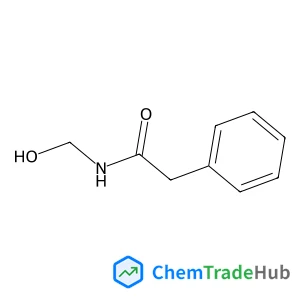
![(3-{[4-(Aminomethyl)-6-(trifluoromethyl)-2-pyridinyl]oxy}phenyl)[(3R,4R)-3-fluoro-4-hydroxy-1-pyrrolidinyl]methanone structure](https://cnstatic.chemtradehub.com/structs/200/2007885-39-2-affc.webp "(3-{[4-(Aminomethyl)-6-(trifluoromethyl)-2-pyridinyl]oxy}phenyl)[(3R,4R)-3-fluoro-4-hydroxy-1-pyrrolidinyl]methanone structure")
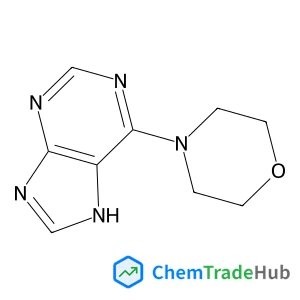
![2-Methyl-2-propanyl (2E)-5-chloro-2-[3-methoxy-4-(4-methyl-1H-imidazol-1-yl)benzylidene]pentanoate structure](https://cnstatic.chemtradehub.com/structs/122/1225232-42-7-ee03.webp "2-Methyl-2-propanyl (2E)-5-chloro-2-[3-methoxy-4-(4-methyl-1H-imidazol-1-yl)benzylidene]pentanoate structure")
推荐供应商







免责声明
本页面提供的学术期刊信息仅供参考和研究使用。我们与任何期刊出版商均无关联,也不处理投稿事宜。如有投稿相关咨询,请直接联系相关期刊出版商。
如发现页面信息有误,请发送邮件至 support@chemtradehub.com 联系我们。我们将及时核实并处理您的问题。