


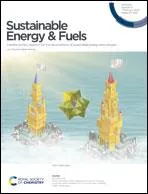
Investigating high-performance sulfur–metal nanocomposites for lithium batteries
文献信息
发布日期
2020-03-16
DOI
10.1039/D0SE00134A
影响因子
6.367
作者
Vittorio Marangon, Daniele Di Lecce, Fabio Orsatti, Dan J. L. Brett, Paul R. Shearing
查看原文
摘要
Herein, for the first time, we study the reversible conversion in a lithium cell of a novel sulfur–metal nanocomposite by combining X-ray computed tomography data at the micro- and nanoscales with the electrochemistry. The electrode is obtained at mild temperatures according to an alternative approach, including metal nanoparticles of either tin or nickel in bulk molten sulfur in the corresponding weight ratio of 85 : 15. We show that this pathway leads to the formation of high-performance electrodes, matching the state-of-the-art results obtained from the best carbonaceous composites. Indeed, lithium–sulfur (Li–S) cells at a working voltage of about 2.2 V ensure sulfur-mass-referred capacity approaching 1400 mA h g−1 at a C/3 rate and 740 mA h g−1 at a rate as high as 3C (1C = 1675 mA h g−1), with a coulombic efficiency close to 100% and stable cycling trends over 100 cycles. High-resolution imaging sheds light on the characteristic morphological features of the electrode allowing these remarkable performances, and reveals the beneficial effects of the incorporation of metal nanoparticles within the sulfur phase. The various investigation techniques, with a particular focus on three-dimensional imaging, suggest sulfur electrodeposition upon charging, preferentially adjacent to the electron-conductive centers within the electrode support as well as that on metal clusters. A massive microstructural reorganization is observed during the first cycle in lithium cells with concomitant remarkable enhancements in the electrode charge transfer and variation in the reaction potentials. This process is accompanied by substantial electrode amorphization and migration of the active material toward the current-collector bulk. The results obtained in this work, as well as a comprehensive study with an ad hoc design for sulfur electrodes, suggest alternative strategies for ultimately achieving actual Li–S cell improvement.
期刊推荐

Bioorganic & Medicinal Chemistry Letters

Atomization and Sprays
Herald of the Russian Academy of Sciences
Journal of Chemical Sciences

NDT & E International
Journal of the Indian Institute of Science

Bioorganic & Medicinal Chemistry
Critical Reviews in Solid State and Materials Sciences

Main Group Chemistry
Polycyclic Aromatic Compounds
相关文献
A time-resolved spectroscopy and density functional theory study of the solvent dependent photochemistry of fenofibric acid
Ming-De Li, Jiani Ma, Tao Su, Mingyue Liu, David Lee Phillips
2012-11-16
Paper
DOI: 10.1039/C2CP41739A
Ultrafast dynamics and single particle spectroscopy of Au–CdSe nanorods
Gabriel Sagarzazu, Kohki Inoue, Masaki Saruyama, Masanori Sakamoto, Toshiharu Teranishi, Sadahiro Masuo, Naoto Tamai
2012-12-07
Paper
DOI: 10.1039/C2CP43458J
Anchoring sites to the STM tip can explain multiple peaks in single molecule conductance histograms
S. Alexis Paz, Martin E. Zoloff Michoff, Christian F. A. Negre, Jimena A. Olmos-Asar, Marcelo M. Mariscal, Cristián G. Sánchez, Ezequiel P. M. Leiva
2012-11-22
Paper
DOI: 10.1039/C2CP43811A
Structure analysis of substrate catalyst complexes in mixtures with ultrafast two-dimensional infrared spectroscopy
Andreas T. Messmer, Katharina M. Lippert, Peter R. Schreiner
2012-11-22
Paper
DOI: 10.1039/C2CP42863F
Effect of multilayer structure on cyclic performance of Si/Fe anode electrode in Lithium-ion secondary batteries
Hee-Kook Kang, Seong-Rae Lee, Won Il Cho, Byung Won Cho
2012-11-22
Paper
DOI: 10.1039/C2CP42824E
Enhanced electronic contacts in SnO2–dye–P3HT based solid state dye sensitized solar cells
Golnaz Sadoughi, Varun Sivaram, Robbert Gunning, Pablo Docampo, Ingmar Bruder, Neil Pschirer, Azam Irajizad, Henry J. Snaith
2013-01-03
Paper
DOI: 10.1039/C2CP43434B
Structural prediction of a rhodamine-based biosensor and comparison with biophysical data
Martin R. Webb, John E. T. Corrie
2012-12-17
Paper
DOI: 10.1039/C2CP42396K
A new type of low-cost counter electrode catalyst based on platinum nanoparticles loaded onto silicon carbide (Pt/SiC) for dye-sensitized solar cells
Sining Yun, Liang Wang, Chunyu Zhao, Yanxiang Wang, Tingli Ma
2013-02-01
Communication
DOI: 10.1039/C3CP44048F
Ruthenium sulphide thin layers as catalysts for the electrooxidation of water
Peter Bogdanoff, Carolin Zachäus, Stephan Brunken, Andreas Kratzig, Klaus Ellmer, Sebastian Fiechter
2012-11-29
Paper
DOI: 10.1039/C2CP42348K
您可能还喜欢
化合物问答
4-((4-甲基哌嗪-1-基)甲基)苯硼酸(CAS号:763120-62-3)的市场或研究趋势如何?
随着有机硼化学的发展,该化合物在催化、药物合成、材料科学等领域展现出潜在的应用价值。近年来,其在药物前体合成中的应用越来越受到关注。市场趋势显示,随着科研投入的...
763120-62-3{4-[(4-Methyl-1-pipe...
化合物问答
如何储存2,4,5-三甲基-1-硝基苯(CAS号:610-91-3)?
2,4,5-三甲基-1-硝基苯应储存在阴凉、干燥且通风良好的地方,避免阳光直射。储存在密封的金属容器中,远离火源和热源。储存温度应控制在25°C以下,湿度不宜过...
610-91-31,2,4-Trimethyl-5-ni...
化合物问答
处理2,5-二碘噻吩(CAS号:625-88-7)时应注意哪些实验室安全事项?
在处理2,5-二碘噻吩时,应穿戴适当的个人防护装备(PPE),包括实验室外套、手套和防护眼镜。在通风橱中进行操作以避免吸入蒸气。如果发生泄漏,应立即疏散人员并使...
625-88-72,5-Diiodothiophene
化合物问答
在合成中是否有6-bromo-3-chloro-1H-indole(CAS号:57916-08-2)的替代品?
在合成6-溴-3-氯-1H-吲哚(CAS号:57916-08-2)时,可以考虑使用一些类似的化合物作为替代品,如6-氯-3-氯-1H-吲哚或3-氯-1H-吲哚,...
57916-08-26-bromo-3-chloro-1H-...
化合物问答
在合成中是否有(R)-(-)-1-(1-萘基)乙基异氰酸酯(CAS号:42340-98-7)的替代品?
可以考虑使用类似结构的化合物,如1-[(1R)-1-(2-氨基乙基)萘-1-基]乙基异氰酸酯作为替代品。此外,还可以寻找其他类型的异氰酸酯衍生物,如苯基异氰酸酯...
42340-98-71-[(1R)-1-Isocyanato...
化合物问答
3-氨基苯甲酰苯胺(CAS号:14315-16-3)适用哪些法规指南?
3-氨基苯甲酰苯胺适用于多项法规指南,包括但不限于GHS(全球化学品统一分类和标签制度)分类为皮肤腐蚀/刺激类别2,以及潜在的皮肤过敏性类别1。在欧盟地区,它受...
14315-16-33-Amino-N-phenylbenz...
化合物问答
β-环柠檬醛-D5(CAS号:26309-95-5)通常如何合成?
β-环柠檬醛-D5可通过不对称合成方法获得。常见的合成路线包括以环己酮为原料,经过选择性氧化、还原、保护基引入等步骤,最终得到目标化合物。该合成过程中通常使用多...
26309-95-5[(2,2-Dimethylpropan...
34915-68-9Bunitrolol
化合物问答
如何处理含有BIO-1211(CAS号:187735-94-0)的废料?
对于含有BIO-1211(CAS号:187735-94-0)的废料,首先应进行分类收集,确保符合环保要求。然后,可以考虑通过焚烧或其他专业处理方法进行处置。在处...
187735-94-0BIO-1211
化合物问答
如何处理含有4-氯-2-氟-3-甲基苯酚(CAS号:1351668-24-0)的废料?
含有该化合物的废液应收集至专用容器中,避免与其他化学品混合。可采用焚烧或送交专业废弃物处理公司处理。处理过程中需遵守当地环保法规,确保不产生二次污染。处理前应进...
1351668-24-04-Chloro-2-fluoro-3-...
来源期刊
推荐化合物
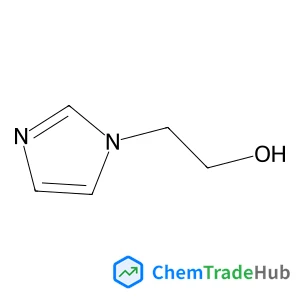
![(4R,5S,6S)-3-({(3S,5S)-5-[(3-Carboxyphenyl)carbamoyl]-3-pyrrolidinyl}sulfanyl)-6-[(1R)-1-hydroxyethyl]-4-methyl-7-oxo-1-azabicyclo[3.2.0]hept-2-ene-2-carboxylic acid structure](https://cnstatic.chemtradehub.com/structs/153/153832-46-3-b2e0.webp "(4R,5S,6S)-3-({(3S,5S)-5-[(3-Carboxyphenyl)carbamoyl]-3-pyrrolidinyl}sulfanyl)-6-[(1R)-1-hydroxyethyl]-4-methyl-7-oxo-1-azabicyclo[3.2.0]hept-2-ene-2-carboxylic acid structure")
推荐供应商







免责声明
本页面提供的学术期刊信息仅供参考和研究使用。我们与任何期刊出版商均无关联,也不处理投稿事宜。如有投稿相关咨询,请直接联系相关期刊出版商。
如发现页面信息有误,请发送邮件至 support@chemtradehub.com 联系我们。我们将及时核实并处理您的问题。