


![Disodium (6R,7R)-7-{[(2R)-2-hydroxy-2-phenylacetyl]amino}-8-oxo-3-({[1-(sulfonatomethyl)-1H-tetrazol-5-yl]sulfanyl}methyl)-5-thia-1-azabicyclo[4.2.0]oct-2-ene-2-carboxylate structure](https://cnstatic.chemtradehub.com/structs/612/61270-78-8-6b58.webp "Disodium (6R,7R)-7-{[(2R)-2-hydroxy-2-phenylacetyl]amino}-8-oxo-3-({[1-(sulfonatomethyl)-1H-tetrazol-5-yl]sulfanyl}methyl)-5-thia-1-azabicyclo[4.2.0]oct-2-ene-2-carboxylate structure")
Self-supporting N-rich Cu2Se/C nanowires for highly reversible, long-life potassium-ion storage
文献信息
发布日期
2020-03-10
DOI
10.1039/D0SE00160K
影响因子
6.367
作者
Xingqun Zhu, Jingyu Gao, Jing Li, Guojing Hu, Jie Li, Genqiang Zhang, Bin Xiang
查看原文
摘要
Currently, the search for excellent anode materials for potassium-ion storage is an important research direction. Transition metal selenide has potential application value in alkali metal-ion batteries because of its high theoretical capacity. However, due to its poor conductivity, slow insertion/extraction kinetics, and volume expansion, obtaining stable cycling performance remains challenging. In this paper, we report the design of self-supporting N-rich Cu2Se/C nanowires for use as a binder-free potassium-ion battery (PIB) electrode, which exhibits prolonged cycling life and good rate capacity. Because of the stable three-dimensional (3D) flexible structure, faster reaction kinetics, and high conductance of the as-synthesized nanowires, an excellent ultralong potassium-ion storage stability of ∼190 mA h g−1 is achieved over 200 cycles at a current density of 0.1 A g−1. In addition, a great rate capability is achieved (181 mA h g−1 at 0.1 A g−1vs. 104 mA h g−1 at 2.0 A g−1) due to partial pseudocapacitive behavior. The N-rich Cu2Se/C electrode also exhibits a stable capacity of 78 mA h g−1 over 1200 cycles when the current density is as high as 2 A g−1. We are the first to achieve such great performance in Cu–Se–C-based materials, and our work also provides a way to construct advanced transition metal selenide anodes for energy-storage devices.
期刊推荐
Heteroatom Chemistry
Acta Metallurgica Sinica-English Letters
Chinese Journal of Chemistry
Bioorganic & Medicinal Chemistry Letters
Biocatalysis and Biotransformation
Herald of the Russian Academy of Sciences
Medicinal Chemistry Research
Critical Reviews in Solid State and Materials Sciences
Main Group Chemistry
Journal of the Indian Institute of Science
相关文献
The relevance of interfaces for oxide ion transport in yttria stabilized zirconia (YSZ) thin films
Matthias Gerstl, Gernot Friedbacher, Frank Kubel, Herbert Hutter, Jürgen Fleig
2012-11-20
Paper
DOI: 10.1039/C2CP42347B
Understanding the different activities of highly promiscuous MbtI by computational methods
Silvia Ferrer, Sergio Martí, Vicent Moliner, Iñaki Tuñón, Juan Bertrán
2012-01-17
Paper
DOI: 10.1039/C2CP23149B
Possible presence of hydrophilic SO3H nanoclusters on the surface of dry ultrathin Nafion® films: a positron annihilation study
Hamdy F. M. Mohamed, S. Kuroda, Y. Kobayashi, N. Oshima, R. Suzuki
2012-11-22
Paper
DOI: 10.1039/C2CP43727A
Sophorolipids-functionalized iron oxide nanoparticles
Lorenzo Stievano, Inge Van Bogaert
2012-12-17
Paper
DOI: 10.1039/C2CP41977G
Photoinduced ultrafast dynamics of the triphenylamine-based organic sensitizer D35 on TiO2, ZrO2 and in acetonitrile
Kawon Oum, Peter W. Lohse, Johannes R. Klein, Oliver Flender, Mirko Scholz, Anders Hagfeldt, Gerrit Boschloo, Thomas Lenzer
2013-02-12
Paper
DOI: 10.1039/C3CP44095H
Directed electron transfer in Langmuir–Schäfer layers of porphyrin–fullerene and phthalocyanine–fullerene dyads in inverted organic solar cells
A. Tolkki, K. Kaunisto, A. Efimov, H. Kivistö, L. Storbacka, R. Savikoski, K. Huttunen, S. Lehtimäki, H. Lemmetyinen
2012-01-16
Paper
DOI: 10.1039/C2CP24022J
Naphthalene bisimides asymmetrically and symmetrically N-substituted with triarylamine – comparison of spectroscopic, electrochemical, electronic and self-assembly properties
Renata Rybakiewicz, David Djurado, Robert Nowakowski, Petr Toman, Jiri Pfleger, Jean-Marie Verilhac, Malgorzata Zagorska, Adam Pron
2012-12-14
Paper
DOI: 10.1039/C2CP43505E
Access to enhanced differences in Marcus–Hush and Butler–Volmer electron transfer theories by systematic analysis of higher order AC harmonics
Gareth P. Stevenson, Ruth E. Baker, Gareth F. Kennedy, Alan M. Bond, David J. Gavaghan, Kathryn Gillow
2012-11-12
Paper
DOI: 10.1039/C2CP43193A
Clarifying the role of sodium in the silica oligomerization reaction
Anna Pavlova, Thuat T. Trinh, Rutger A. van Santen, Evert Jan Meijer
2012-11-16
Paper
DOI: 10.1039/C2CP42436C
On the methods of calculation of the charge collection efficiency of dye sensitized solar cells
Luca Bertoluzzi, Shuai Ma
2013-02-04
Communication
DOI: 10.1039/C3CP44248A
您可能还喜欢
化合物问答
4-((4-甲基哌嗪-1-基)甲基)苯硼酸(CAS号:763120-62-3)的市场或研究趋势如何?
随着有机硼化学的发展,该化合物在催化、药物合成、材料科学等领域展现出潜在的应用价值。近年来,其在药物前体合成中的应用越来越受到关注。市场趋势显示,随着科研投入的...
763120-62-3{4-[(4-Methyl-1-pipe...
化合物问答
如何储存2,4,5-三甲基-1-硝基苯(CAS号:610-91-3)?
2,4,5-三甲基-1-硝基苯应储存在阴凉、干燥且通风良好的地方,避免阳光直射。储存在密封的金属容器中,远离火源和热源。储存温度应控制在25°C以下,湿度不宜过...
610-91-31,2,4-Trimethyl-5-ni...
化合物问答
处理2,5-二碘噻吩(CAS号:625-88-7)时应注意哪些实验室安全事项?
在处理2,5-二碘噻吩时,应穿戴适当的个人防护装备(PPE),包括实验室外套、手套和防护眼镜。在通风橱中进行操作以避免吸入蒸气。如果发生泄漏,应立即疏散人员并使...
625-88-72,5-Diiodothiophene
化合物问答
在合成中是否有6-bromo-3-chloro-1H-indole(CAS号:57916-08-2)的替代品?
在合成6-溴-3-氯-1H-吲哚(CAS号:57916-08-2)时,可以考虑使用一些类似的化合物作为替代品,如6-氯-3-氯-1H-吲哚或3-氯-1H-吲哚,...
57916-08-26-bromo-3-chloro-1H-...
化合物问答
在合成中是否有(R)-(-)-1-(1-萘基)乙基异氰酸酯(CAS号:42340-98-7)的替代品?
可以考虑使用类似结构的化合物,如1-[(1R)-1-(2-氨基乙基)萘-1-基]乙基异氰酸酯作为替代品。此外,还可以寻找其他类型的异氰酸酯衍生物,如苯基异氰酸酯...
42340-98-71-[(1R)-1-Isocyanato...
化合物问答
3-氨基苯甲酰苯胺(CAS号:14315-16-3)适用哪些法规指南?
3-氨基苯甲酰苯胺适用于多项法规指南,包括但不限于GHS(全球化学品统一分类和标签制度)分类为皮肤腐蚀/刺激类别2,以及潜在的皮肤过敏性类别1。在欧盟地区,它受...
14315-16-33-Amino-N-phenylbenz...
化合物问答
β-环柠檬醛-D5(CAS号:26309-95-5)通常如何合成?
β-环柠檬醛-D5可通过不对称合成方法获得。常见的合成路线包括以环己酮为原料,经过选择性氧化、还原、保护基引入等步骤,最终得到目标化合物。该合成过程中通常使用多...
26309-95-5[(2,2-Dimethylpropan...
34915-68-9Bunitrolol
化合物问答
如何处理含有BIO-1211(CAS号:187735-94-0)的废料?
对于含有BIO-1211(CAS号:187735-94-0)的废料,首先应进行分类收集,确保符合环保要求。然后,可以考虑通过焚烧或其他专业处理方法进行处置。在处...
187735-94-0BIO-1211
化合物问答
如何处理含有4-氯-2-氟-3-甲基苯酚(CAS号:1351668-24-0)的废料?
含有该化合物的废液应收集至专用容器中,避免与其他化学品混合。可采用焚烧或送交专业废弃物处理公司处理。处理过程中需遵守当地环保法规,确保不产生二次污染。处理前应进...
1351668-24-04-Chloro-2-fluoro-3-...
来源期刊
推荐化合物
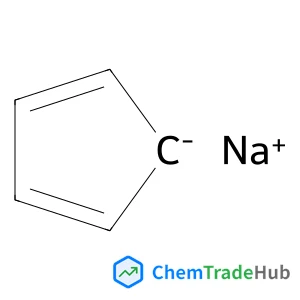
![(2S)-{[(9H-Fluoren-9-ylmethoxy)carbonyl]amino}(phenyl)acetic acid structure](https://cnstatic.chemtradehub.com/structs/102/102410-65-1-4aa7.webp "(2S)-{[(9H-Fluoren-9-ylmethoxy)carbonyl]amino}(phenyl)acetic acid structure")
推荐供应商




免责声明
本页面提供的学术期刊信息仅供参考和研究使用。我们与任何期刊出版商均无关联,也不处理投稿事宜。如有投稿相关咨询,请直接联系相关期刊出版商。
如发现页面信息有误,请发送邮件至 support@chemtradehub.com 联系我们。我们将及时核实并处理您的问题。