


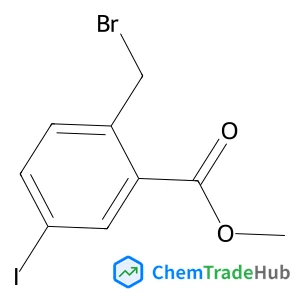
Realizing cool and warm white-LEDs based on color controllable (Sr,Ba)2Al3O6F:Eu2+ phosphors obtained via a microwave-assisted diffusion method
文献信息
发布日期
2021-07-08
DOI
10.1039/D1CP01593A
影响因子
3.676
作者
P. Ranjith, Pritha Patra, Sudipta Som, Ammu Menon, K. Jayanthi, K. Annapurna, Amarnath R. Allu
查看原文
摘要
Globally, phosphor converted white-LEDs (W-LEDs) are among the most suitable sources to reduce energy consumption. Nevertheless, modernization of efficient broadband emitting phosphors is most crucial to improve the W-LED performance. Herein, we synthesized a series of novel broadband emitting Sr2−xAl3O6F:xEu2+ phosphors via a new microwave-assisted diffusion method. Rietveld refinement of the obtained X-ray diffraction results was performed to recognize the exact crystal phase and the various cationic sites. Oxygen vacancies (VO) formed under synthetic reducing conditions enabled Sr2Al3O6F to demonstrate bright self-activated bluish emission. Doping of Eu2+ ions unlocked the energy transfer process from the host to the activator ions, owing to which, the self-activated emission diminished and the Eu2+-doped sample showed amplified bluish-green emission. The gradual increase in Eu2+ concentrations regulated the controllable emissions from the bluish (0.34, 0.42) to the greenish (0.38, 0.43) zone under UV excitation. Because of the different absorption preferences of Eu2+ ions located at the different Sr2+ sites, Sr2−xAl3O6F:xEu2+ exhibited bluish-white emission under blue irradiation. A further enhancement in PL intensity had been observed by the cation substitution of Ba2+ for Sr2+ sites in the optimum Sr1.95Al3O6F:0.05Eu2+ phosphor. The as-fabricated W-LEDs utilizing the optimized Sr1.75Ba0.2Al3O6F:0.05Eu2+ phosphor exhibited a cool-white light emission along with a 372 nm NUV-LED and a 420 nm blue-LED with a moderate CRI of 70 and a CCT above 6000 K. Such cool white emission was controlled to natural white with the CCT close to 5000 K, and the CRI above 80 via utilizing a suitable red emitting phosphor. The W-LED performances of the optimized phosphor justified its applicability to produce white light for lighting applications.
期刊推荐

New Journal of Chemistry

Journal of Natural Medicines
Organic Process Research & Development

Acta Materialia
Russian Chemical Bulletin

Chemistry Education Research and Practice

Russian Journal of Organic Chemistry
Current Opinion in Colloid & Interface Science
Crystallography Reports
Russian Journal of General Chemistry
相关文献
Origin of electrolyte-dopant dependent sulfur poisoning of SOFC anodes
ZhenHua Zeng, Mårten E. Björketun, Sune Ebbesen, Mogens B. Mogensen, Jan Rossmeisl
2013-03-14
Communication
DOI: 10.1039/C3CP51099A
Small-angle water reorientations in KOH doped hexagonal ice and clathrate hydrates
B. Geil
2013-02-25
Paper
DOI: 10.1039/C3CP00139C
Manipulating dynamics with chemical structure: probing vibrationally-enhanced tunnelling in photoexcited catechol
Jamie D. Young, Dave Townsend, Justyna M. Żurek, Martin J. Paterson, Gareth M. Roberts, Vasilios G. Stavros
2013-03-22
Paper
DOI: 10.1039/C3CP51108A
Investigation on the electronic structure of BN nanosheets synthesized via carbon-substitution reaction: the arrangement of B, N, C and O atoms
Lijia Liu, Tsun-Kong Sham, Weiqiang Han
2013-03-18
Paper
DOI: 10.1039/C3CP50498K
Benchmark quantum-chemical calculations on a complete set of rotameric families of the DNA sugar–phosphate backbone and their comparison with modern density functional theory
Arnošt Mládek, Miroslav Krepl, Michal Otyepka, Pavel Banáš, Marie Zgarbová, Petr Jurečka
2013-03-18
Paper
DOI: 10.1039/C3CP44383C
In situ fluorescence and electrochemical monitoring of a photosynthetic microbial fuel cell
Alister E. Inglesby, Kamran Yunus, Adrian C. Fisher
2013-04-02
Paper
DOI: 10.1039/C3CP51076J
Photoinduced energy and charge transfer in a p-phenylene-linked dyad of boron dipyrromethene and monostyryl boron dipyrromethene
Roel Menting, Jian-Yong Liu, Ying-Si Huang, Dennis K. P. Ng, Beate Röder
2013-03-15
Paper
DOI: 10.1039/C3CP50576F
Ligand strain and conformations in a family of Fe(ii) spin crossover hexadentate complexes involving the 2-pyridylmethyl-amino moiety: DFT modelling
Galina S. Matouzenko, Serguei A. Borshch, Volker Schünemann, Juliusz A. Wolny
2013-03-22
Paper
DOI: 10.1039/C3CP44570D
Ab initio simulations of scanning-tunneling-microscope images with embedding techniques and application to C58-dimers on Au(111)
Alexei Bagrets
2013-02-14
Paper
DOI: 10.1039/C3CP44286A
您可能还喜欢
化合物问答
处理2-异丙基-5-羧基-1,3-二氧六环(CAS号:116193-72-7)时应注意哪些实验室安全事项?
处理2-异丙基-5-羧基-1,3-二氧六环时应注意以下安全事项:1. 戴上防护眼镜和手套,避免直接接触皮肤和眼睛。2. 在通风橱中操作,确保空气流通。3. 防止...
116193-72-72-Isopropyl-1,3-diox...
化合物问答
2-Hydroxy-N,N-dimethyl-2-phenylacetamide(CAS号:2019-71-8)的市场或研究趋势如何?
该化合物在制药和精细化工领域具有一定的应用,特别是在药物合成中作为中间体。随着环保意识的提高,市场对更安全、更环保的化学品的需求增加,因此该化合物的研究趋势倾向...
2019-71-82-Hydroxy-N,N-dimeth...
化合物问答
4-(1H-吡唑-3-基)哌啶(CAS号:278798-08-6)应用于哪些行业?
4-(1H-吡唑-3-基)哌啶在医药领域有潜在应用,可用于合成药物中间体。此外,在聚合物和传感器领域也有一定的应用前景,可以作为功能材料的一部分。
278798-08-64-(1H-Pyrazol-3-yl)p...
化合物问答
什么是三氯噻嗪(CAS号:133-67-5)?
三氯噻嗪是一种化学物质,其英文名称为6-Chloro-3-(dichloromethyl)-3,4-dihydro-2H-1,2,4-benzothiadiaz...
133-67-56-Chloro-3-(dichloro...
化合物问答
阿螺旋霉素(CAS号:467214-20-6)通常如何合成?
阿螺旋霉素的合成通常采用生物发酵技术,首先从特定的链霉菌提取前体物质,然后通过一系列化学修饰步骤,如酰胺化、环化等,最终得到阿螺旋霉素。常用的催化剂包括有机酸等...
467214-20-6Alvespimycin Hydroch...
化合物问答
什么是2-(二甲基氨基)-5-硝基苯甲酸(CAS号:4405-28-1)?
2-(二甲基氨基)-5-硝基苯甲酸是一种化学化合物,其分子式为C9H11N2O4。该化合物具有一定的生物活性和化学性质,常用于医药、农药及研究领域。
4405-28-12-(Dimethylamino)-5-...
化合物问答
1-苯基-1H-吡唑-4-甲酸甲酯(CAS号:7188-96-7)应用于哪些行业?
1-苯基-1H-吡唑-4-甲酸甲酯主要应用于医药行业,用作合成其他药物的中间体。此外,它还可能在聚合物、传感器等领域有应用。
7188-96-7Methyl 1-phenyl-1h-p...
化合物问答
1-(三异丙基甲硅烷基氧基)环丙烷羧酸甲酯(CAS号:83010-83-7)应用于哪些行业?
该化合物主要用于有机合成中间体领域,特别是在医药合成中作为关键中间体。它也可用于聚合物合成和传感器材料制备。由于其特殊的环丙烷结构和甲硅烷基氧基团,它在半导体材...
83010-83-77-Methoxy-8-nitroqui...
215319-47-4Balanophonin, (+)-
化合物问答
如何处理含有对甲苯氧基乙酸肼(CAS号:36304-39-9)的废料?
含有对甲苯氧基乙酸肼的废料应首先通过中和或沉淀等方法进行预处理,以降低其毒性。然后,可以采用焚烧或交由专业废物处理公司进行安全处置。根据当地法规和环境标准,务必...
36304-39-92-(4-Methylphenoxy)a...
来源期刊
Physical Chemistry Chemical Physics

CiteScore:
5.5
自引率:
10.3%
年发文量:
3036
Physical Chemistry Chemical Physics (PCCP) is an international journal co-owned by 19 physical chemistry and physics societies from around the world. This journal publishes original, cutting-edge research in physical chemistry, chemical physics and biophysical chemistry. To be suitable for publication in PCCP, articles must include significant innovation and/or insight into physical chemistry; this is the most important criterion that reviewers and Editors will judge against when evaluating submissions. The journal has a broad scope and welcomes contributions spanning experiment, theory, computation and data science. Topical coverage includes spectroscopy, dynamics, kinetics, statistical mechanics, thermodynamics, electrochemistry, catalysis, surface science, quantum mechanics, quantum computing and machine learning. Interdisciplinary research areas such as polymers and soft matter, materials, nanoscience, energy, surfaces/interfaces, and biophysical chemistry are welcomed if they demonstrate significant innovation and/or insight into physical chemistry. Joined experimental/theoretical studies are particularly appreciated when complementary and based on up-to-date approaches.
推荐化合物
![4-{2-[(9H-Fluoren-9-ylmethoxy)carbonyl]hydrazino}benzoic acid structure](https://cnstatic.chemtradehub.com/structs/214/214475-53-3-bf36.webp "4-{2-[(9H-Fluoren-9-ylmethoxy)carbonyl]hydrazino}benzoic acid structure")
![Ethyl 5-[({[(2-methyl-2-propanyl)oxy]carbonyl}amino)methyl]-1,2-oxazole-3-carboxylate structure](https://cnstatic.chemtradehub.com/structs/253/253196-37-1-8450.webp "Ethyl 5-[({[(2-methyl-2-propanyl)oxy]carbonyl}amino)methyl]-1,2-oxazole-3-carboxylate structure")
推荐供应商




免责声明
本页面提供的学术期刊信息仅供参考和研究使用。我们与任何期刊出版商均无关联,也不处理投稿事宜。如有投稿相关咨询,请直接联系相关期刊出版商。
如发现页面信息有误,请发送邮件至 support@chemtradehub.com 联系我们。我们将及时核实并处理您的问题。