









![O-Benzyl-N-[(9H-fluoren-9-ylmethoxy)carbonyl]-N-methyl-L-threonine structure](https://cnstatic.chemtradehub.com/structs/198/198561-81-8-a56e.webp "O-Benzyl-N-[(9H-fluoren-9-ylmethoxy)carbonyl]-N-methyl-L-threonine structure")
From fluorogens to fluorophores by elucidation and suppression of ultrafast excited state processes of a Schiff base
文献信息
发布日期
2021-08-11
DOI
10.1039/D1CP02540F
影响因子
3.676
作者
Souradip Dasgupta, Shrobona Banerjee, Sharmistha Das, Anindya Datta
查看原文
摘要
Strategies have been explored for developing strongly fluorescent species out of a weakly fluorescent Schiff base, 2-(((pyridin-2-ylmethyl)imino)methyl)phenol (salampy). The locally excited enolic state of salampy undergoes an intramolecular proton transfer with a time constant of ca. 200 fs. The emissive cis keto state thus formed decays completely within 50 ps. Its fast decay and miniscule fluorescence quantum yield are attributed to efficient non-radiative channels associated with conformational relaxation. The anionic form, salampy−, has a significantly longer fluorescence lifetime of 800 ps. Its emissive state evolves in tens of picoseconds, from the locally excited state, by solvent and conformational relaxation. Both the neutral and anionic forms have a fluorescence lifetime of about 6 ns at 77 K, a temperature at which all activated nonradiative channels are blocked. This lifetime is similar to that obtained at room temperature, upon rigidification of the anion by complexation with Zn2+. Two such complexes have been studied. The first is binuclear, with acetate bridge between the two Zn2+ ions. The second, with ClO4− as the counterion, is mononuclear with two salampy ligands ligating the metal ion. Unlike a previous report on a different Schiff base, in which the ligands are π-stacked in its dimeric Zn2+ complex, no additional nonradiative deactivation pathway opens up in the Zn complexes of salampy, which are devoid of such stacking. The complex of salampy with Al3+ has an even longer fluorescence lifetime of 9 ns, indicating a greater degree of rigidification and consequent suppression of nonradiative processes.
相关文献
Experimental and theoretical studies on glucose conversion in ethanol solution to 5-ethoxymethylfurfural and ethyl levulinate catalyzed by a Brønsted acid
Shijie Wang, Yihang Chen, Yu Jia, Guizhuan Xu, Qianhui Guo, Hongge Tao, Caihong Zou, Kai Li
2021-08-31
Paper
DOI: 10.1039/D1CP02986J
31P nuclear spin singlet lifetimes in a system with switchable magnetic inequivalence: experiment and simulation
David E. Korenchan, Jiaqi Lu, Malcolm H. Levitt, Alexej Jerschow
2021-08-17
Paper
DOI: 10.1039/D1CP03085J
Single photon double and triple ionization of allene
Veronica Ideböhn, Alistair J. Sterling, Måns Wallner, Emelie Olsson, Richard J. Squibb, Ugne Miniotaite, Emma Forsmalm, Malin Forsmalm, John M. Dyke, Fernanda Duarte, John H. D. Eland, Raimund Feifel
2021-12-09
Paper
DOI: 10.1039/D1CP04666G
Oxide-ion diffusion in brownmillerite-type Ca2AlMnO5+δ from first-principles calculations
Akihide Kuwabara, Craig A. J. Fisher, Hiroki Moriwake
2021-12-02
Paper
DOI: 10.1039/D1CP05174A
A switchable terahertz device combining ultra-wideband absorption and ultra-wideband complete reflection
Zhipeng Zheng, Ying Zheng, Yao Luo, Zao Yi, Jianguo Zhang, Zhimin Liu, Wenxing Yang, Yang Yu, Xianwen Wu, Pinghui Wu
2022-01-10
Paper
DOI: 10.1039/D1CP04974G
CO2-Activation by size-selected tantalum cluster cations (Ta1–16+): thermalization governing reaction selectivity
Nikita Levin, Jozef Lengyel, Martin Tschurl, Ulrich Heiz
2022-01-06
Paper
DOI: 10.1039/D1CP04469A
Fabrication and application of composite adsorbents made by one-pot electrochemical exfoliation of graphite in surfactant ionic liquid/nanocellulose mixtures
Nur Amirah Jamaluddin, Suriani Abu Bakar, Tretya Ardyani, Masanobu Sagisaka, Haruka Saito, Mohamad Hafiz Mamat, Mohd Khairul Ahmad, H. P. S. Abdul Khalil, Stephen M. King, Sarah E. Rogers, Julian Eastoe
2021-08-12
Paper
DOI: 10.1039/D1CP02206G
Stationary stripe patterns and chemical waves on the bimetallic Rh(110)/Ni surface during the H2 + O2 reaction
Mathias Homann, Ronald Imbihl
2021-08-20
Paper
DOI: 10.1039/D1CP02389F
Intrinsic defect structures of polycrystalline CaKFe4As4 superconductors
Shigeyuki Ishida, Koji Kimoto, Keiichi Yanagisawa, Yoshinori Tsuchiya, Yoshiyuki Yoshida, Akira Iyo, Hiroshi Eisaki, Taichiro Nishio, Hiraku Ogino
2021-08-16
Paper
DOI: 10.1039/D1CP02613E
您可能还喜欢
化合物问答
2-(甲基磺酰基)嘧啶-5-胺(CAS号:56621-92-2)适用哪些法规指南?
该化合物适用的法规指南包括GHS(全球化学品统一分类和标签制度)分类为特定目标器官毒性-单次接触类别3;根据欧盟REACH法规,该化合物需要进行注册和评估;在美...
56621-92-22-(Methylsulfonyl)py...
化合物问答
在合成中是否有4-(4-氯苯基)-1H-咪唑(CAS号:35512-29-9)的替代品?
在合成中,可以考虑使用一些类似的化合物作为4-(4-氯苯基)-1H-咪唑的替代品,如4-(4-溴苯基)-1H-咪唑或4-(4-甲氧基苯基)-1H-咪唑。这些化合...
35512-29-94-(4-Chlorophenyl)-1...
化合物问答
什么是N~2~-甲基丙氨酸酰胺(CAS号:32012-16-1)?
N~2~-甲基丙氨酸酰胺是一种有机化合物,其化学名为2-(Methylamino)propanamide。它是一种酰胺类化合物,分子式为C4H10N2O,相对分...
32012-16-12-(Methylamino)propa...
化合物问答
如何处理含有N-苄基-3-氨基氧杂环丁烷草酸盐(CAS号:1956341-96-0)的废料?
处理含有N-苄基-3-氨基氧杂环丁烷草酸盐(CAS号:1956341-96-0)的废料时,应首先确保遵循相关法规要求,如GHS和REACH等。通常,废液应先进行...
1956341-96-0N-Benzyloxetan-3-ami...
化合物问答
4-bromo-2-chloro-6-methylbenzoic acid(CAS号:877149-07-0)的物理化学性质是什么?
4-溴-2-氯-6-甲基苯甲酸是一种固体化合物,具有较高的熔点和较低的沸点。它的分子量为261.03 g/mol。该化合物在水中几乎不溶,在有机溶剂中溶解度适中...
877149-07-04-Bromo-2-chloro-6-m...
化合物问答
2-[(2,5-二氯-4-嘧啶)氨基]-N-甲基苯甲酰胺(CAS号:761440-08-8)通常如何合成?
该化合物通常通过缩合反应合成,典型的方法是将2,5-二氯嘧啶与N-甲基苯甲酰胺在碱性条件下进行偶联反应。常用的碱包括NaH、LDA等强碱。该合成路线具有较高的选...
761440-08-82-[(2,5-dichloropyri...
4752-10-71,4-Dichlorophthalaz...
化合物问答
在合成中是否有3,5-二溴-4-甲基苯胺(CAS号:13194-73-5)的替代品?
3,5-二溴-4-甲基苯胺在某些合成路线中可能没有直接替代品。然而,在某些应用场景下,可以考虑使用其他类似结构的化合物如3,5-二溴-4-硝基苯胺或3,5-二碘...
13194-73-53,5-Dibromo-4-methyl...
化合物问答
2-氯喹啉-4-羧酸甲酯(CAS号:62482-26-2)的主要用途是什么?
2-氯喹啉-4-羧酸甲酯主要用于有机合成和药物合成领域,作为中间体或原料。它在合成某些药物和染料时具有重要作用。此外,该化合物还可能用于某些特定的化学研究中。
62482-26-2Methyl 2-chloro-4-qu...
化合物问答
i>]吡啶(CAS号:474708-88-8)安全吗?
6-溴-8-氯咪唑[1,2-a]吡啶在操作过程中需要谨慎以确保安全。该化合物具有一定的毒性,吸入其蒸气或粉尘可能导致呼吸道刺激。处理时应佩戴适当的防护装备,如手...
474708-88-86-Bromo-8-chloroimid...
来源期刊
Physical Chemistry Chemical Physics

CiteScore:
5.5
自引率:
10.3%
年发文量:
3036
Physical Chemistry Chemical Physics (PCCP) is an international journal co-owned by 19 physical chemistry and physics societies from around the world. This journal publishes original, cutting-edge research in physical chemistry, chemical physics and biophysical chemistry. To be suitable for publication in PCCP, articles must include significant innovation and/or insight into physical chemistry; this is the most important criterion that reviewers and Editors will judge against when evaluating submissions. The journal has a broad scope and welcomes contributions spanning experiment, theory, computation and data science. Topical coverage includes spectroscopy, dynamics, kinetics, statistical mechanics, thermodynamics, electrochemistry, catalysis, surface science, quantum mechanics, quantum computing and machine learning. Interdisciplinary research areas such as polymers and soft matter, materials, nanoscience, energy, surfaces/interfaces, and biophysical chemistry are welcomed if they demonstrate significant innovation and/or insight into physical chemistry. Joined experimental/theoretical studies are particularly appreciated when complementary and based on up-to-date approaches.
推荐化合物
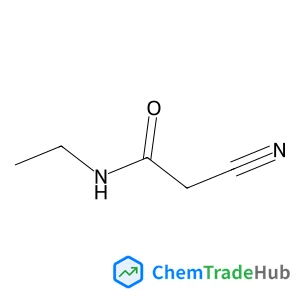
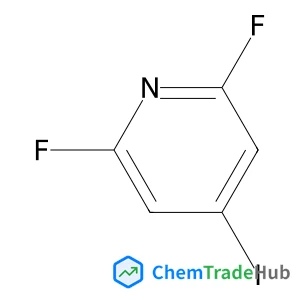
![2,4,5-Trichloro-7H-pyrrolo[2,3-d]pyrimidine structure](https://cnstatic.chemtradehub.com/structs/105/1053228-28-6-fba3.webp "2,4,5-Trichloro-7H-pyrrolo[2,3-d]pyrimidine structure")
推荐供应商





免责声明
本页面提供的学术期刊信息仅供参考和研究使用。我们与任何期刊出版商均无关联,也不处理投稿事宜。如有投稿相关咨询,请直接联系相关期刊出版商。
如发现页面信息有误,请发送邮件至 support@chemtradehub.com 联系我们。我们将及时核实并处理您的问题。