



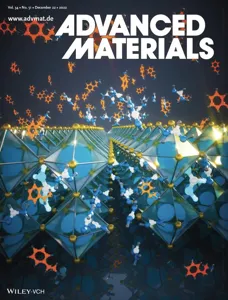
Fe–N–C electrocatalysts in the oxygen and nitrogen cycles in alkaline media: the role of iron carbide‡
文献信息
发布日期
2021-10-01
DOI
10.1039/D1CP03650E
影响因子
3.676
作者
Tomer Y. Burshtein, Denial Aias, Jin Wang, Matan Sananis, Eliyahu M. Farber, Oz M. Gazit, Ilya Grinberg, David Eisenberg
查看原文
摘要
Fe–N–C electrocatalysts hold a great promise for Pt-free energy conversion, driving the electrocatalysis of oxygen reduction and evolution, oxidation of nitrogen fuels, and reduction of N2, CO2, and NOx. Nevertheless, the catalytic role of iron carbide, a component of nearly every pyrolytic Fe–N–C material, is at the focus of a heated controversy. We now resolve the debate by examining a broad range of Fe3C sites, spanning across many typical size distributions and carbon environments. Removing Fe3C selectively by a non-oxidizing acid reveals its inactivity towards two representative reactions in alkaline media, oxygen reduction and hydrazine oxidation. The activity is assigned to other pre-existing sites, most probably Fe–Nx. DFT calculations prove that the Fe3C surface binds O and N intermediates too strongly to be catalytic. By settling the argument on the catalytic role of Fe3C in alkaline electrocatalysis, we hope to spur innovation in this critical field.
相关文献
Giant strain geared to transformable H-bonded network in compressed β-d-mannose
Ewa Patyk, Anna Jenczak, Andrzej Katrusiak
2016-03-21
Paper
DOI: 10.1039/C6CP01286H
Exploring the mechanism of water-splitting reaction in NiOx/β-Ga2O3 photocatalysts by first-principles calculations
Xin Zhou, Hao Dong, Ai-Min Ren
2016-03-22
Paper
DOI: 10.1039/C5CP07260C
Effects of carbon vacancies on the structures, mechanical properties, and chemical bonding of zirconium carbides: a first-principles study
2016-03-30
Paper
DOI: 10.1039/C5CP07724A
Vibronic coupling in the excited-states of carotenoids
Takeshi Miki, Tiago Buckup, Marie S. Krause, June Southall, Richard J. Cogdell, Marcus Motzkus
2016-03-23
Paper
DOI: 10.1039/C5CP07542D
CdSe-sensitized branched CdS hierarchical nanostructures for efficient photoelectrochemical solar hydrogen generation
Zonghu Han, Meng Wang, Xiangyan Chen, Shaohua Shen
2016-03-29
Paper
DOI: 10.1039/C6CP00692B
Probing the thermal stability and the decomposition mechanism of a magnesium–fullerene polymer via X-ray Raman spectroscopy, X-ray diffraction and molecular dynamics simulations
Matteo Aramini, Johannes Niskanen, Daniele Pontiroli, Abdurrahman Musazay, Michael Krisch, Mikko Hakala, Simo Huotari
2016-01-13
Paper
DOI: 10.1039/C5CP07783D
Electron transport mechanism of bathocuproine exciton blocking layer in organic photovoltaics
Jeihyun Lee, Soohyung Park, Younjoo Lee, Hyein Kim, Dongguen Shin, Junkyeong Jeong, Kwangho Jeong, Sang Wan Cho, Hyunbok Lee, Yeonjin Yi
2016-01-19
Paper
DOI: 10.1039/C5CP07099F
Swelling of ionic microgel particles in the presence of excluded-volume interactions: a density functional approach
Arturo Moncho-Jordá
2016-01-22
Paper
DOI: 10.1039/C5CP07794J
Theoretical predictions of structures in dispersions containing charged colloidal particles and non-adsorbing polymers
Fei Xie, Martin Turesson, Clifford E. Woodward, Kitty van Gruijthuijsen, Anna Stradner, Jan Forsman
2016-03-30
Paper
DOI: 10.1039/C5CP07814H
Electrochemical synthesis of poly(3-aminophenylboronic acid) in ethylene glycol without exogenous protons
Feifan Wang, Feixue Zou, Xinxin Yu, Zhenyu Feng, Na Du, Yaohua Zhong
2016-03-11
Paper
DOI: 10.1039/C6CP00800C
您可能还喜欢
化合物问答
3 - (二氟甲基)-1 -氟苯(CAS号:26029-52-7)适用哪些法规指南?
3 - (二氟甲基)-1 -氟苯需遵循联合国全球化学品统一分类和标签制度(GHS),包括急性毒性、皮肤腐蚀/刺激、严重眼损伤/眼刺激等分类。同时,该化合物还需符...
26029-52-71-(Difluoromethyl)-3...
化合物问答
3,5-二甲基苯胺(CAS号:108-69-0)通常如何合成?
3,5-二甲基苯胺通常通过乙苯的氨解反应合成。反应中使用硫酸作为催化剂,反应温度为120-130°C。乙苯在硫酸存在下与氨反应,生成3,5-二甲基苯胺和苯胺副产...
108-69-03,5-Dimethylaniline
化合物问答
3-甲基异噻唑-5-胺(CAS号:24340-76-9)安全吗?
3-甲基异噻唑-5-胺在适当使用和储存条件下是相对安全的,但在操作时应注意防护措施。应避免吸入粉尘,避免与皮肤和眼睛直接接触。在操作过程中,应穿戴适当的防护装备...
24340-76-93-Methyl-1,2-thiazol...
化合物问答
3-(1,3-Thiazol-2-yl)-1H-indole(CAS号:135531-86-1)通常如何合成?
3-(1,3-噻唑-2-基)-1H-吲哚通常通过多步合成方法制备。首先,由噻唑-2-基溴化物和吲哚进行偶联反应,得到中间体。然后,通过还原反应将中间体转化为所需...
135531-86-13-(1,3-Thiazol-2-yl)...
化合物问答
4-溴-2-氟苯甲基氯(CAS号:85510-82-3)的主要用途是什么?
4-溴-2-氟苯甲基氯主要用于有机合成中间体,特别是在医药、农药和染料等领域。作为一种具有特定结构的化合物,它在合成复杂有机分子时扮演重要角色。
85510-82-34-Bromo-1-(chloromet...
化合物问答
处理Fmoc-β-(3-噻吩基)-D-Ala-OH(CAS号:220497-90-5)时应注意哪些实验室安全事项?
处理Fmoc-β-(3-噻吩基)-D-Ala-OH时,应佩戴防护手套、护目镜和实验服。操作应在通风橱内进行。如发生泄露,应立即用大量水冲洗,并通知实验室管理人员...
220497-90-5N-[(9H-Fluoren-9-ylm...
化合物问答
氮化硅(CAS号:12033-89-5)通常如何合成?
氮化硅通常通过氮化硅的直接反应合成,即在高温下将四氯化硅与氨气反应。具体步骤是将四氯化硅和氨气混合并加热至1300-1700℃,在该条件下,四氯化硅与氨气反应生...
12033-89-5Trisilicon tetranitr...
化合物问答
Cetirizine EP Impurity B DiHCl(CAS号:1000690-91-4)通常如何合成?
Cetirizine EP Impurity B DiHCl通常通过一锅法合成,首先将4-氯苯基-苯甲基氯甲酸酯与1-哌嗪乙酸反应,生成相应的酸,然后与盐酸反应...
1000690-91-4{4-[(4-Chlorophenyl)...
化合物问答
如何储存1-哌啶-4-基丁-1-酮(CAS号:3509-15-7)?
1-哌啶-4-基丁-1-酮应储存在阴凉、干燥的地方,避免阳光直射。存储容器应密封,并确保通风良好。建议储存温度不超过25℃,湿度保持在相对较低的水平。
3509-15-71-Piperidin-4-ylbuta...
化合物问答
如何处理含有VORUCICLIB(CAS号:1000023-04-0)的废料?
含有VORUCICLIB的废料应进行专业的收集和处理,包括使用适当的容器进行隔离,避免与其他化学品接触。处理方法通常包括化学中和、沉淀反应或吸附过程,随后进行焚...
1000023-04-02-[2-Chloro-4-(trifl...
来源期刊
Physical Chemistry Chemical Physics

CiteScore:
5.5
自引率:
10.3%
年发文量:
3036
Physical Chemistry Chemical Physics (PCCP) is an international journal co-owned by 19 physical chemistry and physics societies from around the world. This journal publishes original, cutting-edge research in physical chemistry, chemical physics and biophysical chemistry. To be suitable for publication in PCCP, articles must include significant innovation and/or insight into physical chemistry; this is the most important criterion that reviewers and Editors will judge against when evaluating submissions. The journal has a broad scope and welcomes contributions spanning experiment, theory, computation and data science. Topical coverage includes spectroscopy, dynamics, kinetics, statistical mechanics, thermodynamics, electrochemistry, catalysis, surface science, quantum mechanics, quantum computing and machine learning. Interdisciplinary research areas such as polymers and soft matter, materials, nanoscience, energy, surfaces/interfaces, and biophysical chemistry are welcomed if they demonstrate significant innovation and/or insight into physical chemistry. Joined experimental/theoretical studies are particularly appreciated when complementary and based on up-to-date approaches.
推荐化合物
![2,6-Di(thiophen-2-yl)dithieno[3,2-b:2',3'-d]thiophene structure](https://cnstatic.chemtradehub.com/structs/910/910788-24-8-5b70.webp "2,6-Di(thiophen-2-yl)dithieno[3,2-b:2',3'-d]thiophene structure")
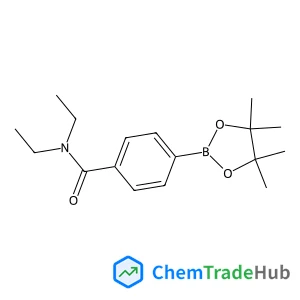
N,N-Diethyl-4-(4,4,5,5-tetramethyl-1,3,2-dioxaborolan-2-yl)benzamide
CAS号:
325142-99-2
分子式:
C17H26BNO3
![5-Methyl-4,5,6,7-tetrahydropyrazolo[1,5-a]pyrazin-2-amine structure](https://cnstatic.chemtradehub.com/structs/122/1227210-33-4-8d64.webp "5-Methyl-4,5,6,7-tetrahydropyrazolo[1,5-a]pyrazin-2-amine structure")
推荐供应商





免责声明
本页面提供的学术期刊信息仅供参考和研究使用。我们与任何期刊出版商均无关联,也不处理投稿事宜。如有投稿相关咨询,请直接联系相关期刊出版商。
如发现页面信息有误,请发送邮件至 support@chemtradehub.com 联系我们。我们将及时核实并处理您的问题。