


A mechanistic study on the regioselective Ni-catalyzed methylation–alkenylation of alkyne with AlMe3 and allylic alcohol
文献信息
发布日期
2021-11-17
DOI
10.1039/D1QO01580J
影响因子
5.281
作者
Jiao Liu, Deguang Liu, Wan Nie, Haizhu Yu, Jing Shi
查看原文
摘要
The recently reported Ni-catalyzed methylation–allylation of alkynes with allylic alcohols and AlMe3 reagents delivers valuable tetrasubstituted alkene units in a highly regioselective fashion. Motivated by the experimental significance and the mechanistic ambiguity (e.g. the details of C–O bond activation, the function of the Lewis acid AlMe3, etc.), we conducted a detailed mechanistic study using density functional theory (DFT) calculations. The reaction was found to occur via the C–O bond activation of allylic alcohol, allylation of alkyne, transmetalation, reductive elimination and catalyst regeneration steps. AlMe3 could easily react with the allylic alcohol to form a cyclodialuminoxane species bearing two groups of Lewis acid–base interactions. In this regard, the C(allyl)–O bond is remarkably activated, resulting in a relatively facile C–O activation (compared to the typical Lewis-acid mediated reactions). In addition, the Al–Me interaction is a double-edged sword to the methylation step: the cyclodialuminoxane group functions as the methyl resource, while the full dissociation of the Al–Me interaction (via a cis-to-trans isomerization) is a requisite to fully release the methyl group. In this context, the “Me-relay” pathway involving the [Ni]–Me intermediate is found to be more plausible than all other mechanistic possibilities (such as the typical concerted Me-transfer mechanism in previous studies).
期刊推荐
Chinese Journal of Chemistry

Journal of Asian Natural Products Research

Critical Reviews in Solid State and Materials Sciences
Herald of the Russian Academy of Sciences
Electroanalysis

Bioorganic & Medicinal Chemistry Letters
Polycyclic Aromatic Compounds

Cellulose
Bioorganic & Medicinal Chemistry

Journal of the Indian Institute of Science
相关文献
Chemiluminescence molecular probe with a linear chain reaction amplification mechanism
Samer Gnaim, Doron Shabat
2019-01-21
Communication
DOI: 10.1039/C8OB03042A
One-pot stapling of interchain disulfides of antibodies using an isobutylene motif
Shuang Sun, Padma Akkapeddi, Nuria Martínez-Sáez, Vukosava M. Torres, Carlos Cordeiro, Omar Boutureira
2018-12-10
Paper
DOI: 10.1039/C8OB02877J
Rh-Catalyzed nitrene alkyne metathesis/formal C–N bond insertion cascade: synthesis of 3-iminoindolines
Kemiao Hong, Su Zhou, Wenhao Hu
2020-04-08
Research Article
DOI: 10.1039/D0QO00294A
The key role of protodeauration in the gold-catalyzed reaction of 1,3-diynes with pyrrole and indole to form complex heterocycles
Ioannis Stylianakis, Antonios Kolocouris
2020-03-17
Research Article
DOI: 10.1039/C9QO01544B
Palladium-catalyzed enantioselective [5 + 4] annulation of ortho-quinone methides and vinylethylene carbonates
Chao Xia, Dong-Chao Wang, Gui-Rong Qu
2020-05-08
Research Article
DOI: 10.1039/D0QO00128G
Recent developments in palladium-catalyzed C–S bond formation
Jianxiao Li, Shaorong Yang, Wanqing Wu, Huanfeng Jiang
2020-04-22
Review Article
DOI: 10.1039/D0QO00377H
Hydroaminoalkylation of sterically hindered alkenes with N,N-dimethyl anilines using a scandium catalyst
Jianhong Su, Yiqun Zhou, Xin Xu
2018-12-10
Paper
DOI: 10.1039/C8OB02657B
Palladium-catalyzed cross-coupling of (hetero)aryl or alkenyl sulfonates with aryl titanium as the multi-functional reagent
2020-03-03
Research Article
DOI: 10.1039/C9QO01537J
Synthesis and biological evaluation of fluorinated analogues of ripostatin A
Vladyslav Shenderman
2018-12-10
Communication
DOI: 10.1039/C8OB02890G
Palladium-catalyzed double carbonylation of propargyl amines and aryl halides to access 1-aroyl-3-aryl-1,5-dihydro-2H-pyrrol-2-ones
Jun Ying, Zhengjie Le, Zhi-Peng Bao
2020-03-24
Research Article
DOI: 10.1039/D0QO00007H
您可能还喜欢
化合物问答
如何处理含有8-氯咪唑并[1,2-A]吡嗪(CAS号:69214-33-1)的废料?
处理含有8-氯咪唑并[1,2-A]吡嗪的废料时,应首先将其收集并进行化学回收或降解。如果无法回收,需采用安全的化学处理方法,如中和、氧化还原或沉淀。处理过程中需...
69214-33-18-chloroimidazo[1,2-...
化合物问答
Calhex 231 hydrochloride(CAS号:2387505-78-2)适用哪些法规指南?
Calhex 231 hydrochloride 需要遵循《全球化学品统一分类和标签制度》(GHS)的分类和标签要求,以及欧盟的《化学品注册、评估、授权和限制条...
2387505-78-24-Chloro-N-[(1S,2S)-...
化合物问答
11-Beta,17-alpha,21-三羟基-5-beta-孕烯-3,20-二酮(CAS号:1482-50-4)的物理化学性质是什么?
11-Beta,17-alpha,21-三羟基-5-beta-孕烯-3,20-二酮是一种无色结晶性粉末,分子量为372.45 g/mol。该化合物在水中的溶解度...
1482-50-45β-Dihydrocortisol
化合物问答
处理5-异丙基-1,3,4-恶二唑-2-羧酸(CAS号:944907-13-5)时应注意哪些实验室安全事项?
处理5-异丙基-1,3,4-恶二唑-2-羧酸时应注意以下安全事项:穿戴适当的个人防护装备,包括实验室外套、手套和护目镜;操作应在通风橱中进行,以减少吸入或接触有...
944907-13-55-Isopropyl-1,3,4-ox...
化合物问答
benzyl 3-bromopropanoate(CAS号:90841-55-7)安全吗?
Benzyl 3-bromopropanoate属于有毒物质,吸入、摄入或皮肤接触均可能对人体造成伤害。操作时应佩戴防护眼镜、口罩和手套,避免吸入蒸汽和直接接触...
90841-55-7Benzyl 3-bromopropan...
化合物问答
什么是(R)-N-苄氧羰基-3,4-二氢-1H-异喹啉羧酸(CAS号:151004-88-5)?
(R)-N-苄氧羰基-3,4-二氢-1H-异喹啉羧酸是一种含有苄氧羰基和异喹啉环结构的化合物,分子式为C17H15NO3。它是一种有机化合物,具有一定的生物活性...
151004-88-5(1R)-2-[(Benzyloxy)c...
化合物问答
在合成中是否有1-苄基吡啶嗡-3-羧酸盐(CAS号:15990-43-9)的替代品?
可以考虑使用1-苄基吡啶-3-羧酸盐作为1-苄基吡啶嗡-3-羧酸盐的替代品。此外,还可以探索其他类似物,如1-苄基吡啶-3-氨基甲酸酯等。具体的替代品选择需根据...
15990-43-91-Benzyl-3-pyridiniu...
化合物问答
(2,6-二甲基吡啶-3-基)甲醇(CAS号:582303-10-4)安全吗?
(2,6-二甲基吡啶-3-基)甲醇在使用时需注意安全,应避免吸入其蒸汽,接触皮肤和眼睛。操作应在通风良好的环境中进行,佩戴适当的个人防护装备。
582303-10-4(2,6-Dimethyl-3-pyri...
化合物问答
5-溴-2-乙烯基吡啶(CAS号:226883-52-9)的物理化学性质是什么?
5-溴-2-乙烯基吡啶是一种有机化合物,外观为白色固体,具有良好的结晶性。分子量约为190.03 g/mol。它的溶解性在水中较差,但在有机溶剂如二氯甲烷、甲醇...
226883-52-95-Bromo-2-vinylpyrid...
化合物问答
2-羟基-3-硝基-5-甲基吡啶(CAS号:7464-14-4)应用于哪些行业?
2-羟基-3-硝基-5-甲基吡啶主要应用于医药、聚合物和半导体行业。在医药领域,它可以用作合成其他药物的中间体。在聚合物领域,它可以作为功能性单体参与聚合反应,...
7464-14-45-Methyl-3-nitro-2(1...
来源期刊
Organic Chemistry Frontiers
CiteScore:
7.8
自引率:
8.7%
年发文量:
724
Organic Chemistry Frontiers publishes high-quality research from across organic chemistry. Emphases are placed on studies that make significant contributions to the field of organic chemistry by reporting either new or significantly improved protocols or methodologies. Topics include, but are not limited to the following: Organic synthesis Development of synthetic methodologies Catalysis Natural products Functional organic materials Supramolecular and macromolecular chemistry Physical and computational organic chemistry
推荐化合物
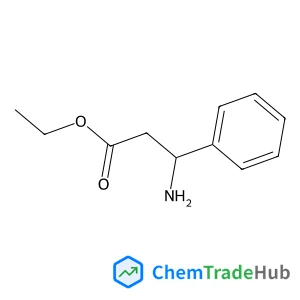
![Ethyl 3-((6-(4,5-dihydro-1H-benzo[d]azepin-3(2H)-yl)-2-(pyridin-2-yl)pyrimidin-4-yl)amino)propanoate structure](https://cnstatic.chemtradehub.com/structs/137/1373423-53-0-496a.webp "Ethyl 3-((6-(4,5-dihydro-1H-benzo[d]azepin-3(2H)-yl)-2-(pyridin-2-yl)pyrimidin-4-yl)amino)propanoate structure")
推荐供应商




免责声明
本页面提供的学术期刊信息仅供参考和研究使用。我们与任何期刊出版商均无关联,也不处理投稿事宜。如有投稿相关咨询,请直接联系相关期刊出版商。
如发现页面信息有误,请发送邮件至 support@chemtradehub.com 联系我们。我们将及时核实并处理您的问题。