




![[5-fluoro-2-(morpholine-4-carbonyl)phenyl]boronic acid structure](https://cnstatic.chemtradehub.com/structs/121/1217501-26-2-505c.webp "[5-fluoro-2-(morpholine-4-carbonyl)phenyl]boronic acid structure")
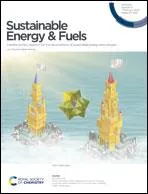
Thermogalvanic energy harvesting from forced convection cooling of 100–200 °C surfaces generating high power density
文献信息
发布日期
2021-09-24
DOI
10.1039/D1SE01264A
影响因子
6.367
作者
Yutaka Ikeda, Yuki Cho
查看原文
摘要
Electrical power recovery from waste heat released during active cooling of 100–200 °C solids is of great importance because such situations are common in our world. However, the concept of simultaneous liquid cooling and electric power generation has been barely explored, apart from a few preliminary studies that showed power generation densities of only 0.05–0.5 W m−2. Here, we report a realistically useful power generation density of 10 W m−2 during liquid forced convection cooling of a 170 °C surface, thus demonstrating the feasibility of such a concept, based on thermogalvanic conversion with a redox couple. This was achieved by exploiting the fluid dynamics based on a microchannel concept, where a thin thermal boundary layer is formed on the hot surface, enabling both high cooling efficiency and large interelectrode temperature difference (>100 K). A new γ-butyrolactone-based high density electrolyte with sufficient stability against flame contact was used. Our combined cooling and thermogalvanic cell was able to continuously light LEDs and run air fans despite the small electrode area. Large values of heat transfer coefficient, up to 1160 W m−2 K−1, were achieved. At all flow rates tested, the electrical power obtained was 10 to 1000 times larger than the hydrodynamic pumping work required to force the liquid through the cell, that is, gain ≫1. Thus, this technological concept has been shown, for the first time, to be a feasible option to recover electrical power from the waste heat released during cooling of 100–200 °C surfaces, which are widespread in our world.
相关文献
New organic–inorganic hybrid microporous organosilica having high metal ion adsorption capacity
Manidipa Paul, Nabanita Pal, P. R. Rajamohanan, Bharat S. Rana, Anil K. Sinha, Asim Bhaumik
2010-07-07
Paper
DOI: 10.1039/B925619A
Nature and role of surface carbonates and bicarbonates in COoxidation over RuO2
Hangyao Wang
2010-04-28
Paper
DOI: 10.1039/C001683G
Unraveling the similarity of the photoabsorption of deprotonated p-coumaric acid in the gas phase and within the photoactive yellow protein
Tomás Rocha-Rinza, Kristian Sneskov, Ove Christiansen, Ulf Ryde, Jacob Kongsted
2010-12-06
Paper
DOI: 10.1039/C0CP01075H
Experimental and theoretical determination of adsorption heats of CO2 over alkali metal exchanged ferrierites with different Si/Al ratio
Arnošt Zukal, Angeles Pulido, Barbara Gil, Petr Nachtigall, Ota Bludský, Miroslav Rubeš, Jiří Čejka
2010-03-30
Paper
DOI: 10.1039/C001950J
Six-dimensional dynamics study of reactive and non reactive scattering of H2 from Cu(111) using a chemically accurate potential energy surface
C. Díaz, R. A. Olsen, D. J. Auerbach, G. J. Kroes
2010-05-15
Paper
DOI: 10.1039/C001956A
Hydroxyapatite as a key biomaterial: quantum-mechanical simulation of its surfaces in interaction with biomolecules
Marta Corno, Albert Rimola, Vera Bolis, Piero Ugliengo
2010-05-18
Perspective
DOI: 10.1039/C002146F
In situ formation of silvernanostructures produced via laser irradiation within sol–gel derived films and their interaction with a fluorescence tagged protein
Graham Hungerford, Marion Toury, David McLoskey, Scott Finnigan, Shaun Gellie, A. Sheila Holmes-Smith
2010-09-22
Paper
DOI: 10.1039/C0CP01081B
Differences in structure, energy, and spectrum between neutral, protonated, and deprotonated phenol dimers: comparison of various density functionals with ab initio theory
Maciej Kołaski, Anupriya Kumar, N. Jiten Singh, Kwang S. Kim
2010-11-09
Paper
DOI: 10.1039/C003008B
您可能还喜欢
化合物问答
4-[[6-(3-苯基苯基)-7H-嘌呤-2-基]氨基]苯磺酰胺(CAS号:2079895-42-2)适用哪些法规指南?
该化合物需遵循REACH法规以确保其安全使用和管理。同时,根据其潜在的生物降解性和毒性,也需要符合GHS分类中的相应要求。此外,若用于医药或食品相关领域,则还需...
2079895-42-24-{[6-(3-Biphenylyl)...
化合物问答
反式-度骨化醇(CAS号:74007-20-8)的物理化学性质是什么?
反式-度骨化醇是一种脂溶性维生素D3的衍生物,呈无色或白色结晶性粉末,不溶于水,溶于乙醇、丙酮、氯仿等有机溶剂。其分子式为C28H44O,分子量为404.65。...
74007-20-8trans-Doxercalcifero...
化合物问答
莲花掌苷(CAS号:59282-56-3)的市场或研究趋势如何?
莲花掌苷作为一种天然产物,近年来在抗炎、抗癌等生物活性研究方面显示出一定的潜力,因此市场需求逐渐增长。市场动态方面,随着天然产物开发的深入,预计该化合物的研究会...
59282-56-3Lindleyin
化合物问答
2-溴-6-(吡咯烷-1-基)吡啶-4-硼酸频那醇酯(CAS号:1150271-64-9)应用于哪些行业?
2-溴-6-(吡咯烷-1-基)吡啶-4-硼酸频那醇酯在医药领域有着广泛的应用,它可以用作药物合成中的中间体。此外,它还可以用于有机合成,特别是在构建复杂杂环化合...
1150271-64-92-Bromo-6-(1-pyrroli...
化合物问答
什么是methyl 2-(4-bromophenyl)-3-methylbutanoate(CAS号:1061284-70-5)?
methyl 2-(4-溴苯基)-3-甲基丁酸甲酯是一种化学物质,分子式为C12H13BrO2。它是一种有机化合物,具有一定的挥发性和易燃性。
1061284-70-52-(4-Bromo-phenyl)-3...
化合物问答
CJC1-295(CAS号:863288-34-0)的物理化学性质是什么?
CJC1-295是一种具有复杂肽链结构的化合物,其分子量约为1875 Da。该化合物在水中具有一定的溶解性,但在有机溶剂中的溶解性不佳。它是一种反应活性化合物,...
863288-34-0L-tyrosyl-D-alanyl-L...
化合物问答
三正丁基锍碘(CAS号:18146-62-8)的市场或研究趋势如何?
三正丁基锍碘作为一种重要的有机硫化合物,主要用于有机合成中作为亲电试剂。近年来,由于其在合成中的广泛应用,市场对其需求持续增长。此外,随着绿色化学的发展,对其替...
18146-62-8Tributylsulfonium io...
化合物问答
雌二醇-[13C3]同位素内标(CAS号:1261254-48-1)通常如何合成?
雌二醇-[13C3]同位素内标通常通过在雌二醇分子中引入[13C3]同位素来合成。常见的方法是通过化学标记反应,如与[13C3]标记的甲基溴化物进行亲核取代反应...
1261254-48-117beta-Estradiol-2,3...
化合物问答
N1-(2-吡啶甲基)-N2-(2-甲基-1-萘基)草酰胺(CAS号:2611225-93-3)的物理化学性质是什么?
N1-(2-吡啶甲基)-N2-(2-甲基-1-萘基)草酰胺为固体化合物,具有良好的结晶形态,分子量为340.34 g/mol。该化合物在水中的溶解度较低,但在有...
2611225-93-3N-(2-Methyl-1-naphth...
化合物问答
如何处理含有十五碳烯酸甲酯(顺-10)(C15:1)标准品(CAS号:90176-52-6)的废料?
含有十五碳烯酸甲酯(顺-10)(C15:1)标准品的废料应首先进行适当收集和储存,避免与其他化学品混合。然后,可采用焚烧或交由专业废物处理公司进行处理。处理过程...
90176-52-6(Z)-10-Pentadecenoic...
来源期刊
推荐化合物
![tert-Butyl 6-chloro-4-oxospiro[chroman-2,4'-piperidine]-1'-carboxylate structure](https://cnstatic.chemtradehub.com/structs/101/1011482-37-3-88a5.webp "tert-Butyl 6-chloro-4-oxospiro[chroman-2,4'-piperidine]-1'-carboxylate structure")
tert-Butyl 6-chloro-4-oxospiro[chroman-2,4'-piperidine]-1'-carboxylate
CAS号:
1011482-37-3
分子式:
C18H22ClNO4
![[(5-Methyl-1,3,4-thiadiazol-2-yl)sulfanyl]acetic acid structure](https://cnstatic.chemtradehub.com/structs/509/50918-26-8-4ce8.webp "[(5-Methyl-1,3,4-thiadiazol-2-yl)sulfanyl]acetic acid structure")
推荐供应商





免责声明
本页面提供的学术期刊信息仅供参考和研究使用。我们与任何期刊出版商均无关联,也不处理投稿事宜。如有投稿相关咨询,请直接联系相关期刊出版商。
如发现页面信息有误,请发送邮件至 support@chemtradehub.com 联系我们。我们将及时核实并处理您的问题。