


Characterization of freeze-dried oxidized human red blood cells for pre-transfusion testing by synchrotron FTIR microspectroscopy live-cell analysis
文献信息
发布日期
2023-03-07
DOI
10.1039/D2AN02001G
影响因子
4.616
作者
Diana Alves, Jitraporn Vongsvivut, Rosemary L. Sparrow, Bayden R. Wood, Gil Garnier
查看原文
摘要
Oxidative treatment of human red blood cells (RBCs) prior to freeze-drying appears to stabilize the RBCs to withstand dried storage at room temperature. To better understand the effects of oxidation and freeze-drying/rehydration on RBC lipids and proteins, single-cell measurements were performed by synchrotron-based Fourier transform infrared (FTIR) microspectroscopy ‘live-cell’ (unfixed) analysis. Lipid and protein spectral data of tert-butyl hydroperoxide (TBHP)-oxidized RBCs (oxRBCs), FDoxRBCs and control (untreated) RBCs were compared using principal component analysis (PCA) and band integration ratios. The oxRBCs and FDoxRBCs samples had similar spectral profiles that were clearly different to control RBCs. Spectral changes in the CH stretching region of oxRBCs and FDoxRBCs indicated the presence of increased saturated and shorter-chain lipids, consistent with lipid peroxidation and stiffening of the RBC membrane compared to control RBCs. The PCA loadings plot for the fingerprint region of control RBCs corresponding to the α-helical structure of hemoglobin, shows that oxRBCs and FDoxRBCs have conformational changes in the protein secondary structure to β-pleated sheets and β-turns. Finally, the freeze-drying process did not appear to compound or induce additional changes. In this context, FDoxRBCs could become a stable source of reagent RBCs for pre-transfusion blood serology testing. The synchrotron FTIR microspectroscopic live-cell protocol provides a powerful analytical tool to characterize and contrast the effects of different treatments on RBC chemical composition at the single cell level.
期刊推荐
Australian Journal of Chemistry
Ferroelectrics
Accounts of Chemical Research
Canadian Metallurgical Quarterly
Bulletin of the Chemical Society of Japan
Advances in Colloid and Interface Science
Chemical Reviews

Chemical & Pharmaceutical Bulletin
Chemistry of Heterocyclic Compounds
Anti-Corrosion Methods and Materials
相关文献
Carbenium ion formation by fragmentation of electrochemically generated oxonium ions
Anna Lielpetere, Aigars Jirgensons
2018-06-27
Communication
DOI: 10.1039/C8OB01339J
Copper-catalyzed [1,3]-alkoxy rearrangement for the selective synthesis of polycyclic ortho-aminoarenol derivatives
Itaru Nakamura, Satoru Nozawa, Yasuhiro Ishida, Ichiro Muranushi, Alexandra Mayerweg, Masahiro Terada
2021-09-18
Research Article
DOI: 10.1039/D1QO01189H
Ru(ii)-Catalyzed C7-acyloxylation of indolines with carboxylic acids
Pinaki Bhusan De, Sonbidya Banerjee, Sourav Pradhan, Tharmalingam Punniyamurthy
2018-07-30
Paper
DOI: 10.1039/C8OB01603H
An MeSeSO3Na reagent for oxidative aminoselenomethylation of maleimides
Yujing Yao, Wenliang Zhang
2021-09-14
Research Article
DOI: 10.1039/D1QO01252E
Ru(ii)-Catalyzed C–H activation/annulation reactions of N-aryl-pyrazolidinones with sulfoxonium ylides: synthesis of cinnoline-fused pyrazolidinones
Hai-Shan Jin, Ya-Zhen Du, Qing-Yang Zhao, Li-Ming Zhao
2021-09-13
Research Article
DOI: 10.1039/D1QO01001H
Grob-type fragmentation of an oxonium ylide generated from α-imino rhodium carbene
Tao Chen, Zhenxing Yan, Shengguo Duan, Ze-Feng Xu, Chuan-Ying Li
2021-09-19
Research Article
DOI: 10.1039/D1QO01226F
Iron promoted C3–H nitration of 2H-indazole: direct access to 3-nitro-2H-indazoles
Arumugavel Murugan, Koteswar Rao Gorantla, Bhabani S. Mallik, Duddu S. Sharada
2018-07-06
Communication
DOI: 10.1039/C8OB00931G
Two bifunctional desferrioxamine chelators for bioorthogonal labeling of biovectors with zirconium-89
F. Gao, C. Ieritano, K.-T. Chen, G. M. Dias, J. Rousseau, Y. Seimbille
2018-07-02
Communication
DOI: 10.1039/C8OB01434E
Chemoenzymatic macrocycle synthesis using resorcylic acid lactone thioesterase domains
Graham W. Heberlig, Jesse T. C. Brown, Ryan D. Simard, Monica Wirz, Wei Zhang, Meng Wang, Leah I. Susser, Mark E. Horsman, Christopher N. Boddy
2018-07-20
Paper
DOI: 10.1039/C8OB01512K
Synthesis of 2-substituted 3-chlorobenzofurans via TMSCl-mediated nucleophilic annulation of isatin-derived propargylic alcohols
Zhou Sun, Kuirong Xiang, Hua Tao, Liqun Guo, Ying Li
2018-08-08
Paper
DOI: 10.1039/C8OB01731J
您可能还喜欢
化合物问答
如何储存1,2-环己二酮环乙缩醛(CAS号:4746-96-7)?
1,2-环己二酮环乙缩醛应储存在阴凉、干燥、通风良好的地方,避免阳光直射。建议使用密封容器保存,并保持环境温度在室温范围内,远离火源和热源。
4746-96-71,4-Dioxaspiro[4.5]d...
化合物问答
Ecopladib(CAS号:381683-92-7)的市场或研究趋势如何?
Ecopladib作为一种新型的药物,主要应用于治疗高胆固醇等疾病。目前,市场和研究趋势显示,Ecopladib因其独特的药理作用而受到关注。随着对心血管疾病治...
381683-92-7Ecopladib
化合物问答
2,3-Dimethyl-3H-imidazo[4,5-c]pyridine(CAS号:52538-09-7)通常如何合成?
2,3-二甲基-3H-咪唑[4,5-c]吡啶通常通过咪唑和2,3-二甲基吡啶的缩合反应合成。具体来说,将咪唑和2,3-二甲基吡啶在适当的溶剂中进行加热或加压反应...
52538-09-72,3-Dimethyl-3H-imid...
化合物问答
2,3,4,5-tetrahydro-1H-3-苯并氮杂环;盐酸盐(CAS号:17379-01-0)的市场或研究趋势如何?
该化合物在药物化学和有机合成中有一定的应用。近年来,随着对新型药物化合物的需求增加,该化合物的研究趋势主要集中在探索其生物活性,尤其是其在神经系统疾病治疗中的潜...
17379-01-02,3,4,5-Tetrahydro-1...
68-90-6(2-Ethyl-1-benzofura...
化合物问答
如何储存盐酸甘氨酸丁酯(CAS号:13048-99-2)?
盐酸甘氨酸丁酯应储存在阴凉、干燥、通风良好的地方,避免阳光直射和高温环境,温度应控制在25℃以下。储存容器应密封,避免与空气中的水分和酸性物质接触,以防发生水解...
13048-99-2Butyl glycinate hydr...
化合物问答
什么是2-Iodo-N,N-dimethylbenzamide(CAS号:54616-46-5)?
2-碘-N,N-二甲基苯胺是一种有机化合物,化学名为2-Iodo-N,N-dimethylbenzamide。其分子式为C<sub>9</sub>H<sub>1...
54616-46-52-Iodo-N,N-dimethylb...
16817-90-6N-Cyclohexylglycinam...
化合物问答
5-溴-2-(4H-1,2,4-三唑-4-基)吡啶(CAS号:959240-99-4)的市场或研究趋势如何?
随着医药、农药和新材料领域的发展,该化合物作为关键中间体的应用日益增多。特别是在药物合成中,由于其独特的化学性质,可以用于合成多种药物分子。未来的研究趋势可能集...
959240-99-45-Bromo-2-(4H-1,2,4-...
化合物问答
2,4-二溴-6-三氟甲基嘧啶(CAS号:785778-00-9)通常如何合成?
2,4-二溴-6-三氟甲基嘧啶通常通过溴化反应合成。首先,将6-三氟甲基嘧啶与溴化剂(如液溴)在适当的溶剂(如二氯甲烷、四氢呋喃)中反应,加入适当的催化剂(如四...
785778-00-92,4-Dibromo-6-(trifl...
来源期刊
Analyst

CiteScore:
7.8
自引率:
5.6%
年发文量:
653
Analyst publishes analytical and bioanalytical research that reports premier fundamental discoveries and inventions, and the applications of those discoveries, unconfined by traditional discipline barriers.
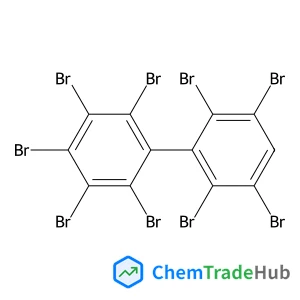
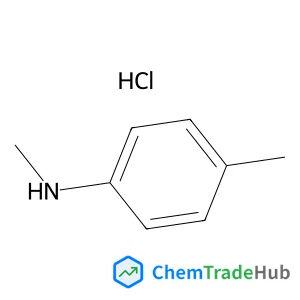
推荐化合物


推荐供应商



免责声明
本页面提供的学术期刊信息仅供参考和研究使用。我们与任何期刊出版商均无关联,也不处理投稿事宜。如有投稿相关咨询,请直接联系相关期刊出版商。
如发现页面信息有误,请发送邮件至 support@chemtradehub.com 联系我们。我们将及时核实并处理您的问题。