



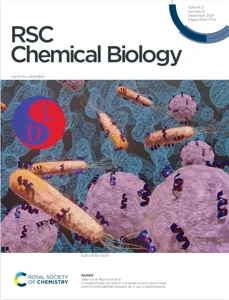

Recalibrating the calcium trap in amino acid carboxyl groups via classical molecular dynamics simulations
文献信息
发布日期
2022-12-05
DOI
10.1039/D2CP02879D
影响因子
3.676
作者
Janou A. Koskamp, Sergio E. Ruiz Hernandez, Mariette Wolthers
查看原文
摘要
In order to use classical molecular dynamics to complement experiments accurately, it is important to use robust descriptions of the system. The interactions between biomolecules, like aspartic and glutamic acid, and dissolved ions are often studied using standard biomolecular force-fields, where the interactions between biomolecules and cations are often not parameterized explicitly. In this study, we have employed metadynamics simulations to investigate different interactions of Ca with aspartic and glutamic acid and constructed the free energy profiles of Ca2+–carboxylate association. Starting from a generally accepted, AMBER-based force field, the association was substantially over and under-estimated, depending on the choice of water model (TIP3P and SPC/fw, respectively). To rectify this discrepancy, we have replaced the default calcium parameters. Additionally, we modified the σij value in the hetero-atomic Lennard-Jones interaction by 0.5% to further improve the interaction between Ca and carboxylate, based on comparison with the experimentally determined association constant for Ca with the carboxylate group of L-aspartic acid. The corrected description retrieved the structural properties of the ion pair in agreement with the original biomolecule – Ca2+ interaction in AMBER, whilst also producing an association constant comparable to experimental observations. This refined force field was then used to investigate the interactions between amino acids, calcium and carbonate ions during biogenic and biomimetic calcium carbonate mineralisation.
相关文献
Oxidative polymerization of catecholamines: structural access by high-resolution mass spectrometry
Christiane Lang, Kathryn E. Fairfull-Smith
2017-04-26
Communication
DOI: 10.1039/C7PY00506G
Fabrication of water dispersible and biocompatible AIE-active fluorescent polymeric nanoparticles through a “one-pot” Mannich reaction
Guangjian Zeng, Meiying Liu, Ruming Jiang, Qiang Huang, Long Huang, Qing Wan, Yanfeng Dai, Yuanqing Wen, Xiaoyong Zhang, Yen Wei
2017-07-13
Paper
DOI: 10.1039/C7PY00884H
Circularly polarized luminescence based chirality transfer of the chiral BINOL moiety via rigid π-conjugation chain backbone structures
Fandian Meng, Yunzhi Li, Wenjie Zhang, Shuhua Li, Yiwu Quan, Yixiang Cheng
2017-01-30
Paper
DOI: 10.1039/C6PY02218A
A straightforward approach for one-pot synthesis of noncovalently connected graft copolymers with unique self-assembly nanostructures
Liang Ding, Wei Song, Ruiyu Jiang, Lei Zhu
2016-10-24
Paper
DOI: 10.1039/C6PY01509C
Quantitative end-group functionalization of PNIPAM from aqueous SET-LRP via in situ reduction of Cu(ii) with NaBH4
Mikhail Gavrilov, Zhongfan Jia, Virgil Percec, Michael J. Monteiro
2016-06-27
Paper
DOI: 10.1039/C6PY00968A
Sol–gel reversible metallo-supramolecular hydrogels based on a thermoresponsive double hydrophilic block copolymer
Maël Le Bohec, Manon Banère, Sandie Piogé, Sagrario Pascual, Lazhar Benyahia, Laurent Fontaine
2016-10-19
Paper
DOI: 10.1039/C6PY01639A
The synergistic effect during biphasic SET-LRP in ethanol–nonpolar solvent–water mixtures
Mojtaba Enayati, Rauan B. Smail, Silvia Grama, Ryan L. Jezorek, Michael J. Monteiro, Virgil Percec
2016-11-08
Paper
DOI: 10.1039/C6PY01815G
Amphipathic metal-containing macromolecules with photothermal properties
Xumin He, Xiehua He, Shenyan Li, Kaiyue Zhuo, Weixiang Qin, Shuyu Dong, Jiangxi Chen, Lei Ren, Gang Liu, Haiping Xia
2017-05-15
Communication
DOI: 10.1039/C7PY00641A
Molecular weight prediction with no dependence on solvent viscosity. A quantitative pulse field gradient diffusion NMR approach
Francisco M. Arrabal-Campos, Pascual Oña-Burgos
2016-06-06
Communication
DOI: 10.1039/C6PY00691D
您可能还喜欢
化合物问答
甲基双烯双酮(CAS号:5173-46-6)通常如何合成?
甲基双烯双酮可以通过多种途径合成。一种常见的合成方法是通过甲基化和环化反应,先由4-甲基-9-烯-1,3-二酮合成,然后进行环化反应得到目标产物。具体的合成路线...
5173-46-6Estra-4,9-diene-3,17...
化合物问答
如何处理含有tert-butyl 3,5-difluorobenzoate(CAS号:467442-11-1)的废料?
处理含有tert-butyl 3,5-difluorobenzoate(CAS号:467442-11-1)的废液时,应首先收集并密封,避免泄漏。随后,建议通过焚...
467442-11-12-Methyl-2-propanyl ...
化合物问答
4-二甲氧基甲基-2-(三氟甲基)嘧啶(CAS号:878760-47-5)通常如何合成?
4-二甲氧基甲基-2-(三氟甲基)嘧啶通常通过三氟甲基化反应合成。首先,将2-氯嘧啶与三氟甲基锂在惰性溶剂中反应,然后将得到的三氟甲基化中间体与二甲氧基甲基化试...
878760-47-54-(Dimethoxymethyl)-...
化合物问答
WRW4(CAS号:878557-55-2)的主要用途是什么?
WRW4主要应用于科学研究领域,尤其是在合成化学和有机合成方面。由于其特殊的化学性质,它可能被用于特定的化学反应或合成过程。
878557-55-2WRW4
化合物问答
什么是6-O-(三异丙基硅基)-D-葡萄烯糖(CAS号:137915-37-8)?
6-O-(三异丙基硅基)-D-葡萄烯糖是一种有机化合物,化学名为1,5-Anhydro-2-deoxy-6-O-(triisopropylsilyl)-D-ar...
137915-37-81,5-Anhydro-2-deoxy-...
化合物问答
N-Benzyl-N,N-dimethyl-2-phenoxyethanaminium(CAS号:7181-73-9)的主要用途是什么?
N-Benzyl-N,N-dimethyl-2-phenoxyethanaminium在有机合成中被用作保护基团,可以用于保护氨基,提高反应的选择性和产率。此外...
7181-73-9N-Benzyl-N,N-dimethy...
化合物问答
什么是3-(Cyclohex-1-en-1-yl)acrylic acid(CAS号:56453-88-4)?
3-(Cyclohex-1-en-1-yl)acrylic acid,简称3-环己烯-1-烯丙酸,是一种含有环己烯基团的丙烯酸衍生物,用于合成其他化合物或作为有...
56453-88-43-(Cyclohex-1-en-1-y...
化合物问答
如何储存(1R)-7-fluoro-1,2,3,4-tetrahydronaphthalen-1-amine(CAS号:1055949-62-6)?
应将(1R)-7-氟-1,2,3,4-四氢萘胺储存于阴凉、干燥、通风良好的地方,远离火源和热源。避免与氧化剂、酸类接触。使用合适的容器,密封保存。
1055949-62-6(1R)-7-Fluoro-1,2,3,...
化合物问答
3-甲基苯并呋喃-2-羧酸(CAS号:24673-56-1)的主要用途是什么?
3-甲基苯并呋喃-2-羧酸主要用作合成其他化合物的中间体,如药物合成、有机合成等领域。此外,该化合物在某些领域作为化学试剂或分析试剂使用。
24673-56-13-Methyl-1-benzofura...
化合物问答
孕烷醇酮(CAS号:128-20-1)适用哪些法规指南?
孕烷醇酮(CAS号:128-20-1)需遵守GHS(全球化学品统一分类和标签制度)的相关分类和标签要求,主要涉及健康危害、环境危害和物理化学危害。此外,还需要遵...
128-20-1(3alpha,5beta)-3-Hyd...
来源期刊
Physical Chemistry Chemical Physics

CiteScore:
5.5
自引率:
10.3%
年发文量:
3036
Physical Chemistry Chemical Physics (PCCP) is an international journal co-owned by 19 physical chemistry and physics societies from around the world. This journal publishes original, cutting-edge research in physical chemistry, chemical physics and biophysical chemistry. To be suitable for publication in PCCP, articles must include significant innovation and/or insight into physical chemistry; this is the most important criterion that reviewers and Editors will judge against when evaluating submissions. The journal has a broad scope and welcomes contributions spanning experiment, theory, computation and data science. Topical coverage includes spectroscopy, dynamics, kinetics, statistical mechanics, thermodynamics, electrochemistry, catalysis, surface science, quantum mechanics, quantum computing and machine learning. Interdisciplinary research areas such as polymers and soft matter, materials, nanoscience, energy, surfaces/interfaces, and biophysical chemistry are welcomed if they demonstrate significant innovation and/or insight into physical chemistry. Joined experimental/theoretical studies are particularly appreciated when complementary and based on up-to-date approaches.
推荐化合物

![2,5-Dichloro-1H-pyrrolo[3,2-b]pyridine structure](https://cnstatic.chemtradehub.com/structs/100/1000342-87-9-f632.webp "2,5-Dichloro-1H-pyrrolo[3,2-b]pyridine structure")
![2-[2-(2-Methoxyethoxy)ethoxy]-2-methylpropane structure](https://cnstatic.chemtradehub.com/structs/527/52788-79-1-71c1.webp "2-[2-(2-Methoxyethoxy)ethoxy]-2-methylpropane structure")
推荐供应商


免责声明
本页面提供的学术期刊信息仅供参考和研究使用。我们与任何期刊出版商均无关联,也不处理投稿事宜。如有投稿相关咨询,请直接联系相关期刊出版商。
如发现页面信息有误,请发送邮件至 support@chemtradehub.com 联系我们。我们将及时核实并处理您的问题。