




Slow-light effects based on the tunable Fano resonance in a Tamm state coupled graphene surface plasmon system
文献信息
发布日期
2022-12-10
DOI
10.1039/D2CP04531A
影响因子
3.676
作者
Banxian Ruan, Min Li, Chao Liu, Enduo Gao, Zhenbin Zhang, Xia Chang, Baihui Zhang, Hongjian Li
查看原文
摘要
We theoretically realize the tunable Fano resonance in a hybrid structure that allows the coupling between Tamm plasmon-polaritons (TPPs) and graphene surface plasmon-polaritons (SPPs). In this coupling system, a distributed Bragg reflector (DBR)/Ag structure is designed to generate the TPP with a narrow resonance, and the graphene SPP is excited by grating coupling with a broad resonance. The overlap of these two kinds of resonances results in the Fano resonance with a high-quality factor close to 1500. The behaviors of the Fano resonance are discussed carefully, and the results show that both the graphene Fermi level and the incidence angle can actively tune the profile of the Fano resonance. Owing to the ultrasharp spectrum of the tunable Fano resonance, our design may offer an alternative strategy for developing various optoelectronic devices such as filters, sensors, and nonlinear and slow-light devices. Finally, as an example of the potential applications, we apply the tunable Fano resonance to the slow-light effect, a high performance slow-light effect can be achieved, and the group delay can reach up to 52 ps.
相关文献
Metal oxide supported Ni-impregnated bifunctional catalysts for controlling char formation and maximizing energy recovery during catalytic hydrothermal liquefaction of food waste
Feng Cheng, Geoffrey A. Tompsett, Daniela Valeska Fraga Alvarez, Carla I. Romo, Amy M. McKenna, Sydney F. Niles, Robert K. Nelson, Christopher M. Reddy, Sergio Granados-Fócil, Alex D. Paulsen, Ruihan Zhang, Michael T. Timko
2020-12-22
Paper
DOI: 10.1039/D0SE01662D
Effect of cellulase on the UCST behavior of sulfobetaine zwitterionic surfactants and the cellulase recovery mechanism
Feiyun Li, Feiyang Qin, Cheng Cai, Yuxia Pang, Weifeng Liu, Qiong Li, Xueqing Qiu
2020-11-16
Paper
DOI: 10.1039/D0SE01158D
Morphologically controlled rapid fabrication of rhodium sulfide (Rh2S3) thin films for superior and robust hydrogen evolution reaction
Muhammad Ali Ehsan, Alaaldin Adam, Abdul Rehman, Abbas Saeed Hakeem, Anvarhusein A. Isab
2020-11-16
Paper
DOI: 10.1039/D0SE01423K
Practical increases in power output from soil-based microbial fuel cells under dynamic temperature variations
Lingling Gong, Mehran Abbaszadeh Amirdehi, Amine Miled
2020-12-18
Paper
DOI: 10.1039/D0SE01406K
Synthesis of amino alcohols, cyclic urea, urethanes, and cyclic carbonates and tandem one-pot conversion of an epoxide to urethanes using a Zn–Zr bimetallic oxide catalyst
Ganesh Sunil More, Rajendra Srivastava
2021-02-04
Paper
DOI: 10.1039/D0SE01912G
A green synthesis of PEI@nano-SiO2 adsorbent from coal fly ash: selective and efficient CO2 adsorption from biogas
Chunyan Li
2021-01-05
Paper
DOI: 10.1039/D0SE01780A
Metal–organic framework (MOF)-derived amorphous nickel boride: an electroactive material for electrochemical energy conversion and storage application
2021-01-25
Paper
DOI: 10.1039/D0SE01831G
Fine-tuning the water oxidation performance of hierarchical Co3O4 nanostructures prepared from different cobalt precursors
Avani Chunduri, Nainesh Patel, Dattatray S. Dhawale, Ajayan Vinu, Hind Aljohani
2021-01-06
Paper
DOI: 10.1039/D0SE01711F
Ultrathin MoS2 wrapped N-doped carbon-coated cobalt nanospheres for OER applications
Ashish Gaur, Parrydeep K. Sachdeva, Rajinder Kumar, Takahiro Maruyama, Chandan Bera, Vivek Bagchi
2020-12-10
Paper
DOI: 10.1039/D0SE01543A
Properties, performance and stability of iridium-coated water oxidation electrodes based on anodized titanium felts
André Hofer, Sebastian Bochmann
2020-12-10
Paper
DOI: 10.1039/D0SE01577F
您可能还喜欢
化合物问答
甲基双烯双酮(CAS号:5173-46-6)通常如何合成?
甲基双烯双酮可以通过多种途径合成。一种常见的合成方法是通过甲基化和环化反应,先由4-甲基-9-烯-1,3-二酮合成,然后进行环化反应得到目标产物。具体的合成路线...
5173-46-6Estra-4,9-diene-3,17...
化合物问答
如何处理含有tert-butyl 3,5-difluorobenzoate(CAS号:467442-11-1)的废料?
处理含有tert-butyl 3,5-difluorobenzoate(CAS号:467442-11-1)的废液时,应首先收集并密封,避免泄漏。随后,建议通过焚...
467442-11-12-Methyl-2-propanyl ...
化合物问答
4-二甲氧基甲基-2-(三氟甲基)嘧啶(CAS号:878760-47-5)通常如何合成?
4-二甲氧基甲基-2-(三氟甲基)嘧啶通常通过三氟甲基化反应合成。首先,将2-氯嘧啶与三氟甲基锂在惰性溶剂中反应,然后将得到的三氟甲基化中间体与二甲氧基甲基化试...
878760-47-54-(Dimethoxymethyl)-...
化合物问答
WRW4(CAS号:878557-55-2)的主要用途是什么?
WRW4主要应用于科学研究领域,尤其是在合成化学和有机合成方面。由于其特殊的化学性质,它可能被用于特定的化学反应或合成过程。
878557-55-2WRW4
化合物问答
什么是6-O-(三异丙基硅基)-D-葡萄烯糖(CAS号:137915-37-8)?
6-O-(三异丙基硅基)-D-葡萄烯糖是一种有机化合物,化学名为1,5-Anhydro-2-deoxy-6-O-(triisopropylsilyl)-D-ar...
137915-37-81,5-Anhydro-2-deoxy-...
化合物问答
N-Benzyl-N,N-dimethyl-2-phenoxyethanaminium(CAS号:7181-73-9)的主要用途是什么?
N-Benzyl-N,N-dimethyl-2-phenoxyethanaminium在有机合成中被用作保护基团,可以用于保护氨基,提高反应的选择性和产率。此外...
7181-73-9N-Benzyl-N,N-dimethy...
化合物问答
什么是3-(Cyclohex-1-en-1-yl)acrylic acid(CAS号:56453-88-4)?
3-(Cyclohex-1-en-1-yl)acrylic acid,简称3-环己烯-1-烯丙酸,是一种含有环己烯基团的丙烯酸衍生物,用于合成其他化合物或作为有...
56453-88-43-(Cyclohex-1-en-1-y...
化合物问答
如何储存(1R)-7-fluoro-1,2,3,4-tetrahydronaphthalen-1-amine(CAS号:1055949-62-6)?
应将(1R)-7-氟-1,2,3,4-四氢萘胺储存于阴凉、干燥、通风良好的地方,远离火源和热源。避免与氧化剂、酸类接触。使用合适的容器,密封保存。
1055949-62-6(1R)-7-Fluoro-1,2,3,...
化合物问答
3-甲基苯并呋喃-2-羧酸(CAS号:24673-56-1)的主要用途是什么?
3-甲基苯并呋喃-2-羧酸主要用作合成其他化合物的中间体,如药物合成、有机合成等领域。此外,该化合物在某些领域作为化学试剂或分析试剂使用。
24673-56-13-Methyl-1-benzofura...
化合物问答
孕烷醇酮(CAS号:128-20-1)适用哪些法规指南?
孕烷醇酮(CAS号:128-20-1)需遵守GHS(全球化学品统一分类和标签制度)的相关分类和标签要求,主要涉及健康危害、环境危害和物理化学危害。此外,还需要遵...
128-20-1(3alpha,5beta)-3-Hyd...
来源期刊
Physical Chemistry Chemical Physics

CiteScore:
5.5
自引率:
10.3%
年发文量:
3036
Physical Chemistry Chemical Physics (PCCP) is an international journal co-owned by 19 physical chemistry and physics societies from around the world. This journal publishes original, cutting-edge research in physical chemistry, chemical physics and biophysical chemistry. To be suitable for publication in PCCP, articles must include significant innovation and/or insight into physical chemistry; this is the most important criterion that reviewers and Editors will judge against when evaluating submissions. The journal has a broad scope and welcomes contributions spanning experiment, theory, computation and data science. Topical coverage includes spectroscopy, dynamics, kinetics, statistical mechanics, thermodynamics, electrochemistry, catalysis, surface science, quantum mechanics, quantum computing and machine learning. Interdisciplinary research areas such as polymers and soft matter, materials, nanoscience, energy, surfaces/interfaces, and biophysical chemistry are welcomed if they demonstrate significant innovation and/or insight into physical chemistry. Joined experimental/theoretical studies are particularly appreciated when complementary and based on up-to-date approaches.
推荐化合物

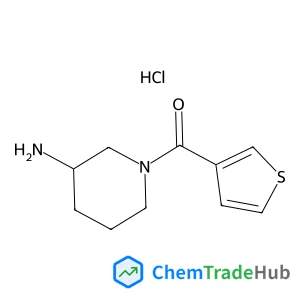
![1-{[5-(4,4,5,5-Tetramethyl-1,3,2-dioxaborolan-2-yl)-2-thienyl]methyl}piperidine structure](https://cnstatic.chemtradehub.com/structs/121/1218790-44-3-baef.webp "1-{[5-(4,4,5,5-Tetramethyl-1,3,2-dioxaborolan-2-yl)-2-thienyl]methyl}piperidine structure")
推荐供应商







免责声明
本页面提供的学术期刊信息仅供参考和研究使用。我们与任何期刊出版商均无关联,也不处理投稿事宜。如有投稿相关咨询,请直接联系相关期刊出版商。
如发现页面信息有误,请发送邮件至 support@chemtradehub.com 联系我们。我们将及时核实并处理您的问题。