




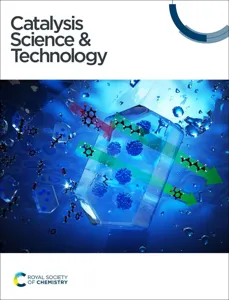








A molecular dynamics and quantum mechanical investigation of intermolecular interaction and electron-transfer mechanism between copper-containing nitrite reductase and redox partner pseudoazurin
文献信息
发布日期
2023-02-07
DOI
10.1039/D2CP05534A
影响因子
3.676
作者
Xin Li, Hang Zou
查看原文
摘要
Much of biological electron transfer occurs between proteins. These molecular processes usually involve molecular recognition and intermolecular electron transfer (inter-ET). The inter-ET reaction between copper-containing nitrite reductase (CuNiR) and partner protein pseudoazurin (PAz) is the first step in denitrification, which is affected by intermolecular association. However, the transient interaction between CuNiR and PAz and the indistinct inter-ET pathway pose challenges for people to understand the biological functions of the CuNiR–PAz complex. Thus, molecular dynamics simulation and quantum mechanical calculation were used to investigate the question in this study. The interaction of the interface residues was determined through hydrogen bonds, root-mean-square deviation, root-mean-square fluctuation, the dynamics cross-correlation matrix, and molecular mechanics Poisson–Boltzmann surface area of molecular dynamics simulations. The interactions among the residues Glu89, Gly200, Asp205, Asn91, Glu204, Thr92, and Met141 on CuNiR and the residues Lys109, Ala15, Lys10, Asn9, Ile110, Met84, and Met16 on PAz are responsible for the stabilization of the complex. The binding free energy is up to −25.33 kcal mol−1. We compared the wild-type and mutant (M84A) interfacial optimized complex models at the CAM-B3LYP level with Grimme dispersion corrections (GD3) to confirm Met84 as a relay station for promoting the inter-ET. Additionally, to test whether Met84 may combine with the adjacent Met141 to form a special two-center, three-electron (S∴S)+ structure to promote the inter-ET, QM/MM was further performed to discuss the possibility of generating an electron stepping stone. Our study will promote a deep understanding of the stable protein–protein interaction, and the identified inter-residue interaction will be theoretical guidance for enhancing the catalytic activity of CuNiR in denitrification.
相关文献
Photo-induced radical polarization and liquid-state dynamic nuclear polarization using fullerene nitroxide derivatives
Guoquan Liu, Shu-Hao Liou, Nikolay Enkin, Igor Tkach
2017-11-10
Paper
DOI: 10.1039/C7CP06073D
Dynamical properties of EMIM-SCN confined in a SiO2 matrix by means of 1H NMR relaxometry
Danuta Kruk, Milosz Wojciechowski, Yogendra Lal Verma, Sujeet Kumar Chaurasia, Rajendra Kumar Singh
2017-12-01
Paper
DOI: 10.1039/C7CP06174A
Dynamics of poly(vinyl butyral) studied using dielectric spectroscopy and 1H NMR relaxometry
Silvia Pizzanelli, Daniele Prevosto, Massimiliano Labardi, Tommaso Guazzini, Simona Bronco, Claudia Forte, Lucia Calucci
2017-11-13
Paper
DOI: 10.1039/C7CP02595E
Role of halogen⋯halogen interactions in the 2D crystallization of n-semiconductors at the liquid–solid interface
Zongxia Guo, Ping Yu, Kai Sun, Shengbin Lei, Yuanping Yi, Zhibo Li
2017-09-25
Communication
DOI: 10.1039/C7CP06027K
Carbon vacancies in Ti2CT2 MXenes: defects or a new opportunity?
Xiaohui Wang
2017-11-10
Paper
DOI: 10.1039/C7CP06593K
Escape of anions from geminate recombination in THF due to charge delocalization
Hung-Cheng Chen, Andrew R. Cook, Sadayuki Asaoka, Jeffery S. Boschen, Theresa L. Windus, John R. Miller
2017-11-24
Paper
DOI: 10.1039/C7CP05880B
Biological application of water-based electrochemically synthesized CuO leaf-like arrays: SERS response modulated by the positional isomerism and interface type
E. Proniewicz, S. Vantasin, T. K. Olszewski, B. Boduszek, Y. Ozaki
2017-11-13
Paper
DOI: 10.1039/C7CP06001G
Mutual diffusion governed by kinetics and thermodynamics in the partially miscible mixture methanol + cyclohexane
Tatjana Janzen, Aliaksandr Mialdun, Gabriela Guevara-Carrion, Jadran Vrabec, Maogang He, Valentina Shevtsova
2017-11-14
Paper
DOI: 10.1039/C7CP06515A
The benchmark of 31P NMR parameters in phosphate: a case study on structurally constrained and flexible phosphate
Jiří Fukal, Ondřej Páv, Miloš Buděšínský, Jakub Šebera
2017-11-13
Paper
DOI: 10.1039/C7CP06969C
您可能还喜欢
化合物问答
硅烷偶联剂ZQ-172(CAS号:1067-53-4)的主要用途是什么?
硅烷偶联剂ZQ-172主要用于增强无机填料与有机高分子材料之间的相容性,常见于橡胶、塑料、涂料和胶黏剂等复合体系中。其硅氧烷基团可与玻璃纤维、二氧化硅等无机物表...
1067-53-46-(2-Methoxyethoxy)-...
化合物问答
如何处理含有6-(2,4-二甲氧基苯基)-2-吡啶甲醇(CAS号:887981-31-9)的废料?
对于含有该化合物的废料,首先应收集并分类存放,避免与其它化学品混合。在处理前,需进行必要的检测,确定其含量和性质。随后,可以采用化学氧化、生物降解或物理吸附等方...
887981-31-9[6-(2,4-Dimethoxyphe...
化合物问答
甲砜霉素甘氨酸酯盐酸盐(CAS号:2611-61-2)的物理化学性质是什么?
该化合物为白色或类白色结晶性粉末,不溶于水,溶于乙醇和氯仿。分子量为403.03 g/mol。它具有手性,含有三个手性中心,分别为2S,3R构型。该化合物在酸性...
2611-61-2(2S,3R)-2-[(Dichloro...
化合物问答
如何储存反式-环丙烷-1,2-二胺双盐酸盐(CAS号:3187-76-6)?
反式-环丙烷-1,2-二胺双盐酸盐应存放在阴凉、干燥且通风良好的地方,避免阳光直射。储存容器应密封,以防挥发和受潮。同时,应远离火源和热源,确保储存环境温度不超...
3187-76-6trans-1,2-Diaminocyc...
化合物问答
什么是吩嗪硫酸甲酯(CAS号:299-11-6)?
吩嗪硫酸甲酯是一种有机化合物,化学结构由吩嗪环与甲酯基团构成,分子式为C10H9N2SO4。其为吩嗪类衍生物,具有典型的芳香环结构和酯基官能团,常作为氧化剂或染...
299-11-65-Methylphenazin-5-i...
化合物问答
N1-异丙基二乙烯三胺(CAS号:207399-20-0)的市场或研究趋势如何?
随着绿色化学和环保意识的提高,N1-异丙基二乙烯三胺的研究趋势正向低毒、环保的方向发展。市场趋势方面,由于其在功能性材料、药物合成等领域的需求,预计其市场需求将...
207399-20-0N-(2-Aminoethyl)-N'-...
化合物问答
4,4-Dimethyl-5,6-dihydro-4H-cyclopenta[d][1,3]thiazol-2-amine(CAS号:1182284-47-4)应用于哪些行业?
该化合物在医药、聚合物、传感器和半导体领域有潜在的应用。在医药领域,作为一种新型的噻唑类化合物,它可能具有抗炎、抗病毒等生物活性。在聚合物领域,该化合物可用作增...
1182284-47-44,4-Dimethyl-5,6-dih...
化合物问答
处理5-(PYRIDIN-4-YL)-OXAZOL-2-YLAMINE(CAS号:1014629-83-4)时应注意哪些实验室安全事项?
在处理5-(吡啶-4-基)-2-氧代-1-氧杂环己烷-3-胺时,应佩戴防护眼镜、手套和防护服。实验应在通风橱中进行,以避免吸入有害气体。如果发生泄露,应立即用大...
1014629-83-45-(4-Pyridinyl)-1,3-...
化合物问答
什么是伊托必利N-氧化物(CAS号:141996-98-7)?
伊托必利N-氧化物是一种化学化合物,其分子结构是伊托必利的N位进行氧化处理后的产物。它具有一定的生物活性,主要用于药物研究和开发。
141996-98-7Itopride N-Oxide
化合物问答
氟氯烟酸(CAS号:82671-06-5)安全吗?
氟氯烟酸属于有机氯化物,具有一定的毒性,需谨慎处理。在操作过程中,应佩戴防护手套、护目镜和实验服,避免吸入其粉尘或蒸汽。接触皮肤或眼睛可能导致刺激,应采取适当的...
82671-06-52,6-Dichloro-5-fluor...
来源期刊
Physical Chemistry Chemical Physics

CiteScore:
5.5
自引率:
10.3%
年发文量:
3036
Physical Chemistry Chemical Physics (PCCP) is an international journal co-owned by 19 physical chemistry and physics societies from around the world. This journal publishes original, cutting-edge research in physical chemistry, chemical physics and biophysical chemistry. To be suitable for publication in PCCP, articles must include significant innovation and/or insight into physical chemistry; this is the most important criterion that reviewers and Editors will judge against when evaluating submissions. The journal has a broad scope and welcomes contributions spanning experiment, theory, computation and data science. Topical coverage includes spectroscopy, dynamics, kinetics, statistical mechanics, thermodynamics, electrochemistry, catalysis, surface science, quantum mechanics, quantum computing and machine learning. Interdisciplinary research areas such as polymers and soft matter, materials, nanoscience, energy, surfaces/interfaces, and biophysical chemistry are welcomed if they demonstrate significant innovation and/or insight into physical chemistry. Joined experimental/theoretical studies are particularly appreciated when complementary and based on up-to-date approaches.
推荐化合物


推荐供应商




免责声明
本页面提供的学术期刊信息仅供参考和研究使用。我们与任何期刊出版商均无关联,也不处理投稿事宜。如有投稿相关咨询,请直接联系相关期刊出版商。
如发现页面信息有误,请发送邮件至 support@chemtradehub.com 联系我们。我们将及时核实并处理您的问题。