






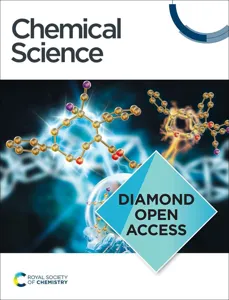

How does aggregation of doxorubicin molecules affect its solvation and membrane penetration?
文献信息
发布日期
2023-11-14
DOI
10.1039/D2NJ06221F
影响因子
3.591
作者
Sadaf Shirazi-Fard, Amin Reza Zolghadr
查看原文
摘要
Intermolecular interactions of drug molecules can lead to aggregation, which has a significant impact on their application. This problem might escape the attention when studying their solubility as small aggregates might behave almost as single molecules. We studied the aggregation behaviour of doxorubicin (DOX) molecules through density functional (DFT) methods and molecular dynamics (MD) simulations in water, dimethylformamide (DMF), ethanol (EtOH), and dimethyl sulfoxide (DMSO). We described the degree of aggregation by MD-calculated radial distribution function, combined radial/angular distribution functions, autocorrelation functions, and the number of hydrogen bonds of individual DOX and solvent atoms. MD-calculated diffusion coefficients for DOX decrease along the series water > DMF > EtOH > DMSO (0.101 × 10⁻⁹, 0.047 × 10⁻⁹, 0.025 × 10⁻⁹, and 0.007 × 10⁻⁹ m2 s−1, respectively) consistent with increasing aggregation found in the MD simulations. These aggregates have different characters, depending on the DOX⋯solvent interactions, and include hydrogen bonding and π-stacking. Even though the solvation energy of a single DOX molecule in DMSO (−24.8 kcal mol−1) is higher than in other solvents, the formation of larger aggregates in this solvent prevents proper solvation. Further, the orientation of doxorubicin molecules at octanol/water and dipalmitoylphosphatidylcholine (DPPC)/water interfaces was studied with two different orientations from the bivariate maps. In the case of the DPPC/water interface, the anthracycline part points toward the aqueous phase, while this part is oriented almost parallel to the octanol/water interface in DMSO.
相关文献
Chemical kinetics in an atmospheric pressure helium plasma containing humidity
Sandra Schröter, Apiwat Wijaikhum, Andrew West, Nicolas Minesi, James Dedrick, Erik Wagenaars, Nelson de Oliveira, Laurent Nahon, Mark J. Kushner, Jean-Paul Booth, Kari Niemi, Timo Gans, Deborah O'Connell
2018-09-13
Paper
DOI: 10.1039/C8CP02473A
Ab initio molecular dynamics of atomic-scale surface reactions: insights into metal organic chemical vapor deposition of AlN on graphene
G. K. Gueorguiev, A. Kakanakova-Georgieva
2018-06-12
Paper
DOI: 10.1039/C8CP02786B
Charged impurity-tuning of midgap states in biased Bernal bilayer black phosphorus: an anisotropic electronic phase transition
K. Mirabbaszadeh, M. Davoudiniya, M. Yarmohammadi
2018-09-11
Paper
DOI: 10.1039/C8CP04446E
Multiporous sp2-hybridized boron nitride (d-BN): stability, mechanical properties, lattice thermal conductivity and promising application in energy storage
Yingxiang Cai, Li Zeng, Yu Zhang, Xuechun Xu
2018-07-23
Paper
DOI: 10.1039/C8CP03447H
Charge transfer dynamics at the boron subphthalocyanine chloride/C60 interface: non-adiabatic dynamics study with Libra-X
Kosuke Sato, Ekadashi Pradhan, Ryoji Asahi, Alexey V. Akimov
2018-09-25
Paper
DOI: 10.1039/C8CP03841D
Correction: Improved fill factor in inverted planar perovskite solar cells with zirconium acetate as the hole-and-ion-blocking layer
Xuewen Zhang, Chunjun Liang, Mengjie Sun, Huimin Zhang, Chao Ji, Zebang Guo, Yajun Xu, Fulin Sun, Qi Song, Zhiqun He
2018-07-25
Correction
DOI: 10.1039/C8CP91812K
Insight into the enhanced photocatalytic activity of SrTiO3 in the presence of a (Ni, V/Nb/Ta/Sb) pair
Swapan K. Ghosh
2018-07-06
Paper
DOI: 10.1039/C8CP00844B
Electronic structure and rovibrational predissociation of the 21Π state in KLi
P. Jasik, J. Kozicki, T. Kilich, J. E. Sienkiewicz, N. E. Henriksen
2018-06-25
Paper
DOI: 10.1039/C8CP02551G
您可能还喜欢
化合物问答
6-氯-2H-1,4-苯并噁嗪-3(4H)-酮(CAS号:7652-29-1)应用于哪些行业?
6-氯-2H-1,4-苯并噁嗪-3(4H)-酮主要应用于医药、农药和聚合物等领域。在医药领域,该化合物可用于合成抗菌药物;在农药领域,可用作杀虫剂的中间体;在聚...
7652-29-16-Chloro-2H-1,4-benz...
化合物问答
活性氧化铝(CAS号:1302-74-5)应用于哪些行业?
活性氧化铝广泛应用于医药、聚合物、传感器、半导体和催化等领域。在医药行业,活性氧化铝用作吸附剂和干燥剂,有助于去除杂质和水分。在聚合物行业,它用作增白剂和抗结块...
1302-74-5aluminum;trihydrate
化合物问答
什么是硅胶(CAS号:112926-00-8)?
硅胶(Silica gel, pptd.,cryst.-free)是一种无定形、多孔的硅酸盐材料,主要成分为二氧化硅(SiO₂)。其结构由硅氧四面体构成,通过酸...
112926-00-8Silica gel, pptd.,cr...
化合物问答
二乙基甲基一氢硅烷(CAS号:760-32-7)的主要用途是什么?
二乙基甲基一氢硅烷主要用于有机合成、表面处理以及作为溶剂。它还被用作合成其他硅烷化合物的原料,以及在涂料、粘合剂和密封剂中的应用。
760-32-7Diethyl(methyl)silan...
化合物问答
在合成中是否有N-花生四烯酰基甘氨酸(CAS号:179113-91-8)的替代品?
在合成过程中,可以考虑使用类似结构的化合物作为替代品,例如N-亚油酰基甘氨酸或N-花生二烯酰基甘氨酸。这些替代品在结构上有类似的双键位置,但可能具有不同的物理化...
179113-91-8Glycine, N-[(5Z,8Z,1...
化合物问答
在合成中是否有1-(4-甲氧基苯基)丙烷-1,2-二酮(CAS号:10557-27-4)的替代品?
在合成过程中,可以考虑使用类似结构的化合物作为替代品,例如1-(3-甲氧基苯基)丙烷-1,2-二酮或1-(4-羟基苯基)丙烷-1,2-二酮。这些替代品具有相似的...
10557-27-41-(4-Methoxyphenyl)p...
化合物问答
N-(4-氨基-1-苄基-3-羟基-5-苯基戊基)-3-甲基-2-(2-氧代四氢嘧啶-1-基)-丁酰胺 5-氧代吡咯烷-2-甲酸(CAS号:192726-06-0)通常如何合成?
该化合物通常通过一系列复杂的有机合成步骤获得。首先,通过芳香族化合物的羟基化反应获得羟基化产物,然后通过酰化反应形成酰胺中间体,最后通过环化反应得到目标产物。常...
192726-06-05-Oxo-L-proline - (2...
化合物问答
(S)-2-氨基-3-喹啉-2-丙酸(CAS号:161513-46-8)的市场或研究趋势如何?
该化合物作为生物活性化合物,尤其是在药物化学领域表现出色。近年来,随着对新型抗炎、抗病毒和抗癌药物的研究增加,其市场和研究趋势持续增长。此外,其在神经科学领域的...
161513-46-8(S)-2-Amino-3-quinol...
化合物问答
核黄素磷酸钠(CAS号:130-40-5)安全吗?
核黄素磷酸钠在常规使用条件下安全,但高剂量可能引起刺激性反应。操作时需佩戴防护手套和护目镜,避免吸入粉尘。若接触皮肤或眼睛,应立即用大量清水冲洗。急救时需根据接...
130-40-5Sodium 1-deoxy-1-(7,...
化合物问答
盐酸丙胺卡因杂质A(EP) 标准品(CAS号:19281-31-3)通常如何合成?
盐酸丙胺卡因杂质A(EP) 标准品可通过重氮化反应和随后的酰胺化反应合成。首先,利用氯化反应将苯环上的氢原子转化为氯原子,然后通过芳香族重氮化反应引入氨基,最后...
19281-31-32-Chloro-N-(2-methyl...
来源期刊
New Journal of Chemistry
CiteScore:
5.3
自引率:
3.7%
年发文量:
2153
NJC (New Journal of Chemistry) is a broad-based primary journal encompassing all branches of chemistry and its sub-disciplines. It contains full research articles, communications, perspectives and focus articles. This well-established journal, owned by the Centre National de la Recherche Scientifique (CNRS) of France, has been co-published with the Royal Society of Chemistry since January 1998. NJC is the forum for the publication of high-quality, original and significant work that opens new directions in chemistry or other scientific disciplines. In addition to having a significant chemical component, work published in NJC must demonstrate that it will have an impact on areas of research other than that of the reported work.
推荐化合物
![1,2-Diphenyl-4-[2-(phenylsulfinyl)ethyl]-3,5-pyrazolidinedione structure](https://cnstatic.chemtradehub.com/structs/57-/57-96-5-efcc.webp "1,2-Diphenyl-4-[2-(phenylsulfinyl)ethyl]-3,5-pyrazolidinedione structure")
推荐供应商




免责声明
本页面提供的学术期刊信息仅供参考和研究使用。我们与任何期刊出版商均无关联,也不处理投稿事宜。如有投稿相关咨询,请直接联系相关期刊出版商。
如发现页面信息有误,请发送邮件至 support@chemtradehub.com 联系我们。我们将及时核实并处理您的问题。