


Exploiting the reversible covalent bonding of boronic acids for self-healing/recycling of main-chain polybenzoxazines
文献信息
发布日期
2022-05-20
DOI
10.1039/D2PY00068G
影响因子
5.582
作者
Sevinc Gulyuz, Yusuf Yagci, Baris Kiskan
查看原文
摘要
In this work, a new strategy for the synthesis of self-healable/recyclable polybenzoxazine networks under mild conditions by exploiting dynamic B–O bond exchanges is presented. The process is based on mixing main chain polybenzoxazine precursors with phenyl boronic acid and heating up to 180 °C. The obtained polybenzoxazine films displayed good self-healing properties at low temperatures and very mild pressures in the absence of additives to promote the healing process. The recovery extent of the films was quantified by tensile tests. The stress relaxation and sweep frequency behaviour of the films were analyzed by rheological measurements. The spectral and thermal behaviors of the films were also investigated. Moreover, the networks showed higher hydrolysis stability than those of conventional boronic esters because of the intramolecular coordination of B–N in the linkages.
期刊推荐
Russian Journal of Bioorganic Chemistry
Journal of Saudi Chemical Society
Journal of Natural Medicines
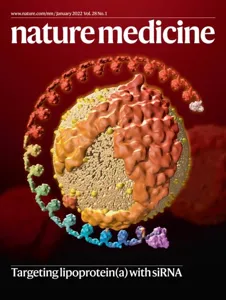
Nature Medicine
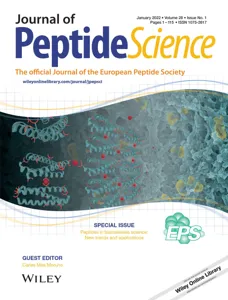
Journal of Peptide Science
Russian Chemical Bulletin
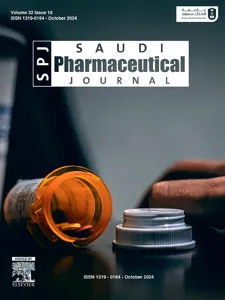
Saudi Pharmaceutical Journal

Chemistry Education Research and Practice
Current Opinion in Colloid & Interface Science
Russian Journal of General Chemistry
相关文献
Combinatorial selection of a two-dimensional 3d-TM-tetracyanoquinodimethane (TM-TCNQ) monolayer as a high-activity nanocatalyst for CO oxidation
Tiantian Wu, Guibin Chen, Heine Anton Hansen, Tejs Vegge
2018-01-18
Paper
DOI: 10.1039/C7CP07988E
Solvation dynamics in polar solvents and imidazolium ionic liquids: failure of linear response approximations
Esther Heid, Christian Schröder
2018-01-29
Paper
DOI: 10.1039/C7CP07052G
Activation of Kagome lattice-structured Cu3V2O7(OH)2·2H2O volborthite via hydrothermal crystallization for boosting visible light-driven water oxidation
Hengyan Yang, Ding Wang, AiYing Chen, Wei-Lin Dai, Xianglong Zhao
2018-07-09
Paper
DOI: 10.1039/C8CP03530J
Intermolecular and very strong intramolecular C–Se⋯O/N chalcogen bonds in nitrophenyl selenocyanate crystals
Hui Wang, Ju Liu, Weizhou Wang
2018-01-25
Paper
DOI: 10.1039/C7CP08215K
Bimetallic Rh–Fe catalysts for N2O decomposition: effects of surface structures on catalytic activity
Hao Chen, Qinghua Lu, Chunhai Yi, Bolun Yang, Suitao Qi
2018-01-16
Paper
DOI: 10.1039/C7CP08562A
Mineralization of phosphorylated cellulose: crucial role of surface structure and monovalent ions for optimizing calcium content
Natalia V. Lukasheva, Dmitry A. Tolmachev
2018-11-27
Paper
DOI: 10.1039/C8CP05767B
Impact of screw and edge dislocations on the thermal conductivity of individual nanowires and bulk GaN: a molecular dynamics study
Anastasiia Salnikova, Imad Belabbas, David Lacroix, Joseph Kioseoglou
2018-01-15
Paper
DOI: 10.1039/C7CP07821H
The influence of interactions between isotopoloques on coherent, ultrafast vibrational dynamics of liquid C2Cl4
B. Ratajska-Gadomska, W. Gadomski, J. Konarska, K. Polok
2018-01-15
Paper
DOI: 10.1039/C7CP07928A
High-pressure and temperature dependence of the spontaneous resolution of 1,1′-binaphthyl enantiomers
Kinga Roszak, Andrzej Katrusiak
2018-01-16
Paper
DOI: 10.1039/C7CP07234A
Photoelectron spectroscopy and thermochemistry of o-, m-, and p-methylenephenoxide anions
Daniel J. Nelson, Wilson K. Gichuhi, Charles M. Nichols, Veronica M. Bierbaum, W. Carl Lineberger
2018-09-20
Paper
DOI: 10.1039/C8CP05403G
您可能还喜欢
化合物问答
3 - (二氟甲基)-1 -氟苯(CAS号:26029-52-7)适用哪些法规指南?
3 - (二氟甲基)-1 -氟苯需遵循联合国全球化学品统一分类和标签制度(GHS),包括急性毒性、皮肤腐蚀/刺激、严重眼损伤/眼刺激等分类。同时,该化合物还需符...
26029-52-71-(Difluoromethyl)-3...
化合物问答
3,5-二甲基苯胺(CAS号:108-69-0)通常如何合成?
3,5-二甲基苯胺通常通过乙苯的氨解反应合成。反应中使用硫酸作为催化剂,反应温度为120-130°C。乙苯在硫酸存在下与氨反应,生成3,5-二甲基苯胺和苯胺副产...
108-69-03,5-Dimethylaniline
化合物问答
3-甲基异噻唑-5-胺(CAS号:24340-76-9)安全吗?
3-甲基异噻唑-5-胺在适当使用和储存条件下是相对安全的,但在操作时应注意防护措施。应避免吸入粉尘,避免与皮肤和眼睛直接接触。在操作过程中,应穿戴适当的防护装备...
24340-76-93-Methyl-1,2-thiazol...
化合物问答
3-(1,3-Thiazol-2-yl)-1H-indole(CAS号:135531-86-1)通常如何合成?
3-(1,3-噻唑-2-基)-1H-吲哚通常通过多步合成方法制备。首先,由噻唑-2-基溴化物和吲哚进行偶联反应,得到中间体。然后,通过还原反应将中间体转化为所需...
135531-86-13-(1,3-Thiazol-2-yl)...
化合物问答
4-溴-2-氟苯甲基氯(CAS号:85510-82-3)的主要用途是什么?
4-溴-2-氟苯甲基氯主要用于有机合成中间体,特别是在医药、农药和染料等领域。作为一种具有特定结构的化合物,它在合成复杂有机分子时扮演重要角色。
85510-82-34-Bromo-1-(chloromet...
化合物问答
处理Fmoc-β-(3-噻吩基)-D-Ala-OH(CAS号:220497-90-5)时应注意哪些实验室安全事项?
处理Fmoc-β-(3-噻吩基)-D-Ala-OH时,应佩戴防护手套、护目镜和实验服。操作应在通风橱内进行。如发生泄露,应立即用大量水冲洗,并通知实验室管理人员...
220497-90-5N-[(9H-Fluoren-9-ylm...
化合物问答
氮化硅(CAS号:12033-89-5)通常如何合成?
氮化硅通常通过氮化硅的直接反应合成,即在高温下将四氯化硅与氨气反应。具体步骤是将四氯化硅和氨气混合并加热至1300-1700℃,在该条件下,四氯化硅与氨气反应生...
12033-89-5Trisilicon tetranitr...
化合物问答
Cetirizine EP Impurity B DiHCl(CAS号:1000690-91-4)通常如何合成?
Cetirizine EP Impurity B DiHCl通常通过一锅法合成,首先将4-氯苯基-苯甲基氯甲酸酯与1-哌嗪乙酸反应,生成相应的酸,然后与盐酸反应...
1000690-91-4{4-[(4-Chlorophenyl)...
化合物问答
如何储存1-哌啶-4-基丁-1-酮(CAS号:3509-15-7)?
1-哌啶-4-基丁-1-酮应储存在阴凉、干燥的地方,避免阳光直射。存储容器应密封,并确保通风良好。建议储存温度不超过25℃,湿度保持在相对较低的水平。
3509-15-71-Piperidin-4-ylbuta...
化合物问答
如何处理含有VORUCICLIB(CAS号:1000023-04-0)的废料?
含有VORUCICLIB的废料应进行专业的收集和处理,包括使用适当的容器进行隔离,避免与其他化学品接触。处理方法通常包括化学中和、沉淀反应或吸附过程,随后进行焚...
1000023-04-02-[2-Chloro-4-(trifl...
来源期刊
Polymer Chemistry

CiteScore:
8.6
自引率:
7.3%
年发文量:
457
Polymer Chemistry welcomes submissions in all areas of polymer science that have a strong focus on macromolecular chemistry. Manuscripts may cover a broad range of fields, yet no direct application focus is required.
推荐化合物
![2,6-Di(thiophen-2-yl)dithieno[3,2-b:2',3'-d]thiophene structure](https://cnstatic.chemtradehub.com/structs/910/910788-24-8-5b70.webp "2,6-Di(thiophen-2-yl)dithieno[3,2-b:2',3'-d]thiophene structure")
推荐供应商



免责声明
本页面提供的学术期刊信息仅供参考和研究使用。我们与任何期刊出版商均无关联,也不处理投稿事宜。如有投稿相关咨询,请直接联系相关期刊出版商。
如发现页面信息有误,请发送邮件至 support@chemtradehub.com 联系我们。我们将及时核实并处理您的问题。