


Synthesis and molecular dynamics study of high-damping polyurethane elastomers based on the synergistic effect of dangling chains and dynamic bonds
文献信息
发布日期
2022-06-29
DOI
10.1039/D2PY00323F
影响因子
5.582
作者
Haoxiang Rong, Min Xu, Xiaolin Jiang, Xun Lu
查看原文
摘要
Damping elastomers are widely used to control vibration and noise in various fields. However, there are common issues of weak damping temperature range controllability and poor mechanical properties as well as insufficiently tailored molecular structures in high-damping elastomers. Therefore, we have introduced poly(ethylene glycol) monomethyl ether (MPEG) dangling chains and dynamic disulfide bonds to synthesize polyurethane elastomers with an effective damping (tan δ ≥ 0.3) temperature range of 143 °C (−43–100 °C) and a high mechanical strength of 11.43 ± 0.51 MPa. To further probe the effect of dangling chains and dynamic disulfide bonds on the multi-scale molecular structure and properties of PU damping material, the molecular dynamics and dynamic mechanics were analyzed by combining dynamic mechanical analysis (DMA) and broadband dielectric relaxation spectroscopy (BDRS). The Maxwell–Wagner–Sillars (MWS) interfacial polarization process was observed in a PU elastomer after introducing the dangling chains, indicating a lower degree of microphase separation and faster segmental motion to improve the damping properties. After introducing disulfides, the dynamic exchange of disulfides is helpful for segmental motion to increase molecular chain friction and mechanical energy consumption. The relationship among the multi-scale chain structure, phase morphology and damping properties was revealed, thus providing a theoretical basis and technical reference in the development of novel high-damping materials.
期刊推荐
Russian Journal of General Chemistry
Saudi Pharmaceutical Journal
Russian Journal of Applied Chemistry
Russian Chemical Bulletin
Organic Process Research & Development
Acta Materialia
Journal of Natural Medicines

Current Opinion in Solid State & Materials Science

Chemical Communications
Journal of Saudi Chemical Society
相关文献
Intermolecular interactions upon carbon dioxide capture in deep-eutectic solvents
Shashi Kant Shukla
2018-09-10
Paper
DOI: 10.1039/C8CP03724H
A theoretical study of the effect of a non-aqueous proton donor on electrochemical ammonia synthesis
Aayush R. Singh, Brian A. Rohr, Yanjing Su, Lijie Qiao
2018-01-17
Paper
DOI: 10.1039/C7CP05484J
Comment on “Spectroscopic properties and location of the Ce3+ energy levels in Y3Al2Ga3O12 and Y3Ga5O12 at ambient and high hydrostatic pressure” by S. Mahlik, A. Lazarowska, J. Ueda, S. Tanabe and M. Grinberg, Phys. Chem. Chem. Phys., 2016, 18, 6683
Yongjie Wang, M. Głowacki, M. Berkowski, A. Kamińska
2018-12-14
Comment
DOI: 10.1039/C8CP06154H
Kinetics of the reaction of the simplest Criegee intermediate with ammonia: a combination of experiment and theory
Cangtao Yin, Mica C. Smith, Maodu Chen, Chunlei Xiao, Dongxu Dai, Kaito Takahashi, Wenrui Dong
2018-11-16
Paper
DOI: 10.1039/C8CP05920A
Spin–orbit coupling induced spin polarized valley states in SrRuO3/BiIrO3 heterostructures
Yanli Ji, Xiaocha Wang, Wenbo Mi
2018-09-05
Paper
DOI: 10.1039/C8CP04336A
Catalysis and tunnelling in the unimolecular decay of Criegee intermediates
Timothy A. H. Burd, Xiao Shan, David C. Clary
2018-09-25
Paper
DOI: 10.1039/C8CP05021J
F-Doping effects on carbon-coated Li3V2(PO4)3 as a cathode for high performance lithium rechargeable batteries: combined experimental and DFT studies
Guannan Li, Hong He
2018-05-03
Paper
DOI: 10.1039/C8CP00354H
Development and utility of a new 3-D magnetron source for high rate deposition of highly conductive ITO thin films near room temperature
Long Wen, Bibhuti Bhusan Sahu, Jeon Geon Han
2018-01-31
Paper
DOI: 10.1039/C7CP07318F
3D structure of the electric double layer of ionic liquid–alcohol mixtures at the electrochemical interface
José M. Otero-Mato, Hadrián Montes-Campos, Oscar Cabeza, Diddo Diddens, Alina Ciach, Luis J. Gallego, Luis M. Varela
2018-11-30
Paper
DOI: 10.1039/C8CP05632C
Competitor analysis of functional group H-bond donor and acceptor properties using the Cambridge Structural Database
James McKenzie, Christopher A. Hunter
2018-09-26
Paper
DOI: 10.1039/C8CP05470C
您可能还喜欢
化合物问答
3 - (二氟甲基)-1 -氟苯(CAS号:26029-52-7)适用哪些法规指南?
3 - (二氟甲基)-1 -氟苯需遵循联合国全球化学品统一分类和标签制度(GHS),包括急性毒性、皮肤腐蚀/刺激、严重眼损伤/眼刺激等分类。同时,该化合物还需符...
26029-52-71-(Difluoromethyl)-3...
化合物问答
3,5-二甲基苯胺(CAS号:108-69-0)通常如何合成?
3,5-二甲基苯胺通常通过乙苯的氨解反应合成。反应中使用硫酸作为催化剂,反应温度为120-130°C。乙苯在硫酸存在下与氨反应,生成3,5-二甲基苯胺和苯胺副产...
108-69-03,5-Dimethylaniline
化合物问答
3-甲基异噻唑-5-胺(CAS号:24340-76-9)安全吗?
3-甲基异噻唑-5-胺在适当使用和储存条件下是相对安全的,但在操作时应注意防护措施。应避免吸入粉尘,避免与皮肤和眼睛直接接触。在操作过程中,应穿戴适当的防护装备...
24340-76-93-Methyl-1,2-thiazol...
化合物问答
3-(1,3-Thiazol-2-yl)-1H-indole(CAS号:135531-86-1)通常如何合成?
3-(1,3-噻唑-2-基)-1H-吲哚通常通过多步合成方法制备。首先,由噻唑-2-基溴化物和吲哚进行偶联反应,得到中间体。然后,通过还原反应将中间体转化为所需...
135531-86-13-(1,3-Thiazol-2-yl)...
化合物问答
4-溴-2-氟苯甲基氯(CAS号:85510-82-3)的主要用途是什么?
4-溴-2-氟苯甲基氯主要用于有机合成中间体,特别是在医药、农药和染料等领域。作为一种具有特定结构的化合物,它在合成复杂有机分子时扮演重要角色。
85510-82-34-Bromo-1-(chloromet...
化合物问答
处理Fmoc-β-(3-噻吩基)-D-Ala-OH(CAS号:220497-90-5)时应注意哪些实验室安全事项?
处理Fmoc-β-(3-噻吩基)-D-Ala-OH时,应佩戴防护手套、护目镜和实验服。操作应在通风橱内进行。如发生泄露,应立即用大量水冲洗,并通知实验室管理人员...
220497-90-5N-[(9H-Fluoren-9-ylm...
化合物问答
氮化硅(CAS号:12033-89-5)通常如何合成?
氮化硅通常通过氮化硅的直接反应合成,即在高温下将四氯化硅与氨气反应。具体步骤是将四氯化硅和氨气混合并加热至1300-1700℃,在该条件下,四氯化硅与氨气反应生...
12033-89-5Trisilicon tetranitr...
化合物问答
Cetirizine EP Impurity B DiHCl(CAS号:1000690-91-4)通常如何合成?
Cetirizine EP Impurity B DiHCl通常通过一锅法合成,首先将4-氯苯基-苯甲基氯甲酸酯与1-哌嗪乙酸反应,生成相应的酸,然后与盐酸反应...
1000690-91-4{4-[(4-Chlorophenyl)...
化合物问答
如何储存1-哌啶-4-基丁-1-酮(CAS号:3509-15-7)?
1-哌啶-4-基丁-1-酮应储存在阴凉、干燥的地方,避免阳光直射。存储容器应密封,并确保通风良好。建议储存温度不超过25℃,湿度保持在相对较低的水平。
3509-15-71-Piperidin-4-ylbuta...
化合物问答
如何处理含有VORUCICLIB(CAS号:1000023-04-0)的废料?
含有VORUCICLIB的废料应进行专业的收集和处理,包括使用适当的容器进行隔离,避免与其他化学品接触。处理方法通常包括化学中和、沉淀反应或吸附过程,随后进行焚...
1000023-04-02-[2-Chloro-4-(trifl...
来源期刊
Polymer Chemistry

CiteScore:
8.6
自引率:
7.3%
年发文量:
457
Polymer Chemistry welcomes submissions in all areas of polymer science that have a strong focus on macromolecular chemistry. Manuscripts may cover a broad range of fields, yet no direct application focus is required.
推荐化合物
![6-Benzyl-4,5,6,7-tetrahydro-1H-pyrazolo[3,4-c]pyridin-3(2H)-one structure](https://cnstatic.chemtradehub.com/structs/909/909187-64-0-f54f.webp "6-Benzyl-4,5,6,7-tetrahydro-1H-pyrazolo[3,4-c]pyridin-3(2H)-one structure")
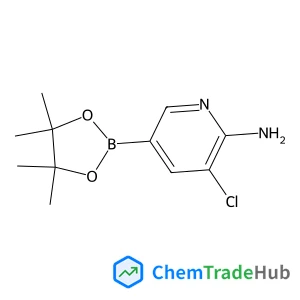
3-Chloro-5-(4,4,5,5-tetramethyl-1,3,2-dioxaborolan-2-yl)-2-pyridinamine
CAS号:
1032758-99-8
分子式:
C11H16BClN2O2
推荐供应商



免责声明
本页面提供的学术期刊信息仅供参考和研究使用。我们与任何期刊出版商均无关联,也不处理投稿事宜。如有投稿相关咨询,请直接联系相关期刊出版商。
如发现页面信息有误,请发送邮件至 support@chemtradehub.com 联系我们。我们将及时核实并处理您的问题。