


Double hydrophilic poly(ethylene glycol)-block-poly(dehydroalanine) four-arm star block copolymers: synthesis and solution behavior
文献信息
发布日期
2022-06-29
DOI
10.1039/D2PY00579D
影响因子
5.582
作者
Nora Fribiczer, Sebastian Seiffert
查看原文
摘要
Star-shaped block copolymers are of interest as versatile and highly functional polymeric building blocks and show interesting solution properties or self-assembly. Herein, we report the synthesis of novel, double hydrophilic four-arm star-shaped block copolymers, based on different poly(ethylene glycol) cores (PEG) and short blocks (“stickers”) of polydehydroalanine (PDha). As PDha is a polyampholyte we were mainly interested in the pH-dependent solution behavior, which we characterize by dynamic light scattering (DLS), atomic force microscopy (AFM), potentiometric titration, and zeta potential measurements. Our main interest was to elucidate how the presence of a short (6–7 units) or intermediate (up to 41 units) PDha segment influences the solution properties of such double hydrophilic block copolymers depending on the solution pH. As we can show, even short “stickers” show a profound influence and lead to increasing aggregation tendency at low pH values, as demonstrated by DLS and AFM experiments with aggregate sizes beyond 1 μm.
期刊推荐
Drug Discovery Today

Chemistry Education Research and Practice
Current Opinion in Colloid & Interface Science

Russian Journal of Organic Chemistry
Russian Journal of General Chemistry
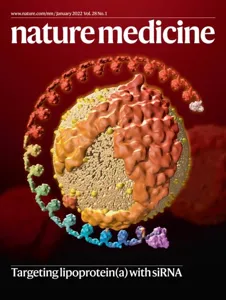
Nature Medicine
Russian Journal of Coordination Chemistry
Saudi Pharmaceutical Journal

Acta Materialia
Russian Chemical Bulletin
相关文献
The blocking effect of surface dislocations on oxygen tracer diffusion in SrTiO3
Henning Schraknepper, Thomas E. Weirich, Roger A. De Souza
2018-05-18
Paper
DOI: 10.1039/C8CP02191K
Activated barrier crossing dynamics of a Janus particle carrying cargo
Tanwi Debnath, Pulak Kumar Ghosh
2018-09-07
Paper
DOI: 10.1039/C8CP04419H
Towards a full quantitative description of single-molecule reaction kinetics in biological cells
Denis S. Grebenkov, Ralf Metzler, Gleb Oshanin
2018-05-21
Paper
DOI: 10.1039/C8CP02043D
Anion-encapsulating fullerenes behave as large anions: a DFT study
2018-09-04
Paper
DOI: 10.1039/C8CP03615B
First-principles database driven computational neural network approach to the discovery of active ternary nanocatalysts for oxygen reduction reaction
Joonhee Kang, Seung Hyo Noh, Jeemin Hwang, Hoje Chun, Hansung Kim, Byungchan Han
2018-07-30
Paper
DOI: 10.1039/C8CP03801E
Molecular dynamics investigations of cello-oligosaccharide recognition by Cel9G–CBM3c from Clostridium cellulovorans
Penghui Li, Chunchun Zhang
2018-01-23
Paper
DOI: 10.1039/C7CP07175B
Characterization of the binding interactions between EvaGreen dye and dsDNA
L. C. T. Shoute, G. R. Loppnow
2018-01-25
Paper
DOI: 10.1039/C7CP06058K
Entropy drives the insertion of ibuprofen into model membranes
Natalia Rojas-Valencia, Marcela Manrique-Moreno, C. Z. Hadad, Albeiro Restrepo
2018-09-05
Paper
DOI: 10.1039/C8CP04674C
Bridging solution properties to gas hydrate nucleation through guest dynamics
Peter G. Kusalik
2018-09-24
Communication
DOI: 10.1039/C8CP04466J
3D structure of the electric double layer of ionic liquid–alcohol mixtures at the electrochemical interface
José M. Otero-Mato, Hadrián Montes-Campos, Oscar Cabeza, Diddo Diddens, Alina Ciach, Luis J. Gallego, Luis M. Varela
2018-11-30
Paper
DOI: 10.1039/C8CP05632C
您可能还喜欢
化合物问答
3 - (二氟甲基)-1 -氟苯(CAS号:26029-52-7)适用哪些法规指南?
3 - (二氟甲基)-1 -氟苯需遵循联合国全球化学品统一分类和标签制度(GHS),包括急性毒性、皮肤腐蚀/刺激、严重眼损伤/眼刺激等分类。同时,该化合物还需符...
26029-52-71-(Difluoromethyl)-3...
化合物问答
3,5-二甲基苯胺(CAS号:108-69-0)通常如何合成?
3,5-二甲基苯胺通常通过乙苯的氨解反应合成。反应中使用硫酸作为催化剂,反应温度为120-130°C。乙苯在硫酸存在下与氨反应,生成3,5-二甲基苯胺和苯胺副产...
108-69-03,5-Dimethylaniline
化合物问答
3-甲基异噻唑-5-胺(CAS号:24340-76-9)安全吗?
3-甲基异噻唑-5-胺在适当使用和储存条件下是相对安全的,但在操作时应注意防护措施。应避免吸入粉尘,避免与皮肤和眼睛直接接触。在操作过程中,应穿戴适当的防护装备...
24340-76-93-Methyl-1,2-thiazol...
化合物问答
3-(1,3-Thiazol-2-yl)-1H-indole(CAS号:135531-86-1)通常如何合成?
3-(1,3-噻唑-2-基)-1H-吲哚通常通过多步合成方法制备。首先,由噻唑-2-基溴化物和吲哚进行偶联反应,得到中间体。然后,通过还原反应将中间体转化为所需...
135531-86-13-(1,3-Thiazol-2-yl)...
化合物问答
4-溴-2-氟苯甲基氯(CAS号:85510-82-3)的主要用途是什么?
4-溴-2-氟苯甲基氯主要用于有机合成中间体,特别是在医药、农药和染料等领域。作为一种具有特定结构的化合物,它在合成复杂有机分子时扮演重要角色。
85510-82-34-Bromo-1-(chloromet...
化合物问答
处理Fmoc-β-(3-噻吩基)-D-Ala-OH(CAS号:220497-90-5)时应注意哪些实验室安全事项?
处理Fmoc-β-(3-噻吩基)-D-Ala-OH时,应佩戴防护手套、护目镜和实验服。操作应在通风橱内进行。如发生泄露,应立即用大量水冲洗,并通知实验室管理人员...
220497-90-5N-[(9H-Fluoren-9-ylm...
化合物问答
氮化硅(CAS号:12033-89-5)通常如何合成?
氮化硅通常通过氮化硅的直接反应合成,即在高温下将四氯化硅与氨气反应。具体步骤是将四氯化硅和氨气混合并加热至1300-1700℃,在该条件下,四氯化硅与氨气反应生...
12033-89-5Trisilicon tetranitr...
化合物问答
Cetirizine EP Impurity B DiHCl(CAS号:1000690-91-4)通常如何合成?
Cetirizine EP Impurity B DiHCl通常通过一锅法合成,首先将4-氯苯基-苯甲基氯甲酸酯与1-哌嗪乙酸反应,生成相应的酸,然后与盐酸反应...
1000690-91-4{4-[(4-Chlorophenyl)...
化合物问答
如何储存1-哌啶-4-基丁-1-酮(CAS号:3509-15-7)?
1-哌啶-4-基丁-1-酮应储存在阴凉、干燥的地方,避免阳光直射。存储容器应密封,并确保通风良好。建议储存温度不超过25℃,湿度保持在相对较低的水平。
3509-15-71-Piperidin-4-ylbuta...
化合物问答
如何处理含有VORUCICLIB(CAS号:1000023-04-0)的废料?
含有VORUCICLIB的废料应进行专业的收集和处理,包括使用适当的容器进行隔离,避免与其他化学品接触。处理方法通常包括化学中和、沉淀反应或吸附过程,随后进行焚...
1000023-04-02-[2-Chloro-4-(trifl...
来源期刊
Polymer Chemistry

CiteScore:
8.6
自引率:
7.3%
年发文量:
457
Polymer Chemistry welcomes submissions in all areas of polymer science that have a strong focus on macromolecular chemistry. Manuscripts may cover a broad range of fields, yet no direct application focus is required.
推荐化合物
![tert-Butyl N-[(2-chloropyridin-4-yl)methyl]carbamate structure](https://cnstatic.chemtradehub.com/structs/916/916210-27-0-9f95.webp "tert-Butyl N-[(2-chloropyridin-4-yl)methyl]carbamate structure")
![5-Methyl-4,5,6,7-tetrahydropyrazolo[1,5-a]pyrazin-2-amine structure](https://cnstatic.chemtradehub.com/structs/122/1227210-33-4-8d64.webp "5-Methyl-4,5,6,7-tetrahydropyrazolo[1,5-a]pyrazin-2-amine structure")
![6-Benzyl-4,5,6,7-tetrahydro-1H-pyrazolo[3,4-c]pyridin-3(2H)-one structure](https://cnstatic.chemtradehub.com/structs/909/909187-64-0-f54f.webp "6-Benzyl-4,5,6,7-tetrahydro-1H-pyrazolo[3,4-c]pyridin-3(2H)-one structure")
推荐供应商






免责声明
本页面提供的学术期刊信息仅供参考和研究使用。我们与任何期刊出版商均无关联,也不处理投稿事宜。如有投稿相关咨询,请直接联系相关期刊出版商。
如发现页面信息有误,请发送邮件至 support@chemtradehub.com 联系我们。我们将及时核实并处理您的问题。