


Classification of bloodstains deposited at different times on floor tiles using hierarchical modelling and a handheld NIR spectrometer
文献信息
发布日期
2023-09-14
DOI
10.1039/D3AY01204B
影响因子
2.896
作者
Aline C. S. Fonseca, José F. Q. Pereira, Ricardo S. Honorato, Rasmus Bro, Maria Fernanda Pimentel
查看原文
摘要
Bloodstains are commonly encountered at crime scenes, especially on floor tiles, and can be deposited over different periods and intervals. Therefore, it is crucial to develop techniques that can accurately identify bloodstains deposited at different times. This study builds upon a previous investigation and aims to enhance the performance of three distinct hierarchical models (HMs) designed to differentiate and identify stains of human blood (HB), animal blood (AB), and common false positives (CFPs) on nine different types of floor tiles. Soft Independent Modeling Class Analogies (SIMCA), and Partial Least Squares-Discriminant Analysis (PLS-DA) were employed as decision rules in this process. The originally published model was constructed using a training set that included samples with a known time of deposit of six days. This model was then tested to predict samples with various deposition times, including human blood samples aged for 0, 1, 9, 20, 30, and 162 days, as well as animal blood samples aged for 0, 1, 10, 13, 20, 29, 105, and 176 days. To improve the identification of human blood, the models were modified by adding zero-day and one-day-old bloodstains to the original training set. All models showed improvement when fresher samples were included in the training set. The best results were achieved with the hierarchical model that used partial least squares-discriminant analysis as the second decision rule and incorporated one-day-old samples in the training set. This model yielded sensitivity values above 0.92 and specificity values above 0.7 for samples aged between zero and 30 days.
期刊推荐

Proceedings of the National Academy of Sciences of the United States of America

Journal of Physics and Chemistry of Solids
Journal of Medicinal Chemistry

Fibre Chemistry

Science

Journal of Catalysis
Pure and Applied Chemistry

Journal of Heterocyclic Chemistry
Russian Chemical Reviews

European Journal of Wood and Wood Products
相关文献
Sorption enhanced CO2 methanation
Andreas Borgschulte, Noris Gallandat, Benjamin Probst, Riccardo Suter, Elsa Callini, Davide Ferri, Yadira Arroyo, Rolf Erni, Hans Geerlings, Andreas Züttel
2013-04-15
Paper
DOI: 10.1039/C3CP51408K
Periodic mesoporous organosilicas functionalized with a wide variety of amines for CO2 adsorption
Els De Canck, Isabelle Ascoop, Abdelhamid Sayari, Pascal Van Der Voort
2013-04-22
Paper
DOI: 10.1039/C3CP50393C
pH in atomic scale simulations of electrochemical interfaces
Jan Rossmeisl, Rizwan Ahmed, Vladimir Tripković, Mårten E. Björketun
2013-05-10
Communication
DOI: 10.1039/C3CP51083B
The effect of the molecular structures of dicyanomethylene compounds on their supramolecular assembly, photophysical and electrochemical properties
Catiúcia R. M. O. Matos, Fabio S. Miranda, José W. de M. Carneiro, Carlos B. Pinheiro, Célia M. Ronconi
2013-05-31
Paper
DOI: 10.1039/C3CP51957K
Mechanism of NO2 storage in ceria studied using combined in situ Raman/FT-IR spectroscopy
Anastasia Filtschew, Dominic Stranz, Christian Hess
2013-04-26
Communication
DOI: 10.1039/C3CP51441B
Monolayer patterning using ketone dipoles
Min Kyoung Kim, Yi Xue, Tereza Pašková, Matthew B. Zimmt
2013-04-09
Paper
DOI: 10.1039/C3CP50808K
Large excited state two photon absorptions in the near infrared region of surprisingly stable radical cations of (ferrocenyl)indenes
Laura Orian, Stefano Scuppa, Saverio Santi, Moreno Meneghetti
2013-06-03
Paper
DOI: 10.1039/C3CP51257F
Calculation of arrangement of oxygen ions and vacancies in double perovskite GdBaCo2O5+δ by first-principles DFT with Monte Carlo simulations
Hiromasa Shiiba, Toshihiro Kasuga, Robin W. Grimes, John A. Kilner
2013-04-22
Paper
DOI: 10.1039/C3CP50316J
Vibrational self-consistent field calculations for spectroscopy of biological molecules: new algorithmic developments and applications
Tapta Kanchan Roy
2013-04-10
Perspective
DOI: 10.1039/C3CP50739D
Separation of cobalt and nickel by solvent extraction with two mutually immiscible ionic liquids
Sil Wellens, Ben Thijs, Claudia Möller, Koen Binnemans
2013-04-12
Paper
DOI: 10.1039/C3CP50819F
您可能还喜欢
化合物问答
什么是2-Bromo-1-(pyrimidin-2-yl)ethanone hydrobromide(CAS号:1588441-02-4)?
2-Bromo-1-(pyrimidin-2-yl)ethanone hydrobromide是一种有机化合物,分子式为C6H5Br2N2O2。它是一种溴代化合...
1588441-02-42-Bromo-1-(2-pyrimid...
化合物问答
在合成中是否有1-正-丁基-3-甲基咪唑鎓三氟甲烷磺酸盐(CAS号:174899-66-2)的替代品?
在合成中,可以考虑使用1-正-丁基-3-甲基咪唑鎓溴酸盐或1-正-丁基-3-甲基咪唑鎓氯酸盐作为替代品。这些化合物在性能上与1-正-丁基-3-甲基咪唑鎓三氟甲烷...
174899-66-21-Butyl-3-methyl-1H-...
化合物问答
2-methyl-5-thiophen-2-ylfuran-3-carboxylic acid(CAS号:651005-90-2)的市场或研究趋势如何?
目前,2-methyl-5-thiophen-2-ylfuran-3-carboxylic acid的研究主要集中在药物化学和新型材料领域。随着生物医药和有机合...
651005-90-22-Methyl-5-(thien-2-...
化合物问答
格列吡嗪杂质H(CAS号:13554-93-3)的主要用途是什么?
格列吡嗪杂质H主要作为药物中间体或副产物存在,并无特定的工业应用。在药物生产中,它可能需要被处理掉以保证最终药物的质量。
13554-93-3Ethyl (2-(4-((cycloh...
化合物问答
如何储存(9ci)-4-甲氧基-1H-苯并咪唑-2-乙腈(CAS号:317817-41-7)?
(9ci)-4-甲氧基-1H-苯并咪唑-2-乙腈应储存在阴凉、干燥、通风良好的地方,避免阳光直射。使用密封的玻璃或塑料容器储存,并确保容器的密封性良好,以防止挥...
317817-41-7(4-Methoxy-1H-benzim...
化合物问答
4,5,9,10-四氢苯芘(CAS号:781-17-9)应用于哪些行业?
4,5,9,10-四氢苯芘在医药行业用于作为某些药物的中间体,在聚合物行业用作添加剂提升材料的热稳定性,在传感器领域作为传感器的敏感材料,在半导体行业中用作掺杂...
781-17-94,5,9,10-Tetrahydrop...
化合物问答
处理叶酸-D4(CAS号:171777-72-3)时应注意哪些实验室安全事项?
处理叶酸-D4时应佩戴个人防护装备(PPE),如手套和实验服。操作应在通风橱内进行,以避免吸入蒸汽或粉尘。如果不慎泄露,应立即用大量清水冲洗,并通知安全人员。参...
171777-72-3Folic Acid-d4
化合物问答
如何处理含有6-溴-2-(三氟乙酰基)-1,2,3,4-四氢异喹啉(CAS号:252331-63-8)的废料?
含有该化合物的废料应收集到专用的容器中,并进行密封以防止挥发和泄漏。在处理前,需进行危险性评估,以确定是否需要进行化学处理。最终处置需遵循当地的危险废物管理规定...
252331-63-81-(6-bromo-3,4-dihyd...
化合物问答
4,5-二氟-2-甲氧基苯甲醛(CAS号:145742-34-3)的主要用途是什么?
4,5-二氟-2-甲氧基苯甲醛主要用作有机合成中的中间体,特别是在制药和农药领域。它可以作为合成其他有机化合物的原料。
145742-34-34,5-difluoro-2-metho...
化合物问答
5-溴-6-三氟甲基吲哚(CAS号:1198475-24-9)安全吗?
5-溴-6-三氟甲基吲哚作为一种化学试剂,具有一定的毒性,需要在通风橱中操作,并采取适当的安全措施以避免吸入、皮肤接触和眼睛刺激。应避免与皮肤和眼睛直接接触,并...
1198475-24-95-bromo-6-(trifluoro...
来源期刊
Analytical Methods
CiteScore:
5.1
自引率:
3.7%
年发文量:
655
Analytical Methods welcomes early applications of new analytical and bioanalytical methods and technology demonstrating the potential for societal impact. We require that methods and technology reported in the journal are sufficiently innovative, robust, accurate, and compared to other available methods for the intended application. Developments with interdisciplinary approaches are particularly welcome. Systems should be proven with suitably complex and analytically challenging samples. We encourage developments within, but not limited to, the following technologies and applications: global health, point-of-care and molecular diagnostics biosensors and bioengineering drug development and pharmaceutical analysis applied microfluidics and nanotechnology omics studies, such as proteomics, metabolomics or glycomics environmental, agricultural and food science neuroscience biochemical and clinical analysis forensic analysis industrial process and method development
推荐化合物
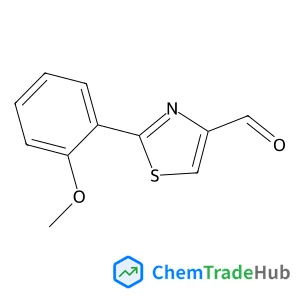
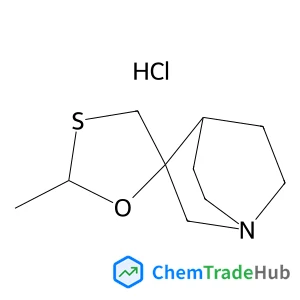
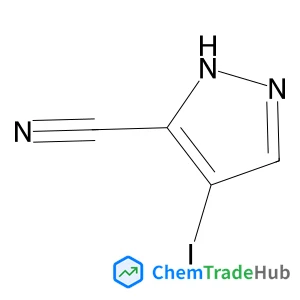
![4-[(1-Methyl-1H-pyrrol-2-yl)methylene]-1,3(2H,4H)-isoquinolinedione structure](https://cnstatic.chemtradehub.com/structs/110/1104546-89-5-a600.webp "4-[(1-Methyl-1H-pyrrol-2-yl)methylene]-1,3(2H,4H)-isoquinolinedione structure")
4-[(1-Methyl-1H-pyrrol-2-yl)methylene]-1,3(2H,4H)-isoquinolinedione
CAS号:
1104546-89-5
分子式:
C15H12N2O2
推荐供应商






免责声明
本页面提供的学术期刊信息仅供参考和研究使用。我们与任何期刊出版商均无关联,也不处理投稿事宜。如有投稿相关咨询,请直接联系相关期刊出版商。
如发现页面信息有误,请发送邮件至 support@chemtradehub.com 联系我们。我们将及时核实并处理您的问题。