






![(2S)-{[(9H-Fluoren-9-ylmethoxy)carbonyl]amino}(phenyl)acetic acid structure](https://cnstatic.chemtradehub.com/structs/102/102410-65-1-4aa7.webp "(2S)-{[(9H-Fluoren-9-ylmethoxy)carbonyl]amino}(phenyl)acetic acid structure")
Design of an apoptotic cell-mimetic wound dressing using phosphoserine–chitosan hydrogels
文献信息
发布日期
2023-10-31
DOI
10.1039/D3BM01259J
影响因子
6.843
作者
Oh Hyeong Kwon
查看原文
摘要
Inflammatory M1 macrophages create a hostile environment that impedes wound healing. Phosphoserine (PS) is a naturally occurring immunosuppressive molecule capable of polarizing macrophages from an inflammatory phenotype (M1) to an anti-inflammatory phenotype (M2). In this study, we designed, fabricated, and characterized PS-immobilized chitosan hydrogels as potential wound dressing materials. A PS group precursor was synthesized via a phosphoramidite reaction and subsequently immobilized onto the chitosan chain through an EDC/N-hydroxysuccinimide reaction using a crosslink moiety HPA. The PS/HPA-conjugated chitosan (CS–PS) was successfully synthesized by deprotecting the PS group in HCl. In addition, the hydrogels were prepared by the HRP/H2O2 enzyme-catalyzed reaction with different PS group contents (0, 7.27, 44.28 and 56.88 μmol g−1). The immobilization of the PS group improved the hydrophilicity of the hydrogels. Interestingly, CS–PS hydrogel treatment upregulated both pro-inflammatory and anti-inflammatory cytokines. This treatment also resulted in alterations in the macrophage cell morphology from the M1 to M2 phenotype. The CS–PS hydrogel significantly accelerated diabetic wound healing. Overall, this study provides insights into the potential of PS-immobilized hydrogel materials for improved inflammatory disease therapy.
相关文献
Synthesis of a manganese dioxide nanorod-anchored graphene oxide composite for highly sensitive electrochemical sensing of dopamine
Juan Li, Huifang Shen, Suhua Yu, Geshan Zhang, Chuanli Ren, Xiaoya Hu, Zhanjun Yang
2020-03-25
Paper
DOI: 10.1039/D0AN00348D
An ionic-based carbon dot for enantioselective discrimination of nonaromatic amino alcohols
Datong Wu, Fei Pan, Li Gao, Yongxin Tao, Yong Kong
2020-03-11
Paper
DOI: 10.1039/D0AN00399A
Facile synthesis of fluorescent tungsten oxide quantum dots for telomerase detection based on the inner filter effect
Li Zhang, Jia-Qing Chen, Ming-Fang Hong, Ru-Ping Liang
2020-03-06
Paper
DOI: 10.1039/D0AN00296H
Electrochemiluminescent aptamer-sensor for alpha synuclein oligomer based on a metal–organic framework
Qian Wu, Rong Tan, Xiaona Mi, Yifeng Tu
2020-02-14
Paper
DOI: 10.1039/D0AN00169D
Raman spectroscopic analysis of the molecular composition of oral cavity squamous cell carcinoma and healthy tongue tissue
T. C. Bakker Schut, P. J. Caspers, R. J. Baatenburg de Jong, S. Koljenović, G. J. Puppels
2018-07-31
Paper
DOI: 10.1039/C7AN02106B
Antibody free ELISA-like assay for the detection of transcription factors based on double-stranded DNA thermostability
Yue Sun, Zhiyan Li, Choiwan Lau, Jianzhong Lu
2020-03-09
Paper
DOI: 10.1039/C9AN02631B
Combined Raman and AFM detection of changes in HeLa cervical cancer cells induced by CeO2 nanoparticles – molecular and morphological perspectives
Mirjana Miletić, Sonja Aškrabić, Jan Rüger, Borislav Vasić, Lela Korićanac, Abdullah Saif Mondol, Jan Dellith, Jürgen Popp, Zorana Dohčević-Mitrović
2020-03-24
Paper
DOI: 10.1039/C9AN02518A
Sensitive and selective monitoring of the DNA damage-induced intracellular p21 protein and unraveling the role of the p21 protein in DNA repair and cell apoptosis by surface plasmon resonance
Yuhan He, Zixiao Wang, Yuqing Hu, Xinyao Yi, Zhong Cao, Jianxiu Wang
2020-04-06
Paper
DOI: 10.1039/C9AN02464F
Selection and community analysis of halophilic mixed exoelectrogens from salt lake soils
Zhuangzhuang Liu, Yamei Ma, Bo Tian, Chenxi Li, Yujing Jiang, Nazish Manzoor, Ying Liu
2018-07-12
Paper
DOI: 10.1039/C8AN00809D
您可能还喜欢
化合物问答
如何储存8-溴-4-羟基-6-(三氟甲氧基)喹啉-3-羧酸乙酯(CAS号:1072944-81-0)?
8-溴-4-羟基-6-(三氟甲氧基)喹啉-3-羧酸乙酯应储存在阴凉、干燥的地方,避免光照和高温。建议使用密封容器进行储存,以防止水分和空气的影响。
1072944-81-0Ethyl 8-bromo-4-hydr...
化合物问答
2,2-二(2-呋喃基)丙烷(CAS号:17920-88-6)的市场或研究趋势如何?
2,2-二(2-呋喃基)丙烷的研究趋势主要集中在新型材料的开发和应用,如高分子材料、有机光电材料等。市场趋势方面,随着环保要求的提高和新材料的应用,该化合物的需...
17920-88-62,2'-(2,2-Propanediy...
化合物问答
如何处理含有螺[呋喃并[3,4-b]吡啶-5(7H),4'-哌啶]-7-酮盐酸盐(CAS号:475152-31-9)的废料?
对于含有螺[呋喃并[3,4-b]吡啶-5(7H),4'-哌啶]-7-酮盐酸盐的废料,应首先进行分类和分离,以减少危险物质的数量。随后,可以考虑通过化学氧化、生物...
475152-31-97H-Spiro[furo[3,4-b]...
化合物问答
Cinnamyl 3-aminobut-2-enoate(CAS号:113898-97-8)安全吗?
Cinnamyl 3-氨基丁-2-烯酸在接触皮肤和眼睛时可能会引起刺激。应避免吸入其粉尘和烟雾。操作时应穿戴适当的个人防护装备,如手套、护目镜和实验室外套。
113898-97-8Cinnamyl 3-aminobut-...
化合物问答
反式-2-十二碳烯二酸(CAS号:6402-36-4)的市场或研究趋势如何?
反式-2-十二碳烯二酸在医药、材料科学等领域有一定的应用,但其市场相对较小。近年来,由于环保意识的提升,对环境友好型化学品的需求增加,研究倾向于开发更绿色的合成...
6402-36-4Traumatic Acid
化合物问答
什么是(9ci)-1H-苯并咪唑-5-乙酸(CAS号:473895-86-2)?
(9ci)-1H-苯并咪唑-5-乙酸是一种含氮杂环化合物,其化学结构为1H-苯并咪唑-5-乙酸。该化合物具有特定的分子式C8H7NO2,属于有机酸类化合物。
473895-86-21H-Benzimidazol-5-yl...
化合物问答
酞菁蓝(CAS号:147-14-8)的主要用途是什么?
酞菁蓝主要用作颜料和染料,广泛应用于塑料、油墨、涂料、纺织品及橡胶工业中。它也用于光敏材料,如太阳能电池和光刻胶。在医疗领域,酞菁蓝因其光敏特性被用于某些光动力...
147-14-8Copper(2+) phthalocy...
化合物问答
5-甲基-1,2,3,4-四氢异喹啉(CAS号:123593-99-7)安全吗?
5-甲基-1,2,3,4-四氢异喹啉在使用和储存时需要谨慎处理。它具有一定的毒性,应避免吸入其蒸气或直接接触皮肤和眼睛。操作此化合物时,建议佩戴防护眼镜、实验服...
123593-99-75-Methyl-1,2,3,4-tet...
化合物问答
如何处理含有3',4',5'-三甲氧基苯乙酮(CAS号:1136-86-3)的废料?
含有3',4',5'-三甲氧基苯乙酮的废液应首先确保其是否为危险废物,根据当地法规确定处理方法。通常,这类有机废液可以采用中和反应降低其pH值,然后通过蒸馏或萃...
1136-86-31-(3,4,5-Trimethoxyp...
化合物问答
如何储存KI-7(CAS号:1489263-00-4)?
KI-7应储存在通风良好的干燥环境中,避免光照和高温。建议使用密封容器储存,并保持在阴凉处。储存温度应控制在室温范围内,一般建议不超过25°C。避免与氧化剂接触...
1489263-00-42-(1-Benzyl-1H-indol...
来源期刊
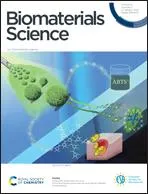
Biomaterials Science
CiteScore:
11.5
自引率:
3.4%
年发文量:
492
Biomaterials Science is an international high impact journal exploring the science of biomaterials and their translation towards clinical use. Its scope encompasses new concepts in biomaterials design, studies into the interaction of biomaterials with the body, and the use of materials to answer fundamental biological questions. Papers do not necessarily need to report a new biomaterial but should provide novel insight into the biological applications of the biomaterial. Articles that primarily focus on demonstrating novel materials chemistry and bring a molecular picture to bear on a given material’s suitability as a biomaterial are more suited to our companion journal, Journal of Materials Chemistry B. Biomaterials Science publishes primary research and review-type articles in the following areas: molecular design of biomaterials, including translation of emerging chemistries to biomaterials science of cells and materials at the nanoscale and microscale materials as model systems for stem cell and human biology materials for tissue engineering and regenerative medicine (Nano)materials and (nano)systems for therapeutic delivery interactions at the biointerface biologically inspired and biomimetic materials, including bio-inspired self-assembly systems and cell-inspired synthetic tools next-generation biomaterials tools and methods
推荐化合物
推荐供应商




免责声明
本页面提供的学术期刊信息仅供参考和研究使用。我们与任何期刊出版商均无关联,也不处理投稿事宜。如有投稿相关咨询,请直接联系相关期刊出版商。
如发现页面信息有误,请发送邮件至 support@chemtradehub.com 联系我们。我们将及时核实并处理您的问题。