





Biomimetic, self-coacervating adhesive with tough underwater adhesion for ultrafast hemostasis and infected wound healing
文献信息
发布日期
2023-10-19
DOI
10.1039/D3BM01391J
影响因子
6.843
作者
Xu Zhang, Donghua Xu, Mingzhe Wang, Qiuyan Yan, Jinghua Yin
查看原文
摘要
Massive bleeding and wound infection due to severe traumas pose a huge threat to the life and health of sufferers; therefore, it is of clinical importance to fabricate adhesives with rapid hemostatic and superior antibacterial capabilities. However, the weak wet adhesion and insufficient function of existing bioadhesives limits their practical application. In this study, a sandcastle worm protein inspired polyelectrolyte self-coacervate adhesive of poly-γ-glutamic acid (PGA) and lysozyme (LZM) was developed. The adhesive exhibited strong underwater adhesion to various surfaces (>250 kPa for solid plates and >50 kPa for soft tissues) and maintained a 80 kPa even when soaked in water for 7 days. Rat liver and tail defect bleeding models revealed that the hemostatic efficiency was superior to that of commercial samples. The in vitro antimicrobial tests showed that the bacterial inhibition to Staphylococcus aureus and Escherichia coli reached almost 100%. Additionally, the infected wound regeneration model demonstrated that the healing rate of the adhesive group was about 100% within 15 days, which was greater than that of the control group. In vitro and in vivo experiments proved that this facilely prepared adhesive will be a promising material to fulfil the integration functions for rapid wound closure and facilitating wound healing.
相关文献
One-incubation one-hour multiplex ELISA enabled by aqueous two-phase systems
Cameron Yamanishi, Midori Maeda, Taisuke Kojima, John Dishinger, Rattikan Chantiwas, Shuichi Takayama
2020-03-27
Paper
DOI: 10.1039/D0AN00383B
Improving the throughput of immunoaffinity purification and enzymatic digestion of therapeutic proteins using membrane-immobilized reagent technology
Michelle R. Robinson, Lisa A. Vasicek, Christian Hoppmann, Mandy Li, Gia Jokhadze, Daniel S. Spellman
2020-03-11
Paper
DOI: 10.1039/D0AN00190B
Synthesis and cell imaging studies of an unusual “OFF–ON” fluorescent sensor containing a triazole unit for Al3+ detection via selective imine hydrolysis
Serkan Erdemir, Sait Malkondu, Serdar Kararkurt
2020-03-24
Paper
DOI: 10.1039/C9AN02500F
Precision medicine, bioanalytics and nanomaterials: toward a new generation of personalized portable diagnostics
Maria Maddalena Calabretta, Martina Zangheri, Antonia Lopreside, Elisa Marchegiani, Laura Montali, Patrizia Simoni, Aldo Roda
2020-02-25
Critical Review
DOI: 10.1039/C9AN02041A
An electrochemical sensor based on enzyme-free recycling amplification for sensitive and specific detection of miRNAs from cancer cells
Lili Jiang, Yuling Yang, Yuhong Lin, Ziyi Chen, Chao Xing, Chunhua Lu, Huanghao Yang, Shusheng Zhang
2020-03-09
Paper
DOI: 10.1039/D0AN00275E
Reporter bacteriophage T7NLC utilizes a novel NanoLuc::CBM fusion for the ultrasensitive detection of Escherichia coli in water
T. C. Hinkley, S. Garing, S. Singh, A-L. M. Le Ny, K. P. Nichols, J. E. Peters, J. N. Talbert, S. R. Nugen
2018-08-02
Paper
DOI: 10.1039/C8AN00781K
Partial least squares-discriminant analysis (PLS-DA) for classification of high-dimensional (HD) data: a review of contemporary practice strategies and knowledge gaps
Choong-Yeun Liong, Abdul Aziz Jemain
2018-06-01
Critical Review
DOI: 10.1039/C8AN00599K
Lossless immunocytochemistry using photo-polymerized hydrogel thin-films
2020-02-27
Communication
DOI: 10.1039/C9AN02503K
Towards microbioprocess control: an inexpensive 3D printed microbioreactor with integrated online real-time glucose monitoring
Peter Panjan, Vesa Virtanen, Adama Marie Sesay
2018-05-21
Paper
DOI: 10.1039/C8AN00308D
A method for the statistical evaluation of the fluorescence intensity of single blinking quantum dots using a confocal fluorescence microscope
Zheng-Yuan Hong, Shu-Lin Liu, Dai-Wen Pang
2020-03-04
Paper
DOI: 10.1039/D0AN00010H
您可能还喜欢
化合物问答
如何储存8-溴-4-羟基-6-(三氟甲氧基)喹啉-3-羧酸乙酯(CAS号:1072944-81-0)?
8-溴-4-羟基-6-(三氟甲氧基)喹啉-3-羧酸乙酯应储存在阴凉、干燥的地方,避免光照和高温。建议使用密封容器进行储存,以防止水分和空气的影响。
1072944-81-0Ethyl 8-bromo-4-hydr...
化合物问答
2,2-二(2-呋喃基)丙烷(CAS号:17920-88-6)的市场或研究趋势如何?
2,2-二(2-呋喃基)丙烷的研究趋势主要集中在新型材料的开发和应用,如高分子材料、有机光电材料等。市场趋势方面,随着环保要求的提高和新材料的应用,该化合物的需...
17920-88-62,2'-(2,2-Propanediy...
化合物问答
如何处理含有螺[呋喃并[3,4-b]吡啶-5(7H),4'-哌啶]-7-酮盐酸盐(CAS号:475152-31-9)的废料?
对于含有螺[呋喃并[3,4-b]吡啶-5(7H),4'-哌啶]-7-酮盐酸盐的废料,应首先进行分类和分离,以减少危险物质的数量。随后,可以考虑通过化学氧化、生物...
475152-31-97H-Spiro[furo[3,4-b]...
化合物问答
Cinnamyl 3-aminobut-2-enoate(CAS号:113898-97-8)安全吗?
Cinnamyl 3-氨基丁-2-烯酸在接触皮肤和眼睛时可能会引起刺激。应避免吸入其粉尘和烟雾。操作时应穿戴适当的个人防护装备,如手套、护目镜和实验室外套。
113898-97-8Cinnamyl 3-aminobut-...
化合物问答
反式-2-十二碳烯二酸(CAS号:6402-36-4)的市场或研究趋势如何?
反式-2-十二碳烯二酸在医药、材料科学等领域有一定的应用,但其市场相对较小。近年来,由于环保意识的提升,对环境友好型化学品的需求增加,研究倾向于开发更绿色的合成...
6402-36-4Traumatic Acid
化合物问答
什么是(9ci)-1H-苯并咪唑-5-乙酸(CAS号:473895-86-2)?
(9ci)-1H-苯并咪唑-5-乙酸是一种含氮杂环化合物,其化学结构为1H-苯并咪唑-5-乙酸。该化合物具有特定的分子式C8H7NO2,属于有机酸类化合物。
473895-86-21H-Benzimidazol-5-yl...
化合物问答
酞菁蓝(CAS号:147-14-8)的主要用途是什么?
酞菁蓝主要用作颜料和染料,广泛应用于塑料、油墨、涂料、纺织品及橡胶工业中。它也用于光敏材料,如太阳能电池和光刻胶。在医疗领域,酞菁蓝因其光敏特性被用于某些光动力...
147-14-8Copper(2+) phthalocy...
化合物问答
5-甲基-1,2,3,4-四氢异喹啉(CAS号:123593-99-7)安全吗?
5-甲基-1,2,3,4-四氢异喹啉在使用和储存时需要谨慎处理。它具有一定的毒性,应避免吸入其蒸气或直接接触皮肤和眼睛。操作此化合物时,建议佩戴防护眼镜、实验服...
123593-99-75-Methyl-1,2,3,4-tet...
化合物问答
如何处理含有3',4',5'-三甲氧基苯乙酮(CAS号:1136-86-3)的废料?
含有3',4',5'-三甲氧基苯乙酮的废液应首先确保其是否为危险废物,根据当地法规确定处理方法。通常,这类有机废液可以采用中和反应降低其pH值,然后通过蒸馏或萃...
1136-86-31-(3,4,5-Trimethoxyp...
化合物问答
如何储存KI-7(CAS号:1489263-00-4)?
KI-7应储存在通风良好的干燥环境中,避免光照和高温。建议使用密封容器储存,并保持在阴凉处。储存温度应控制在室温范围内,一般建议不超过25°C。避免与氧化剂接触...
1489263-00-42-(1-Benzyl-1H-indol...
来源期刊
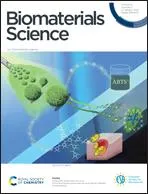
Biomaterials Science
CiteScore:
11.5
自引率:
3.4%
年发文量:
492
Biomaterials Science is an international high impact journal exploring the science of biomaterials and their translation towards clinical use. Its scope encompasses new concepts in biomaterials design, studies into the interaction of biomaterials with the body, and the use of materials to answer fundamental biological questions. Papers do not necessarily need to report a new biomaterial but should provide novel insight into the biological applications of the biomaterial. Articles that primarily focus on demonstrating novel materials chemistry and bring a molecular picture to bear on a given material’s suitability as a biomaterial are more suited to our companion journal, Journal of Materials Chemistry B. Biomaterials Science publishes primary research and review-type articles in the following areas: molecular design of biomaterials, including translation of emerging chemistries to biomaterials science of cells and materials at the nanoscale and microscale materials as model systems for stem cell and human biology materials for tissue engineering and regenerative medicine (Nano)materials and (nano)systems for therapeutic delivery interactions at the biointerface biologically inspired and biomimetic materials, including bio-inspired self-assembly systems and cell-inspired synthetic tools next-generation biomaterials tools and methods
推荐化合物
![N-[(9Z)-9-Octadecen-1-yl]-1,3-propanediamine structure](https://cnstatic.chemtradehub.com/structs/717/7173-62-8-d43e.webp "N-[(9Z)-9-Octadecen-1-yl]-1,3-propanediamine structure")
推荐供应商





免责声明
本页面提供的学术期刊信息仅供参考和研究使用。我们与任何期刊出版商均无关联,也不处理投稿事宜。如有投稿相关咨询,请直接联系相关期刊出版商。
如发现页面信息有误,请发送邮件至 support@chemtradehub.com 联系我们。我们将及时核实并处理您的问题。