


Modulation of single-chain magnet behaviour in a heterometallic Fe2Co cyanide-bridged 2D sheet
文献信息
发布日期
2023-12-14
DOI
10.1039/D3CC03647B
影响因子
6.222
作者
Ranjan Kharel, Jyoti Yadav, Sanjit Konar
查看原文
摘要
A cyanide-bridged Fe2Co 2D sheet exhibiting electron transfer coupled spin transition (ETCST) with co-existence of magnetic ordering below 50 K is reported. The complex exhibits single-chain magnet behaviour where the uncoordinated water molecules act as an exchange-breaking impurity by allowing only a fraction of the molecule to undergo a spin state change. The paramagnetic centres prevail throughout the chain on desolvation, thereby increasing the number of correlated units in the chain.
相关文献
NRIS study on the [FeN6] core in photo-induced high-spin state of [Fe(2-pic)3]Cl2·EtOH
Gergely Juhász, Makoto Seto, Yoshitaka Yoda, Shinya Hayami, Yonezo Maeda
2004-09-29
Communication
DOI: 10.1039/B409025J
Short and stereoselective synthesis of C-glycosylated glycine derivatives from glycals by radical addition and reduction
Thomas Sommermann, Boo Geun Kim, Karl Peters, Eva-Maria Peters, Torsten Linker
2004-10-05
Communication
DOI: 10.1039/B410120K
Oxide surface-promoted Pd-complex catalysis for intramolecular O-activated alkenehydroamination: catalyst preparation, characterization, and performance
Mizuki Tada, Michio Shimamoto, Takehiko Sasaki, Yasuhiro Iwasawa
2004-09-28
Communication
DOI: 10.1039/B408419E
Asymmetric synthesis of 2-alkyl- and 2-aryl-3-aminopropionic acids (β2-amino acids) from (S)-N-acryloyl-5,5-dimethyloxazolidin-2-one SuperQuat derivatives
James E. Beddow, Stephen G. Davies, Andrew D. Smith, Angela J. Russell
2004-10-22
Communication
DOI: 10.1039/B410938D
Selective synthesis of isomeric heterodinuclear complexes with switched metal arrangements viaproton-induced reversible metal migration
Christian Dubs, Akiko Inagaki, Munetaka Akita
2004-10-21
Communication
DOI: 10.1039/B409514F
First example of chiral N-heterocyclic carbenes as catalysts for kinetic resolution
Yumiko Suzuki, Kaori Yamauchi, Kazuyuki Muramatsu, Masayuki Sato
2004-10-11
Communication
DOI: 10.1039/B411855C
A direct meta-lithiation route to 1,3-disubstituted ferrocenes
Christophe Pichon, Barbara Odell, John M. Brown
2004-02-10
Communication
DOI: 10.1039/B314641C
Biomimetic synthesis of the pyrrolobenzoxazine core of paeciloxazine
Dirk Schwaebisch, Kirill Tchabanenko, Robert M. Adlington, Andrew M. Cowley, Jack E. Baldwin
2004-10-25
Communication
DOI: 10.1039/B412300J
Ordered mesoporous titanosilicates with catalytically stable and active four-coordinated titanium sites
Xiaoyu Yang, Yu Han, Kaifeng Lin, Ge Tian, Yefei Feng, Xiangju Meng, Yan Di, Yuncheng Du, Yonglai Zhang, Feng-Shou Xiao
2004-10-04
Communication
DOI: 10.1039/B410305J
Polymorphism in butylated hydroxy anisole (BHA)
Jennifer A. McMahon, Michael J. Zaworotko, Julius F. Remenar
2004-01-06
Communication
DOI: 10.1039/B311606A
您可能还喜欢
化合物问答
十二烷基磺酸钠(CAS号:2386-53-0)的主要用途是什么?
十二烷基磺酸钠主要用作表面活性剂,广泛应用于洗涤剂、肥皂、化妆品和工业清洁产品中。它能有效去除油脂和污垢,常用于制造洗发水、沐浴露、洗衣粉和金属清洗剂。此外,它...
2386-53-01-Dodecanesulfonic a...
化合物问答
5-羟基异喹啉(CAS号:2439-04-5)适用哪些法规指南?
5-羟基异喹啉作为化学品,主要适用的法规包括GHS全球化学品统一分类和标签制度,REACH法规等。GHS将5-羟基异喹啉分类为皮肤腐蚀/刺激类别2,严重眼损伤/...
2439-04-55-Isoquinolinol
化合物问答
在合成中是否有FIDAS-5 | Wnt(CAS号:1391934-98-7)的替代品?
合成中可以考虑使用类似结构的化合物,如4-[(E)-2-(2-氯-6-氟苯基)乙烯基]-N-甲基苯胺的类似物或衍生物作为替代品。这类化合物可能具有相似的生物活性...
1391934-98-74-[(E)-2-(2-Chloro-6...
化合物问答
(R)-tert-Butyl 2-(5-bromo-1H-imidazol-2-yl)pyrrolidine-1-carboxylate(CAS号:1370600-56-8)通常如何合成?
该化合物通常通过如下步骤合成:首先,将4-溴-1H-咪唑与对甲苯磺酸在乙酸乙酯中反应,得到中间体5-溴-1H-咪唑-2-甲酸乙酯。然后,该中间体与2-甲基-2-...
1370600-56-82-Methyl-2-propanyl ...
化合物问答
处理4-(吡咯烷-1-基)环己酮(CAS号:10421-18-8)时应注意哪些实验室安全事项?
处理4-(吡咯烷-1-基)环己酮时,应佩戴手套、护目镜和实验室外套,以防止直接接触或吸入。在通风橱中操作,确保良好的通风条件。一旦发生泄漏,应立即清理并使用适当...
10421-18-84-(Pyrrolidin-1-yl)c...
化合物问答
如何处理含有异麦芽糖醇(CAS号:534-73-6)的废料?
含有异麦芽糖醇的废液应首先进行分类收集,避免与其他化学品混合。对于小规模的废液,可以通过焚烧或加入特定的化学试剂进行无害化处理。对于大规模的废液,建议联系专业的...
534-73-66-O-alpha-D-Glucopyr...
化合物问答
7-甲基壬酸(CAS号:41653-89-8)的主要用途是什么?
7-甲基壬酸主要用于有机合成领域,作为合成其他化合物的原料。此外,它还可能作为一种中间体用于药品制造和香料合成,但具体用途需要根据其具体的化学结构和反应特性来确...
41653-89-87-Methylnonanoic aci...
化合物问答
N-甲氧基-N-甲基甲基吡啶羧酰胺(CAS号:148493-07-6)应用于哪些行业?
N-甲氧基-N-甲基甲基吡啶羧酰胺在医药领域有一定的应用,作为一种潜在的药物前体或中间体。此外,该化合物也可能应用于聚合物改性剂、传感器材料等。由于其独特的化学...
148493-07-6N-Methoxy-N-methylpi...
化合物问答
什么是惕各酸香叶酯(CAS号:7785-33-3)?
惕各酸香叶酯是一种化合物,化学名称为(2E)-3,7-二甲基-2,6-辛二烯-1-基(2E)-2-甲基-2-丁烯酸酯。它是一种具有香叶香气的化合物,分子式为C1...
7785-33-3(2E)-3,7-Dimethyl-2,...
化合物问答
1-环丁基哌嗪(CAS号:132800-13-6)安全吗?
1-环丁基哌嗪在适当的操作条件下是相对安全的,但如遇明火或高热会释放有毒气体。操作时应佩戴防护眼镜和手套,避免吸入或接触皮肤、眼睛。
132800-13-61-Cyclobutylpiperazi...
来源期刊
Chemical Communications

CiteScore:
8.6
自引率:
4.7%
年发文量:
2458
ChemComm publishes urgent research which is of outstanding significance and interest to experts in the field, while also appealing to the journal’s broad chemistry readership. Our communication format is ideally suited to short, urgent studies that are of such importance that they require accelerated publication. Our scope covers all topics in chemistry, and research at the interface of chemistry and other disciplines (such as materials science, nanoscience, physics, engineering and biology) where there is a significant novelty in the chemistry aspects. Major topic areas covered include: Analytical Chemistry Catalysis Chemical Biology and medicinal chemistry Computational Chemistry and Machine Learning Energy and sustainable chemistry Environmental Chemistry Green Chemistry Inorganic Chemistry Materials Chemistry Nanoscience Organic Chemistry Physical Chemistry Polymer Chemistry Supramolecular Chemistry
推荐化合物
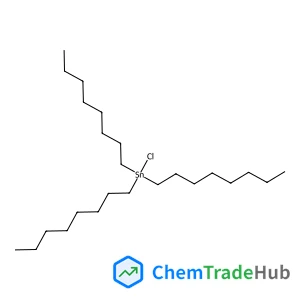
![2-Hydroxy-4-[({[(4-methylphenyl)sulfonyl]oxy}acetyl)amino]benzoic acid structure](https://cnstatic.chemtradehub.com/structs/501/501919-59-1-579f.webp "2-Hydroxy-4-[({[(4-methylphenyl)sulfonyl]oxy}acetyl)amino]benzoic acid structure")
2-Hydroxy-4-[({[(4-methylphenyl)sulfonyl]oxy}acetyl)amino]benzoic acid
CAS号:
501919-59-1
分子式:
C16H15NO7S
推荐供应商






免责声明
本页面提供的学术期刊信息仅供参考和研究使用。我们与任何期刊出版商均无关联,也不处理投稿事宜。如有投稿相关咨询,请直接联系相关期刊出版商。
如发现页面信息有误,请发送邮件至 support@chemtradehub.com 联系我们。我们将及时核实并处理您的问题。