


![[2',6'-bis(propan-2-yloxy)-[1,1'-biphenyl]-3-yl]dicyclohexylphosphane structure](https://cnstatic.chemtradehub.com/structs/787/787618-22-8-dda2.webp "[2',6'-bis(propan-2-yloxy)-[1,1'-biphenyl]-3-yl]dicyclohexylphosphane structure")
[2',6'-bis(propan-2-yloxy)-[1,1'-biphenyl]-3-yl]dicyclohexylphosphane
CAS号:
787618-22-8
分子式:
C30H43O2P
Junwei Xu, Xusheng Zhong, Rumeng Ouyang, Xiuzhong Fang, Xianglan Xu, Xiang Wang
In this study, regular ANbO3 (A = Na, K) perovskites and layered (A′ = Ca, Sr) perovskites have been successfully synthesized using the hydrothermal method for catalyzing oxidative coupling of methane (OCM) and oxidative dehydrogenation of ethane (ODHE). The findings reveal that unit cell free volume (Vf) is the most important factor for regular perovskites since it affects methane, ethane, and oxygen conversions. Meanwhile, the radii ratio of A and B atoms (rA/rB ratio) is the key parameter for layered perovskites and influences these conversions. Owing to the high-temperature phase transitions of regular perovskites, which generate oxygen vacancies and improve their oxygen mobility, the above-mentioned conversions are more profound in regular perovskites than those in layered perovskites. For OCM, chemisorbed oxygen species O2− and O22− are the selective oxygen species, while the surface lattice oxygen species are the completely oxidized hydrocarbon active species. For ODHE, surface O2− and chemisorbed oxygen species O2− are the selective oxygen species. During OCM, Vf and rA/rB ratio of regular and layered perovskites also affect C2 selectivity. This is because both these factors affect oxygen mobility, thereby influencing the generation of chemisorbed oxygen species and resulting in their C2 selectivity sequences being consistent with the methane, ethane, and oxygen conversions. During ODHE, the Nb–O bond strength is an important factor affecting C2H4 selectivity. Compared to regular perovskites, layered perovskites have longer and weaker Nb–O bonds. Meanwhile, the Nb–O bond is prone to fracture in both reactions, which results in more active lattice oxygen. Consequently, layered perovskites exhibit high COx selectivity during OCM, thus decreasing C2 selectivity. During ODHE, layered perovskites exhibit high C2H4 selectivity.
Biocatalysis and Biotransformation
Bioorganic & Medicinal Chemistry
Critical Reviews in Solid State and Materials Sciences
NDT & E International
Heteroatom Chemistry
Main Group Chemistry
Journal of Chemical Sciences
Acta Metallurgica Sinica-English Letters
Medicinal Chemistry Research
Herald of the Russian Academy of Sciences
Landry Charlier, Claude Nespoulous, Sébastien Fiorucci, Serge Antonczak, Jérome Golebiowski
DOI: 10.1039/B710186D
L. Rubio-Lago, G. A. Amaral, A. Arregui, J. G. Izquierdo, F. Wang, L. Bañares
DOI: 10.1039/B708310F
Juha Vaara
DOI: 10.1039/B706135H
Elise E. Dumont, Deborah L. Crittenden, Peter M. W. Gill
DOI: 10.1039/B709513A
Xiangyang Shi, Thommey P. Thomas, Lukasz A. Myc, Alina Kotlyar, James R. Baker, Jr
DOI: 10.1039/B709147H
F. J. Aoiz, V. J. Herrero, M. P. de Miranda, V. Sáez Rábanos
DOI: 10.1039/B709161C
4-[4-三氟甲基苯基]恶唑通常通过将4-三氟甲基苯酚与异硫氰酸苯酯在有机溶剂中进行酯化反应合成。该反应可在无水条件下,使用适当的催化剂,如四丁基氢氧化铵,以提...
RockPhos Pd G3 通常通过钯催化偶联反应合成,使用配体 (2'-Amino-2-biphenylyl)(methanesulfonato-kappa...
1-哌啶甲酰胺作为有机合成中的重要中间体,其市场需求主要受医药、农药、染料等行业推动。近年来,随着新药开发和绿色化学的发展,该化合物的研究趋势集中在开发更高效、...
2-(二苯基膦基)乙胺适用于多种法规指南,包括但不限于《全球化学品统一分类和标签制度》(GHS),欧盟《化学品注册、评估、授权和限制》法规(REACH),以及美...
间苯二甲酸二烯丙酯应储存在阴凉、干燥、通风良好的地方,远离火源和热源。储存容器应密封,避免光照和高温。储存温度应控制在25℃以下,相对湿度应低于80%。避免与其...
间甲苯异硫代异氰酸酯是一种有机化合物,分子式为C7H7NO2S,具有刺激性气味。它是一种重要的有机合成中间体,在合成其他化合物时广泛应用。
在合成中,可以考虑使用N-Cbz-D-苯丙氨醇或N-Fmoc-D-苯丙氨醇作为替代品。这些化合物同样具有保护氨基的功能,且在合成过程中表现出良好的反应性能。
3-羟甲基-2-氧异丙基吡啶主要用于有机合成领域,可以作为合成其他药物、农药或精细化学品的中间体。此外,它还可能在实验室研究中作为特定反应的前体或溶剂。
6-氨基-9-甲基嘌呤目前主要应用于医药行业,作为某些药物的中间体。此外,它还可能用于聚合物、传感器和半导体的某些领域,作为功能性单体或掺杂剂。
Catalysis Science & Technology is committed to publishing research reporting high-quality, cutting-edge developments across the catalysis community at large. The journal places equal focus on publications from the heterogeneous, homogeneous, thermo-, electro-, photo-, organo- and biocatalysis communities. Works published in the journal feature a balanced mix of fundamental, technology-oriented, experimental, computational, digital and data-driven original research, thus appealing to catalysis practitioners in both academic and industrial environments. Original research articles published in the journal must demonstrate new catalytic discoveries and/or methodological advances that represent a significant advance on previously published work, from the molecular to the process scales. We welcome rigorous research in a wide range of timely or emerging applications related to the environment, health, energy and materials. Catalysis Science & Technology publishes Communications, Articles, Reviews and Perspectives. More details regarding manuscript types may be found in the Information for Authors section.
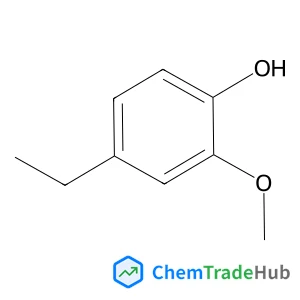
![1-(Hexopyranosyloxy)-4a,5-dihydroxy-7-methyl-1,4a,5,6,7,7a-hexahydrocyclopenta[c]pyran-7-yl 3-phenylacrylate structure](https://cnstatic.chemtradehub.com/structs/192/19210-12-9-ecae.webp "1-(Hexopyranosyloxy)-4a,5-dihydroxy-7-methyl-1,4a,5,6,7,7a-hexahydrocyclopenta[c]pyran-7-yl 3-phenylacrylate structure")





