


Liberation of carbon monoxide from formic acid mediated by molybdenum oxyanions
文献信息
发布日期
2023-10-16
DOI
10.1039/D3DT01983G
影响因子
4.39
作者
Howard Z. Ma, Allan J. Canty, Richard A. J. O'Hair
查看原文
摘要
Multistage mass spectrometry experiments, isotope labelling and DFT calculations were used to explore whether selective decarbonylation of formic acid could be mediated by molybdate anions [(MoO3)x(OH)]− (x = 1 and 2) via a formal catalytic cycle involving two steps. In step 1, both molybdate anions undergo gas-phase ion-molecule reactions (IMR) with formic acid to produce the coordinated formates [(MoO3)x(O2CH)]− and H2O. In step 2, both coordinated formates [(MoO3)x(O2CH)]− undergo decarbonylation under collision-induced dissociation (CID) conditions to reform the molybdate anions [(MoO3)x(OH)]− (x = 1 and 2), thus closing a formal catalytic cycle. In the case of [MoO3(O2CH)]− an additional decarboxylation channel also occurs to yield [MoO3(H)]−, which is unreactive towards formic acid. The reaction between [Mo18O3(18OH)]− and formic acid gives rise to [Mo18O3(O2CH)]− highlighting that ligand substitution occurs without 18O/16O exchange between the coordinated 18OH ligand and HC16O2H. The reaction between [(MoO3)x(OD)]− (x = 1 and 2) and DCO2H initially produces [(MoO3)x(OH)]− (x = 1 and 2), indicating that D/H exchange occurs. DFT calculations were carried out to investigate the reaction mechanisms and energetics associated with both steps of the formal catalytic cycle and to better understand the competition between decarbonylation and decarboxylation, which is crucial in developing a selective catalyst. The CO and CO2 loss channels from the monomolybdate anion [MoO3(O2CH)]− have similar barrier heights which is in agreement with experimental results where both fragmentation channels are observed. In contrast, the dimolybdate anion is more selective, since the decarbonylation pathway of [(MoO3)2(O2CH)]− is both kinetically and thermodynamically favoured, which agrees with experimental observations where the CO loss channel is solely observed.
期刊推荐
Journal of Enzyme inhibition and Medicinal Chemistry
Mini-Reviews in Medicinal Chemistry
European Journal of Organic Chemistry

Advanced Engineering Materials
Current Pharmaceutical Biotechnology
CrystEngComm
Faraday Discussions
Lab on a Chip
Environmental Toxicology and Pharmacology
Contact Lens & Anterior Eye
相关文献
Investigation of collisional quenching of CCl2( 1B1 and ã 3B1) by some inorganic molecules
Yide Gao, Changjin Hu, Qin Ran, Yang Chen, Xingxiao Ma, Congxiang Chen
2002-02-26
Paper
DOI: 10.1039/B105728F
Perturbation theory of polar Kihara molecule mixtures applied to supercritical fluid extraction systems
2002-02-26
Paper
DOI: 10.1039/B108703G
On the enthalpic contribution to the redox energetics of SrFeO3−δ
Camilla Haavik, Tooru Atake, Svein Stølen
2002-02-08
Paper
DOI: 10.1039/B109683D
Thermodynamic properties and interfacial tension of a model water–carbon dioxide system
Tatyana Kuznetsova, Bjørn Kvamme
2002-02-12
Paper
DOI: 10.1039/B108726F
Controlled pattern formation in the CDIMA reaction with a moving boundary of illumination
Mads Kærn, Razvan Satnoianu, Alberto P. Muñuzuri, Michael Menzinger
2002-03-13
Paper
DOI: 10.1039/B109387H
From degeneration to damping of electrochemical oscillation induced by temperature controlling of heat-compensation type
Jinglei Lei, Jiuli Luo
2002-02-19
Paper
DOI: 10.1039/B108572G
Use of ab initio interaction energies for the prediction of phase equilibria in the system nitrogen–ethane
Gabriele Raabe, Juergen Koehler
2002-01-14
Paper
DOI: 10.1039/B108641N
Gibbs solution of the van der Waals–Maxwell problem and universality of the liquid–gas coexistence curve
Vitaly B. Rogankov, Leonid Z. Boshkov
2002-02-18
Paper
DOI: 10.1039/B107989C
Surface freezing in liquid Ga–Bi alloys: optical second harmonic and plasma generation study
2002-01-18
Paper
DOI: 10.1039/B107478B
The effect of pressure on the liquid–liquid phase equilibrium of two polydisperse polyalkylsiloxane blends
Thomas Kraska, Leonid V. Yelash
2002-02-18
Paper
DOI: 10.1039/B109176J
您可能还喜欢
化合物问答
2-氨基-2-(5-甲基噻吩-2-基)乙酸(CAS号:89776-66-9)应用于哪些行业?
2-氨基-2-(5-甲基噻吩-2-基)乙酸主要应用于医药、聚合物、传感器和半导体等行业。在医药领域,它作为中间体用于合成各种药物。在聚合物行业,它可以用作稳定剂...
89776-66-9Amino(5-methyl-2-thi...
化合物问答
什么是N-(叔丁氧羰基)-3-碘吲唑(CAS号:290368-00-2)?
N-(叔丁氧羰基)-3-碘吲唑是一种化学化合物,其英文名称为2-Methyl-2-propanyl 3-iodo-1H-indazole-1-carboxyla...
290368-00-22-Methyl-2-propanyl ...
化合物问答
N-芴甲氧羰基-D-谷氨酸(CAS号:104091-09-0)的市场或研究趋势如何?
该化合物作为重要的保护基,广泛应用于生物有机化学合成中,尤其在肽类、蛋白质和寡核苷酸的研究领域。随着合成生物学和药物开发的进展,该化合物的需求持续增长。未来的研...
104091-09-0N-[(9H-Fluoren-9-ylm...
化合物问答
2-乙氧基-1-萘酰氯(CAS号:55150-29-3)的市场或研究趋势如何?
2-乙氧基-1-萘酰氯在研究领域中主要用于合成研究和有机化学反应,随着有机合成技术的发展,其市场应用和研究兴趣可能会有所增长。尤其是在新型药物合成和新材料开发领...
55150-29-32-Ethoxy-1-naphthoyl...
化合物问答
1-甲氧基菜豆素(CAS号:65428-13-9)的主要用途是什么?
1-甲氧基菜豆素主要应用于有机合成、药物化学领域,作为合成其他有机化合物的中间体或前体。此外,由于其特殊的化学性质,也可能用于某些特定的化学研究和实验中。
65428-13-9(6aR,11aR)-1-Methoxy...
化合物问答
small>-2-氨基丁酸(CAS号:106873-99-8)的主要用途是什么?
small>-2-氨基丁酸主要应用于有机合成和化学研究中,作为中间体或试剂使用。此外,它还可能用于某些药物合成过程中。
106873-99-82-Formamidobutanoic ...
化合物问答
什么是5-氨基-2-氯-n-(2-呋喃甲基)苯甲酰胺(CAS号:926216-59-3)?
5-氨基-2-氯-n-(2-呋喃甲基)苯甲酰胺是一种有机化合物,其分子式为C11H9ClN3O。它具有一定的生物活性,在合成化学和药物化学中有一定的应用价值。
926216-59-35-Amino-2-chloro-N-(...
化合物问答
4-(3-溴苯甲酰基)-哌嗪-1-羧酸叔丁酯(CAS号:890153-34-1)适用哪些法规指南?
该化合物根据其化学性质和用途,可能需要符合GHS(全球化学品统一分类和标签制度)的分类标准,包括急性毒性、皮肤腐蚀/刺激、严重眼损伤/眼刺激等类别。此外,根据其...
890153-34-12-Methyl-2-propanyl ...
化合物问答
如何储存(9ci)-2,4-二甲基-1H-吡咯-3-甲腈(CAS号:26187-28-0)?
应将(9ci)-2,4-二甲基-1H-吡咯-3-甲腈存放在阴凉、干燥的地方,避免阳光直射。储存容器应密封良好,防止挥发和污染。建议温度保持在20-25℃之间,湿...
26187-28-02,4-Dimethyl-1H-pyrr...
化合物问答
巨大戟醇-5,20-缩丙酮-3-当归酸酯(CAS号:87980-68-5)通常如何合成?
该化合物通常通过合成当归酸酯的方法制备,具体步骤为将当归酸酯与巨大戟醇-5,20-缩丙酮进行缩合反应,反应条件为温和的酸性环境,通常使用三氟乙酸作为催化剂。该合...
87980-68-5(4S,5S,6R,18R)-5-Hyd...
来源期刊
Dalton Transactions
CiteScore:
6.6
自引率:
11.4%
年发文量:
1868
Dalton Transactions is a journal for all areas of inorganic chemistry, which encompasses the organometallic, bioinorganic and materials chemistry of the elements, with applications including synthesis, catalysis, energy conversion/storage, electrical devices and medicine. Dalton Transactions welcomes high-quality, original submissions in all of these areas and more, where the advancement of knowledge in inorganic chemistry is significant. Specific guidance for some areas of our scope is given below.
推荐化合物
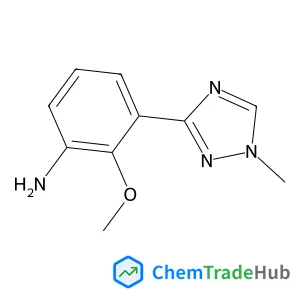
![2-Methyl-2-propanyl 4-{2-fluoro-5-[(4-oxo-3,4-dihydro-1-phthalazinyl)methyl]benzoyl}-1-piperazinecarboxylate structure](https://cnstatic.chemtradehub.com/structs/763/763114-04-1-65a9.webp "2-Methyl-2-propanyl 4-{2-fluoro-5-[(4-oxo-3,4-dihydro-1-phthalazinyl)methyl]benzoyl}-1-piperazinecarboxylate structure")
推荐供应商



免责声明
本页面提供的学术期刊信息仅供参考和研究使用。我们与任何期刊出版商均无关联,也不处理投稿事宜。如有投稿相关咨询,请直接联系相关期刊出版商。
如发现页面信息有误,请发送邮件至 support@chemtradehub.com 联系我们。我们将及时核实并处理您的问题。