






The confusion about S-scheme electron transfer: critical understanding and a new perspective
文献信息
发布日期
2023-12-07
DOI
10.1039/D3EE03282E
影响因子
38.532
作者
Fang Li, Zhaohui Fang, Zhihua Xu, Quanjun Xiang
查看原文
摘要
Charge separation is a crucial process that is closely related to the field of information and energy applications such as optoelectronics, photovoltaics, and artificial photosynthesis. The S-scheme electron transfer is widely used to regulate carrier separation due to its unique superiority. However, as our understanding of this field continues to evolve, there remain many controversial and ambiguous issues that are not well addressed. Focusing on the S-scheme electron transfer, this perspective delves into the reasons behind the confusion between the mechanisms of type-II and S-scheme transfer and clearly affords the theoretical criteria for the establishment of type-II transfer and S-scheme transfer. Considering the Fermi level alignment in a heterojunction is only applicable to the ideal situation, but not to the actual situation. The theory of Fermi level bending is further elaborated. To answer the question of whether the S-scheme driving force can be sustained, the phenomenon of Fermi level pinning is discussed intensively. Finally, the current problems and future development directions of S-scheme electron transfer are summarized and prospected.
相关文献
Self-powered ultraviolet photodetectors based on selectively grown ZnO nanowire arrays with thermal tuning performance
Zhiming Bai, Xiang Chen, Xiaoqin Yan, Xin Zheng, Zhuo Kang
2014-04-03
Paper
DOI: 10.1039/C4CP00892H
Tuning spin polarization and spin transport of zigzag graphene nanoribbons by line defects
G. P. Tang, Z. H. Zhang, X. Q. Deng, Z. Q. Fan, H. L. Zhu
2014-10-28
Paper
DOI: 10.1039/C4CP03837A
Improved permeability and selectivity in porous graphene for hydrogen purification
Chengxi Huang, Haiping Wu, Kaiming Deng, Weihua Tang
2014-10-24
Communication
DOI: 10.1039/C4CP04385E
Solid state effects on the electronic structure of H2OEP
G. Di Santo, M. Caputo, A. Goldoni, M. Kumar, M. Pedio
2014-11-03
Paper
DOI: 10.1039/C4CP03450C
An ab initio study of the CrHe diatomic molecule: the effect of van der Waals distortion on a highly magnetic multi-electron system
Johann V. Pototschnig, Martin Ratschek, Andreas W. Hauser, Wolfgang E. Ernst
2014-03-25
Paper
DOI: 10.1039/C4CP00559G
Di- and tri-oxalkyl derivatives of a boron dipyrromethene (BODIPY) rotor dye in lipid bilayers
Marie Olšinová, Piotr Jurkiewicz, Michal Pozník, Radek Šachl, Tereza Prausová, Martin Hof, Václav Kozmík, Filip Teplý, Jiří Svoboda, Marek Cebecauer
2014-04-10
Paper
DOI: 10.1039/C4CP00888J
Systematic experimental charge density analysis of anion receptor complexes
Isabelle L. Kirby, Mark Brightwell, Mateusz B. Pitak, Claire Wilson, Simon J. Coles
2014-04-28
Paper
DOI: 10.1039/C3CP54858A
Observing Pt nanoparticle formation at the atomic level during polyol synthesis
Jocenir Boita, Lucas Nicolao, Maria C. M. Alves, Jonder Morais
2014-07-10
Paper
DOI: 10.1039/C4CP01925C
Polymer-grafted multiwall carbon nanotubes functionalized by nitrene chemistry: effect on cooperativity and phase miscibility
Goutam Prasanna Kar, Priti Xavier, Suryasarathi Bose
2014-06-25
Paper
DOI: 10.1039/C4CP01594K
Crystal polymorphism: dependence of oxygen diffusion through 2D ordered Co nanocrystals
2013-12-18
Communication
DOI: 10.1039/C3CP54656J
您可能还喜欢
化合物问答
硅烷偶联剂ZQ-172(CAS号:1067-53-4)的主要用途是什么?
硅烷偶联剂ZQ-172主要用于增强无机填料与有机高分子材料之间的相容性,常见于橡胶、塑料、涂料和胶黏剂等复合体系中。其硅氧烷基团可与玻璃纤维、二氧化硅等无机物表...
1067-53-46-(2-Methoxyethoxy)-...
化合物问答
如何处理含有6-(2,4-二甲氧基苯基)-2-吡啶甲醇(CAS号:887981-31-9)的废料?
对于含有该化合物的废料,首先应收集并分类存放,避免与其它化学品混合。在处理前,需进行必要的检测,确定其含量和性质。随后,可以采用化学氧化、生物降解或物理吸附等方...
887981-31-9[6-(2,4-Dimethoxyphe...
化合物问答
甲砜霉素甘氨酸酯盐酸盐(CAS号:2611-61-2)的物理化学性质是什么?
该化合物为白色或类白色结晶性粉末,不溶于水,溶于乙醇和氯仿。分子量为403.03 g/mol。它具有手性,含有三个手性中心,分别为2S,3R构型。该化合物在酸性...
2611-61-2(2S,3R)-2-[(Dichloro...
化合物问答
如何储存反式-环丙烷-1,2-二胺双盐酸盐(CAS号:3187-76-6)?
反式-环丙烷-1,2-二胺双盐酸盐应存放在阴凉、干燥且通风良好的地方,避免阳光直射。储存容器应密封,以防挥发和受潮。同时,应远离火源和热源,确保储存环境温度不超...
3187-76-6trans-1,2-Diaminocyc...
化合物问答
什么是吩嗪硫酸甲酯(CAS号:299-11-6)?
吩嗪硫酸甲酯是一种有机化合物,化学结构由吩嗪环与甲酯基团构成,分子式为C10H9N2SO4。其为吩嗪类衍生物,具有典型的芳香环结构和酯基官能团,常作为氧化剂或染...
299-11-65-Methylphenazin-5-i...
化合物问答
N1-异丙基二乙烯三胺(CAS号:207399-20-0)的市场或研究趋势如何?
随着绿色化学和环保意识的提高,N1-异丙基二乙烯三胺的研究趋势正向低毒、环保的方向发展。市场趋势方面,由于其在功能性材料、药物合成等领域的需求,预计其市场需求将...
207399-20-0N-(2-Aminoethyl)-N'-...
化合物问答
4,4-Dimethyl-5,6-dihydro-4H-cyclopenta[d][1,3]thiazol-2-amine(CAS号:1182284-47-4)应用于哪些行业?
该化合物在医药、聚合物、传感器和半导体领域有潜在的应用。在医药领域,作为一种新型的噻唑类化合物,它可能具有抗炎、抗病毒等生物活性。在聚合物领域,该化合物可用作增...
1182284-47-44,4-Dimethyl-5,6-dih...
化合物问答
处理5-(PYRIDIN-4-YL)-OXAZOL-2-YLAMINE(CAS号:1014629-83-4)时应注意哪些实验室安全事项?
在处理5-(吡啶-4-基)-2-氧代-1-氧杂环己烷-3-胺时,应佩戴防护眼镜、手套和防护服。实验应在通风橱中进行,以避免吸入有害气体。如果发生泄露,应立即用大...
1014629-83-45-(4-Pyridinyl)-1,3-...
化合物问答
什么是伊托必利N-氧化物(CAS号:141996-98-7)?
伊托必利N-氧化物是一种化学化合物,其分子结构是伊托必利的N位进行氧化处理后的产物。它具有一定的生物活性,主要用于药物研究和开发。
141996-98-7Itopride N-Oxide
化合物问答
氟氯烟酸(CAS号:82671-06-5)安全吗?
氟氯烟酸属于有机氯化物,具有一定的毒性,需谨慎处理。在操作过程中,应佩戴防护手套、护目镜和实验服,避免吸入其粉尘或蒸汽。接触皮肤或眼睛可能导致刺激,应采取适当的...
82671-06-52,6-Dichloro-5-fluor...
来源期刊
Energy & Environmental Science
CiteScore:
32.34
自引率:
3.4%
年发文量:
481
Energy & Environmental Science is an international journal dedicated to publishing exceptionally important and high quality, agenda-setting research tackling the key global and societal challenges of ensuring the provision of energy and protecting our environment for the future. The scope is intentionally broad and the journal recognises the complexity of issues and challenges relating to energy conversion and storage, alternative fuel technologies and environmental science. For work to be published it must be linked to the energy-environment nexus and be of significant general interest to our community-spanning readership. All scales of studies and analysis, from impactful fundamental advances, to interdisciplinary research across the (bio)chemical, (bio/geo)physical sciences and chemical engineering disciplines are welcomed. Topics include, but are not limited to, the following: Solar energy conversion and photovoltaics Solar fuels and artificial photosynthesis Fuel cells Hydrogen storage and (bio) hydrogen production Materials for energy systems Capture, storage and fate of CO2, including chemicals and fuels from CO2 Catalysis for a variety of feedstocks (for example, oil, gas, coal, biomass and synthesis gas) Biofuels and biorefineries Materials in extreme environments Environmental impacts of energy technologies Global atmospheric chemistry and climate change as related to energy systems Water-energy nexus Energy systems and networks Globally applicable principles of energy policy and techno-economics
推荐化合物
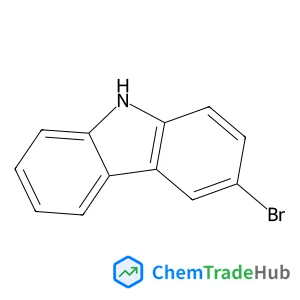
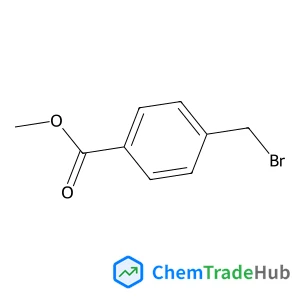
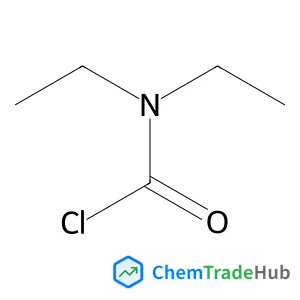
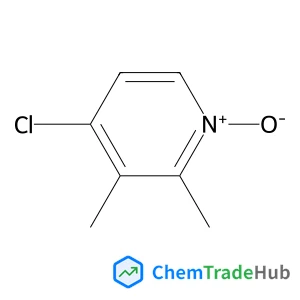
推荐供应商




免责声明
本页面提供的学术期刊信息仅供参考和研究使用。我们与任何期刊出版商均无关联,也不处理投稿事宜。如有投稿相关咨询,请直接联系相关期刊出版商。
如发现页面信息有误,请发送邮件至 support@chemtradehub.com 联系我们。我们将及时核实并处理您的问题。