




![2-Methyl-2-propanyl 4-oxo-3,9-diazabicyclo[4.2.1]nonane-9-carboxylate structure](https://cnstatic.chemtradehub.com/structs/131/1312456-05-5-9a15.webp "2-Methyl-2-propanyl 4-oxo-3,9-diazabicyclo[4.2.1]nonane-9-carboxylate structure")
2-Methyl-2-propanyl 4-oxo-3,9-diazabicyclo[4.2.1]nonane-9-carboxylate
CAS号:
1312456-05-5
分子式:
C12H20N2O3
Daniele Alves, P. Rupa Kasturi, Gillian Collins, Tara N Barwa, Sukanya Ramaraj, Raj Karthik
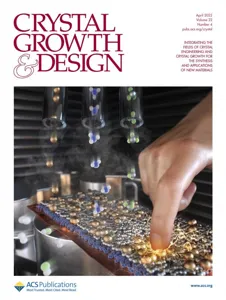
The effects of Climate Change are now clearly evident across the world, with increasing storms, precipitation, rising sea levels and draughts, with an ever increasing need to develop energy storage and conversion approaches and devices to alleviate these issues. Hydrogen has emerged as a clean fuel with no environmental issues and it can be coupled with renewable energy sources such as wind, solar and wave energy. The excess energy from renewables can be employed to power electrolysis cells giving rise to green or renewable hydrogen. This approach is attracting considerable attention as it has the potential not only to provide a very clean energy source, but it also enables more efficient use of renewable energy resources. One of the limiting factors in achieving high volumes of pure hydrogen is the electrocatalytic materials used for the hydrogen evolution reaction (HER) and the oxygen evolution reaction (OER). In this review, we cover the progress made largely within the last six years in the development of two materials that satisfy the conditions of being cost-effective, earth-abundant, simple to form with little or no environmental concerns. The two materials are transition metal dichalcogenides (TMDs) and layered double hydroxides (LDHs), with the latter often described as clays. Following a short overview of the main synthetic methods used to form the TMDs and LDHs, and a short introduction to the HER and OER, the performance of different LDHs, TMDs and their composites in the electrochemical splitting of water, and as bifunctional electrodes is discussed. Finally, the ability of these materials to act as electrocatalysts in seawater electrolysis and to serve as electrocatalytic materials for the oxidation of alternative half-reactions to the sluggish OER is reviewed. Although more studies are required, it is clear that these earth-abundant materials are promising electrocatalysts for the generation of renewable hydrogen.
Iwan W. Schie, Christoph Krafft
DOI: 10.1039/C5AN00178A
Komal Patil, Pravin Babar, Dong Min Lee, Vijay Karade, Eunae Jo, Jin Hyeok Kim
DOI: 10.1039/D0SE00899K
Nouraiz Mushtaq, Chen Qiao, Hassina Tabassum, Muhammad Naveed, Muhammad Tahir, Youqi Zhu, Muhammad Naeem, Waqar Younas, Chuanbao Cao
DOI: 10.1039/D0SE00893A
Ying Rang, Ying Weng, Luyao Lin, Hulie Zeng, Hizuru Nakajim, Jin-Ming Lin, Katsumi Uchiyama
DOI: 10.1039/C5AN00040H
Zeyang Zhang, Weidong Zhu, Dandan Chen, Wenming Chai, Dazheng Chen, He Xi, Jincheng Zhang, Chunfu Zhang, Yue Hao
DOI: 10.1039/D0SE00774A
Tae Ho Shin, Miyoung Shin, Geon-Woo Park, Shiwoo Lee, Sang-Kuk Woo, Jihaeng Yu
DOI: 10.1039/C6SE00090H
Liangrong Yang, Xiangfeng Liang
DOI: 10.1039/C5AN00519A
3-表南美楝属二醇是一种具有特定立体化学结构的化合物,其分子式为C31H52O2,属于甾醇类化合物。它具有光学活性,是一种复杂的有机分子,主要存在于一些植物中。
3-羧基-5-碘苯甲酸甲酯主要应用于医药行业,作为合成某些药物中间体的重要原料。此外,它还可能用于聚合物的改性、传感器的制备以及半导体材料的制备等领域。
3-Bromoindolin-2-one是一种含有溴代基团的吲哚酮衍生物,分子式为C9H7BrNO。它是一种无色固体,具有一定的挥发性,熔点为158-159°C...
对于含有该化合物的废液,应先进行中和处理,然后根据其毒性和活性选择合适的处置方法。可以考虑焚烧处理或由专业的化学品废物处理公司进行无害化处理。处理过程中需注意环...
ANGIOTENSIN 1/2 + A (2 - 8)是一种蛋白质类化合物,具有典型的蛋白质性质。它的分子量约为5900 Da。该化合物在水中具有一定的溶解性,...
应将该化合物存放在阴凉干燥、通风良好的地方,避免阳光直射。建议将化合物密封保存在避光的、干燥的容器中,远离火源和高温环境。
苏丹红IV氘代物 标准品是一种含有氘代标记的苏丹红IV化合物,是一种用于化合物分析、结构确证以及代谢研究的标准物质。
该化合物需要遵循《全球化学品统一分类和标签制度》(GHS)中的分类和标签要求,具体分类需依据其毒性和物理化学性质。此外,还需要符合《欧盟化学品注册、评估、授权和...
2-氨基-2-(2-吡啶)乙酸乙酯应储存于阴凉、干燥、通风良好的环境中,避免高温和光照。应使用密封容器储存,并远离易燃物、氧化剂和其他危险化学品。
3-羟基-4-甲氧基吡啶-2-羧酸主要用于合成其他有机化合物,如药物合成、农药合成和染料合成等。此外,它还可用作中间体和试剂,在化学研究领域也有一定的应用。
![5-Chloropyrrolo[2,1-f][1,2,4]triazin-4(3H)-one structure](https://cnstatic.chemtradehub.com/structs/888/888720-60-3-4f7c.webp "5-Chloropyrrolo[2,1-f][1,2,4]triazin-4(3H)-one structure")