








![(1R,6R)-6-({[(2-Methyl-2-propanyl)oxy]carbonyl}amino)-3-cyclohexene-1-carboxylic acid structure](https://cnstatic.chemtradehub.com/structs/865/865689-24-3-5fef.webp "(1R,6R)-6-({[(2-Methyl-2-propanyl)oxy]carbonyl}amino)-3-cyclohexene-1-carboxylic acid structure")
3D-printing of attapulgite monoliths with superior low-temperature selective catalytic reduction activity: the influence of thermal treatment
文献信息
发布日期
2023-12-07
DOI
10.1039/D3NJ04023B
影响因子
3.591
作者
Jiangtao Yu, Linhua Zhu, Xiaoxiao Yu, Jixing Liu, Jingzhou Yin, Peiwen Wu, Jian Liu
查看原文
摘要
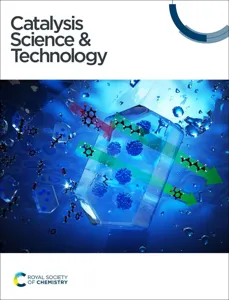
Attapulgite, as a versatile clay, can be constructed as an integral monolith through a 3D printing strategy to promote practical catalytic applications. Herein, we successfully realized 3D printing of attapulgite monoliths with the superior printing effect via a direct ink writing (DIW) technique. The influence of thermal treatment on DIW attapulgite monoliths was also systematically investigated at different calcination temperatures. Wherein, related characteristic changes of DIW attapulgite monoliths under thermal treatment were examined, including surface morphology, chemical properties, solidification shrinkage, rheological behaviors and compressive strength. Additionally, DIW attapulgite monoliths under thermal treatment were probed for the selective catalytic reduction of NOx with NH3 (NH3-SCR) performance, in which 3D-ATP-400 can exhibit superior low-temperature NH3-SCR activity with almost 100% NOx conversion and N2 selectivity in the range of 40–70 °C. This study can provide a facile strategy for the design and preparation of 3D-printed attapulgite monoliths with superior low-temperature NH3-SCR performance under thermal treatment.
相关文献
Evidence for coherent mixing of excited and charge-transfer states in the major plant light-harvesting antenna, LHCII
Charusheela Ramanan, Marco Ferretti, Henny van Roon, Vladimir I. Novoderezhkin, Rienk van Grondelle
2017-08-03
Paper
DOI: 10.1039/C7CP03038J
Multiscale molecular simulations on interfacial adsorption and permeation of nanoporous graphynes
Jie Yang, Zhijun Xu, Xiaoning Yang
2017-07-17
Paper
DOI: 10.1039/C7CP04236A
The gas-phase structure of dimethyl peroxide
Olfa Ferchichi, Najoua Derbel, Nejm-Eddine Jaidane, Thibaud Cours, Alexander Alijah
2017-07-25
Paper
DOI: 10.1039/C7CP03134C
Vibrational nonlinear optical properties of spatially confined weakly bound complexes
Robert Zaleśny, Marta Chołuj, Justyna Kozłowska, Wojciech Bartkowiak, Josep M. Luis
2017-08-14
Paper
DOI: 10.1039/C7CP04259K
Triplet–triplet annihilation upconversion kinetics of C60–Bodipy dyads as organic triplet photosensitizers
Yaxiong Wei, Qiaohui Zhou
2017-08-01
Paper
DOI: 10.1039/C7CP03840B
Interpretation of the à ← transition of hydrated protons in aqueous solutions observed in the far-UV region with quantum chemical calculations
Takeyoshi Goto, Krzysztof B. Beć, Yukihiro Ozaki
2017-07-20
Paper
DOI: 10.1039/C7CP01766A
Cold atom–atom–ion three-body recombination of 4He–4He–X− (X = H or D)
Bin-Bin Wang, Yong-Chang Han, Wei Gao, Shu-Lin Cong
2017-08-03
Paper
DOI: 10.1039/C7CP04310D
Interface nanoparticle control of a nanometer water pump
Jiaye Su, Yunzhen Zhao, Chang Fang, Syed Bilal Ahmed, Yue Shi
2017-08-04
Paper
DOI: 10.1039/C7CP03351F
Spectroscopic characterization of the on-surface induced (cyclo)dehydrogenation of a N-heteroaromatic compound on noble metal surfaces
I. Palacio, A. L. Pinardi, J. I. Martínez, A. Preobrajenski, A. Cossaro, A. Jancarik, I. Stará, I. Starý, J. Méndez, J. A. Martín-Gago, M. F. López
2017-07-31
Paper
DOI: 10.1039/C7CP03955G
Modeling the sensing characteristics of chemi-resistive thin film semi-conducting gas sensors
Abhishek Ghosh, S. B. Majumder
2017-08-14
Paper
DOI: 10.1039/C7CP04241H
您可能还喜欢
化合物问答
(3-氨苯基)环丙基甲酮(CAS号:162174-75-6)的主要用途是什么?
(3-氨苯基)环丙基甲酮主要用于合成化学中间体,特别是在药物化学领域作为原料。它还可以用于有机合成反应中,作为催化剂或反应物。
162174-75-6(3-Aminophenyl)(cycl...
化合物问答
如何储存亚胺菌(CAS号:136470-79-6)?
亚胺菌应储存在干燥、阴凉处,避免直接暴露于光线下。建议使用密封容器储存,防止吸潮和污染。具体的储存条件应参考产品的安全数据表(MSDS)或药品说明书。
136470-79-6Abacavir EP Impurity...
化合物问答
2-氯-2,2-二氟乙酰胺(CAS号:354-28-9)应用于哪些行业?
2-氯-2,2-二氟乙酰胺在医药、聚合物、传感器、半导体等领域有广泛应用。在医药领域,它作为中间体用于合成其他药物;在聚合物领域,用作聚合引发剂或稳定剂;在传感...
354-28-92-Chloro-2,2-difluor...
化合物问答
处理4-甲基-3-硝基-1,1-联苯(CAS号:53812-68-3)时应注意哪些实验室安全事项?
在处理4-甲基-3-硝基-1,1-联苯时,应佩戴手套、护目镜和实验室外套等个人防护装备(PPE),确保在通风橱中操作以减少吸入风险。若发生泄露,应立即使用沙子或...
53812-68-34'-Methyl-3-nitro-1,...
化合物问答
(2S)-羟基(苯基)乙酸 (2R)-N-苄基-1-(4-甲氧基苯基)丙-2-胺盐(CAS号:188690-84-8)应用于哪些行业?
该化合物广泛应用于医药、聚合物和半导体行业。在医药领域,它是某些药物中间体的重要组成部分;在聚合物领域,可用作增塑剂;在半导体行业,可用于制造光刻胶。
188690-84-8Benzeneacetic acid, ...
化合物问答
在合成中是否有芬苯哒唑砜-D3标准品(CAS号:1228182-49-7)的替代品?
芬苯哒唑砜-D3标准品的替代品可能包括类似的苯并咪唑类化合物,如芬苯哒唑本身或其非同位素标记版本。这些替代品在结构上与芬苯哒唑砜-D3相似,但在具体应用中需进行...
1228182-49-7(~2~H_3_)Methyl [5-(...
化合物问答
2-氟-4-硝基苯乙酸(CAS号:315228-19-4)通常如何合成?
2-氟-4-硝基苯乙酸可以通过一系列化学反应合成,通常是从4-氟苯胺开始,首先进行硝化反应生成4-氟-2-硝基苯胺,然后进行乙酰化反应得到目标产物。具体的合成步...
315228-19-42-(2-fluoro-4-nitrop...
化合物问答
2-氟-4-甲氧基苯乙酸(CAS号:883531-28-0)通常如何合成?
2-氟-4-甲氧基苯乙酸通常通过将4-甲氧基苯乙酸与氟化试剂(如氟化氰)反应来合成。反应通常在无水条件下进行,使用催化剂如六氟磷酸锂或四氟硼酸锂以提高选择性和产...
883531-28-02-Fluoro-4-methoxyph...
化合物问答
什么是4SC 202;4SC202(CAS号:1186222-89-8)?
4SC 202;4SC202是一种化学化合物,其化学名称为(2E)-N-(2-氨基苯基)-3-(1-{[4-(1-甲基-1H-吡唑-4-基)苯基]磺酰基}-1H...
1186222-89-8(2E)-N-(2-Aminopheny...
132980-99-53,5-Difluorobenzamid...
来源期刊
New Journal of Chemistry

CiteScore:
5.3
自引率:
3.7%
年发文量:
2153
NJC (New Journal of Chemistry) is a broad-based primary journal encompassing all branches of chemistry and its sub-disciplines. It contains full research articles, communications, perspectives and focus articles. This well-established journal, owned by the Centre National de la Recherche Scientifique (CNRS) of France, has been co-published with the Royal Society of Chemistry since January 1998. NJC is the forum for the publication of high-quality, original and significant work that opens new directions in chemistry or other scientific disciplines. In addition to having a significant chemical component, work published in NJC must demonstrate that it will have an impact on areas of research other than that of the reported work.
推荐化合物
![Methyl 2-[5-(3-Phenoxyphenyl)-2H-tetrazol-2-yl]acetate structure](https://cnstatic.chemtradehub.com/structs/130/1305320-60-8-84b4.webp "Methyl 2-[5-(3-Phenoxyphenyl)-2H-tetrazol-2-yl]acetate structure")
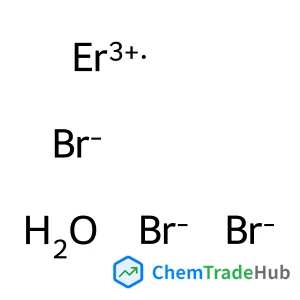
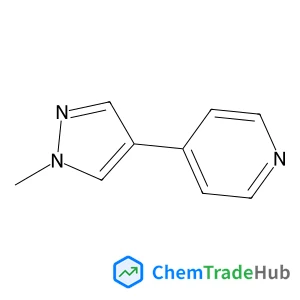
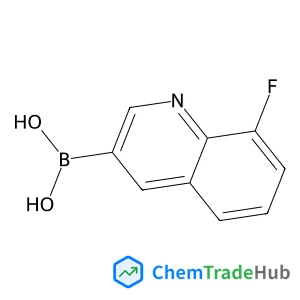
推荐供应商






免责声明
本页面提供的学术期刊信息仅供参考和研究使用。我们与任何期刊出版商均无关联,也不处理投稿事宜。如有投稿相关咨询,请直接联系相关期刊出版商。
如发现页面信息有误,请发送邮件至 support@chemtradehub.com 联系我们。我们将及时核实并处理您的问题。