









A superhydrophobic photothermal carbon black-coated waste face mask for efficient water desalination
文献信息
发布日期
2023-12-18
DOI
10.1039/D3NJ04723G
影响因子
3.591
作者
Yunpeng Liu, Rajaram S. Sutar, Lingling Xiang, Satheesh kumar Balu, Bairu Shi, Qinghai Yang, Shanhu Liu
查看原文
摘要
Low-cost and efficient interface evaporation technology based on solar energy has attracted much attention in seawater desalination, but is still challenging. In this study, a novel interface evaporator was constructed by brushing paste containing 1H,1H,2H,2H-perfluorodecyltriethoxysilane (FAS) modified carbon black (CB) nanoparticles and polyvinylidene fluoride (PVDF) on a pre-cleaned waste mask to develop the superhydrophobic photothermal layer, with cellulose non-woven fabric as the water supply layer and polystyrene foam as the insulation layer. Benefitting from the excellent light absorption capability of CB nanoparticles in the photothermal layer, the surface temperature of the evaporator increased up to 105 °C within 140 s with an evaporation rate of 1.58 kg m−2 h−1, and the photothermal conversion efficiency reached 94.3% under 1 kW m−2 of solar irradiation. The evaporator has shown excellent potential for long-term seawater desalination due to the use of FAS-modified CB nanoparticles, which create surface roughness, and hydrophobic PVDF adhesive, which helps in film formation. As a result, the evaporator has demonstrated significantly low heat loss, making it highly suitable for practical applications. This study demonstrates an economical and efficient solution in seawater desalination, wastewater treatment, and hydropower cogeneration.
相关文献
Controlled biomimetic silica formation using star-shaped poly(l-lysine)
Qinrong Wang, Jun Yu, Yunsong Yan, Shaoqiang Xu, Fangfang Wang, Qingnan Li, Jinzhi Wang, Xin Zhang, Daojun Liu
2012-03-21
Paper
DOI: 10.1039/C2PY20070H
Synthesis of terpene–poly(ethylene oxide)s by t-BuP4-promoted anionic ring-opening polymerization
Junpeng Zhao, Helmut Schlaad, Steffen Weidner, Markus Antonietti
2011-10-26
Paper
DOI: 10.1039/C1PY00388G
A biocompatible, metal-free catalyst and its application in microwave-assisted synthesis of functional polyesters
Zhengwei You, Eric M. Jeffries, Yadong Wang
2011-11-29
Paper
DOI: 10.1039/C1PY00400J
Water-soluble random and alternating copolymers of styrene monomers with adjustable lower critical solution temperature
Jan Weiss, Ang Li, Erik Wischerhoff
2011-11-18
Paper
DOI: 10.1039/C1PY00422K
Efficient synthesis of poly(2-hydroxypropyl methacrylate)-silica colloidal nanocomposite particles via aqueous dispersion polymerization
Hua Zou, Steven P. Armes
2011-11-17
Paper
DOI: 10.1039/C1PY00406A
One-pot surface modification of rubbery polymer films
Hirofumi Tsuruta, Yoshihisa Fujii, Keiji Tanaka
2011-12-01
Communication
DOI: 10.1039/C1PY00488C
Hierarchical self-assembly and secondary structures of linear polypeptides graft onto POSS in the side chain through click chemistry
Yung-Chih Lin, Shiao-Wei Kuo
2011-11-15
Paper
DOI: 10.1039/C1PY00381J
Molecular packing and properties of poly(benzoxazole-benzimidazole-imide) copolymers
Yongbing Zhuang, Xiangyang Liu, Yi Gu
2012-04-25
Paper
DOI: 10.1039/C2PY20074K
您可能还喜欢
化合物问答
4-((4-甲基哌嗪-1-基)甲基)苯硼酸(CAS号:763120-62-3)的市场或研究趋势如何?
随着有机硼化学的发展,该化合物在催化、药物合成、材料科学等领域展现出潜在的应用价值。近年来,其在药物前体合成中的应用越来越受到关注。市场趋势显示,随着科研投入的...
763120-62-3{4-[(4-Methyl-1-pipe...
化合物问答
如何储存2,4,5-三甲基-1-硝基苯(CAS号:610-91-3)?
2,4,5-三甲基-1-硝基苯应储存在阴凉、干燥且通风良好的地方,避免阳光直射。储存在密封的金属容器中,远离火源和热源。储存温度应控制在25°C以下,湿度不宜过...
610-91-31,2,4-Trimethyl-5-ni...
化合物问答
处理2,5-二碘噻吩(CAS号:625-88-7)时应注意哪些实验室安全事项?
在处理2,5-二碘噻吩时,应穿戴适当的个人防护装备(PPE),包括实验室外套、手套和防护眼镜。在通风橱中进行操作以避免吸入蒸气。如果发生泄漏,应立即疏散人员并使...
625-88-72,5-Diiodothiophene
化合物问答
在合成中是否有6-bromo-3-chloro-1H-indole(CAS号:57916-08-2)的替代品?
在合成6-溴-3-氯-1H-吲哚(CAS号:57916-08-2)时,可以考虑使用一些类似的化合物作为替代品,如6-氯-3-氯-1H-吲哚或3-氯-1H-吲哚,...
57916-08-26-bromo-3-chloro-1H-...
化合物问答
在合成中是否有(R)-(-)-1-(1-萘基)乙基异氰酸酯(CAS号:42340-98-7)的替代品?
可以考虑使用类似结构的化合物,如1-[(1R)-1-(2-氨基乙基)萘-1-基]乙基异氰酸酯作为替代品。此外,还可以寻找其他类型的异氰酸酯衍生物,如苯基异氰酸酯...
42340-98-71-[(1R)-1-Isocyanato...
化合物问答
3-氨基苯甲酰苯胺(CAS号:14315-16-3)适用哪些法规指南?
3-氨基苯甲酰苯胺适用于多项法规指南,包括但不限于GHS(全球化学品统一分类和标签制度)分类为皮肤腐蚀/刺激类别2,以及潜在的皮肤过敏性类别1。在欧盟地区,它受...
14315-16-33-Amino-N-phenylbenz...
化合物问答
β-环柠檬醛-D5(CAS号:26309-95-5)通常如何合成?
β-环柠檬醛-D5可通过不对称合成方法获得。常见的合成路线包括以环己酮为原料,经过选择性氧化、还原、保护基引入等步骤,最终得到目标化合物。该合成过程中通常使用多...
26309-95-5[(2,2-Dimethylpropan...
34915-68-9Bunitrolol
化合物问答
如何处理含有BIO-1211(CAS号:187735-94-0)的废料?
对于含有BIO-1211(CAS号:187735-94-0)的废料,首先应进行分类收集,确保符合环保要求。然后,可以考虑通过焚烧或其他专业处理方法进行处置。在处...
187735-94-0BIO-1211
化合物问答
如何处理含有4-氯-2-氟-3-甲基苯酚(CAS号:1351668-24-0)的废料?
含有该化合物的废液应收集至专用容器中,避免与其他化学品混合。可采用焚烧或送交专业废弃物处理公司处理。处理过程中需遵守当地环保法规,确保不产生二次污染。处理前应进...
1351668-24-04-Chloro-2-fluoro-3-...
来源期刊
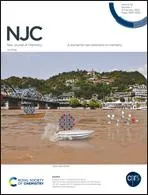
New Journal of Chemistry
CiteScore:
5.3
自引率:
3.7%
年发文量:
2153
NJC (New Journal of Chemistry) is a broad-based primary journal encompassing all branches of chemistry and its sub-disciplines. It contains full research articles, communications, perspectives and focus articles. This well-established journal, owned by the Centre National de la Recherche Scientifique (CNRS) of France, has been co-published with the Royal Society of Chemistry since January 1998. NJC is the forum for the publication of high-quality, original and significant work that opens new directions in chemistry or other scientific disciplines. In addition to having a significant chemical component, work published in NJC must demonstrate that it will have an impact on areas of research other than that of the reported work.
推荐化合物
![4-[(2-Oxo-1,2,3,4-tetrahydroquinolin-7-yl)oxy]butanoic acid structure](https://cnstatic.chemtradehub.com/structs/588/58899-27-7-1f86.webp "4-[(2-Oxo-1,2,3,4-tetrahydroquinolin-7-yl)oxy]butanoic acid structure")
推荐供应商



免责声明
本页面提供的学术期刊信息仅供参考和研究使用。我们与任何期刊出版商均无关联,也不处理投稿事宜。如有投稿相关咨询,请直接联系相关期刊出版商。
如发现页面信息有误,请发送邮件至 support@chemtradehub.com 联系我们。我们将及时核实并处理您的问题。