





Palladium/norbornene/copper-catalysed intermolecular thio-esterification from ketones: modular access towards tetrasubstituted vinyl sulfides
文献信息
发布日期
2023-11-07
DOI
10.1039/D3QO01484C
影响因子
5.281
作者
Guopeng Du, Yu Zhao, Pingliang Zhu, Shaowen Ling, Baolong Xu, Hui Liu, Xinjin Li, Feng-Gang Sun
查看原文
摘要
Herein, we disclosed a strategy to access diverse tetrasubstituted vinyl sulfides from cyclic ketones via palladium/norbornene/copper catalysed dual functionalization of the corresponding enol triflates, allowing simultaneous installation of thio and alkoxycarbonyl groups at vicinal positions of 1,2-disubstiuted alkene in a regioselective fashion. A copper salt was proven to enhance the reactivity of the electrophile to achieve the desired selectivity without using commonly used C2 amide-substituted norbornene. Readily available thiocarbonates are suitable bifunctional electrophiles; various functional groups could be tolerated. The protocol is scalable and permits orthogonal coupling in the presence of other functionalization handles.
期刊推荐
相关文献
X-ray absorption spectroscopy and resonant inelastic scattering study of the first lithiation cycle of the Li-ion battery cathode Li2−xMnSiO4
M. Dahbi, T. Gustafsson, K. Edström, D. Newby, K. E. Smith, L.-C. Duda
2013-12-18
Paper
DOI: 10.1039/C3CP54103G
Single bubble perturbation in cavitation proximity of solid glass: hot spot versus distance
Helmuth Möhwald, Kenneth Suslick
2013-08-21
Paper
DOI: 10.1039/C3CP52850B
Highly porous structure strategy to improve the SnO2 electrode performance for lithium-ion batteries
Ting Yang, Bingan Lu
2013-12-02
Paper
DOI: 10.1039/C3CP54144D
The benzoic acid–water complex: a potential atmospheric nucleation precursor studied using microwave spectroscopy and ab initio calculations
Elijah G. Schnitzler, Wolfgang Jäger
2013-11-28
Paper
DOI: 10.1039/C3CP54486A
Progress on extending the light absorption spectra of photocatalysts
Zeyan Wang, Yuanyuan Liu, Baibiao Huang, Ying Dai, Zaizhu Lou, Gang Wang, Xiaoyang Zhang, Xiaoyan Qin
2013-11-11
Perspective
DOI: 10.1039/C3CP53817F
Lithium diffusion in congruent LiNbO3 single crystals at low temperatures probed by neutron reflectometry
E. Hüger, J. Rahn, J. Stahn, T. Geue
2014-01-02
Paper
DOI: 10.1039/C3CP54939A
Direct evidence of hydrogen-atom tunneling dynamics in the excited state hydrogen transfer (ESHT) reaction of phenol–ammonia clusters
J. D. Rodríguez, M. G. González, L. Rubio-Lago, L. Bañares
2013-12-13
Paper
DOI: 10.1039/C3CP54362E
Optimization of amorphous silicon double junction solar cells for an efficient photoelectrochemical water splitting device based on a bismuth vanadate photoanode
Lihao Han, Paula Perez Rodriguez, Bernard Dam, Miro Zeman, Arno H. M. Smets
2014-01-02
Paper
DOI: 10.1039/C3CP55035D
Facile fabrication of robust superhydrophobic multilayered film based on bioinspired poly(dopamine)-modified carbon nanotubes
Jin-lei Wang, Ke-feng Ren, Hao Chang, Shi-miao Zhang, Lie-jiang Jin, Jian Ji
2013-12-02
Paper
DOI: 10.1039/C3CP54354D
您可能还喜欢
化合物问答
(5-氨基吡唑-3-基)乙酸(CAS号:174891-10-2)的物理化学性质是什么?
(5-氨基吡唑-3-基)乙酸是一种无色至白色固体,分子量为174.15 g/mol。它在水中具有较好的溶解性,在有机溶剂中的溶解度较低。该化合物具有较好的反应活...
174891-10-2(3-Amino-1H-pyrazol-...
化合物问答
3-氟-4,5-二氯苯胺(CAS号:35754-38-2)适用哪些法规指南?
3-氟-4,5-二氯苯胺受到多项法规指南的约束,包括但不限于GHS(全球化学品统一分类和标签制度)的危险分类标准、欧盟的REACH法规(注册、评估、授权和限制)...
35754-38-23,4-Dichloro-5-fluor...
化合物问答
什么是(R)-(+)-2,2',6,6'-四甲氧基-4,4'-联(二(3,5-二甲苯基基)膦基)-3,3'-二联吡啶(CAS号:442905-33-1)?
这是一种有机化合物,化学名为(R)-(+)-2,2',6,6'-四甲氧基-4,4'-联(二(3,5-二甲苯基基)膦基)-3,3'-二联吡啶,CAS号为44290...
442905-33-14,4'-Bis[bis(3,5-dim...
化合物问答
1-氨基-2-氰基萘(CAS号:3100-67-2)应用于哪些行业?
1-氨基-2-氰基萘在医药、聚合物、传感器和半导体等行业中有应用。在医药领域,它可用作中间体合成某些药物。在聚合物行业,它可以用于制备具有特定性能的聚合物。此外...
3100-67-21-Amino-2-naphthonit...
化合物问答
如何处理含有1-溴-4-(异丙氧基甲基)苯(CAS号:98446-84-5)的废料?
处理含1-溴-4-(异丙氧基甲基)苯的废料时,首先应确保废液收集在防渗漏的容器中,避免泄露。然后,可以考虑采用化学降解法或物理吸附法进行处理。在特定条件下,可通...
98446-84-51-Bromo-4-(isopropox...
化合物问答
6-Chloro-8-(trifluoromethyl)chroman-4-one(CAS号:1344889-75-3)的主要用途是什么?
6-氯-8-三氟甲基-2,3-二氢-4H-色喃-4-酮主要用于有机合成中的中间体,也可作为研究试剂使用。
1344889-75-36-Chloro-8-(trifluor...
化合物问答
7-乙氧基-2-萘酚(CAS号:57944-44-2)通常如何合成?
7-乙氧基-2-萘酚通常通过N-乙氧基化反应合成,首先将2-萘酚与乙醇钠在乙醇中反应生成7-乙氧基-2-萘酚钠盐,再通过酸化进一步得到7-乙氧基-2-萘酚。该合...
57944-44-27-Ethoxy-2-naphthol
化合物问答
4-(1,1-二氧硫代吗啉)丁醇(CAS号:59801-41-1)适用哪些法规指南?
该化合物需遵循一系列的法规指南,包括但不限于GHS全球统一分类和标签制度,其分类可能包括易燃液体和可能危害水生环境。在欧洲,还需遵循REACH法规,确保物质和混...
59801-41-14-(4-Hydroxybutyl)th...
化合物问答
4-甲氧基苄基叠氮甲酸酯(CAS号:25474-85-5)的物理化学性质是什么?
4-甲氧基苄基叠氮甲酸酯是一种无色液体,具有一定的挥发性。其分子量为198.16,熔点为-69°C,沸点为105°C。该化合物在水中溶解度较低,在有机溶剂如乙醇...
25474-85-54-Methoxybenzyl carb...
化合物问答
如何处理含有4-氯-2-氟嘧啶(CAS号:51422-00-5)的废料?
含有4-氯-2-氟嘧啶的废料应按照危险废物处理。首先,应收集并分类这些废料,避免与其他废物混合。然后,可以采用焚烧处理或者交由专业机构进行处置。在处理过程中,需...
51422-00-54-Chloro-2-fluoropyr...
来源期刊
Organic Chemistry Frontiers

CiteScore:
7.8
自引率:
8.7%
年发文量:
724
Organic Chemistry Frontiers publishes high-quality research from across organic chemistry. Emphases are placed on studies that make significant contributions to the field of organic chemistry by reporting either new or significantly improved protocols or methodologies. Topics include, but are not limited to the following: Organic synthesis Development of synthetic methodologies Catalysis Natural products Functional organic materials Supramolecular and macromolecular chemistry Physical and computational organic chemistry
推荐化合物
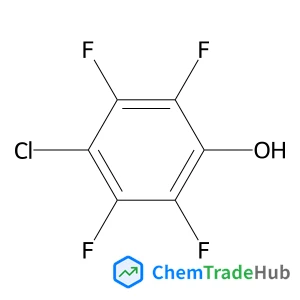
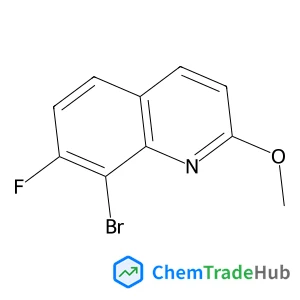
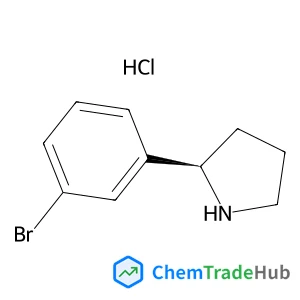
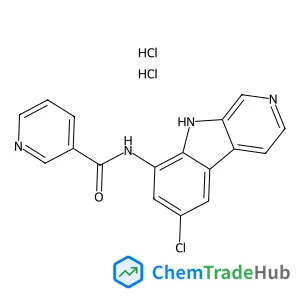
推荐供应商





免责声明
本页面提供的学术期刊信息仅供参考和研究使用。我们与任何期刊出版商均无关联,也不处理投稿事宜。如有投稿相关咨询,请直接联系相关期刊出版商。
如发现页面信息有误,请发送邮件至 support@chemtradehub.com 联系我们。我们将及时核实并处理您的问题。