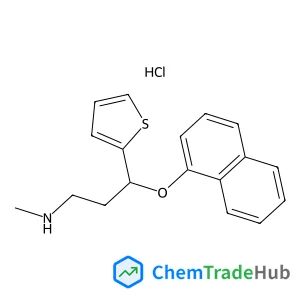
N-Methyl-3-(1-naphthyloxy)-3-(2-thienyl)-1-propanamine hydrochloride (1:1)
CAS号:
1188266-11-6
分子式:
C18H20ClNOS
Organoboron compounds now known as versatile building blocks are broadly used in a variety of transformations in the fields of organic synthesis, drug synthesis, and materials science. The practical and convenient synthesis methodology of organoboron compounds has been well developed. Generally, organoboron compounds are prepared through transmetalation reactions using organolithium or organomagnesium reagents, hydroboration of C–C unsaturated bonds, borylation of CX double bonds, or borylation of C–H/C–X bonds. Among these methods, bis(pinacolato)diboron (B2pin2) and pinacol borane (HBpin) are used extensively. Recently, borylation mediated by BX3 for the efficient synthesis of organoborons has been well developed. In this review, we summarize the research on borylation driven by BX3 in the fields of organic synthesis and drug synthesis, including (1) borylative difunctionalization of C–C unsaturated bonds and (2) C–H bond borylation. The strategies of borylation processes as well as the scopes, limits, and mechanisms of these approaches are addressed.
Mini-Reviews in Medicinal Chemistry
Nature Reviews Drug Discovery
Molecular Diversity
Molecules

Physical Chemistry Chemical Physics

Journal of Enzyme inhibition and Medicinal Chemistry
Angewandte Chemie International Edition

Photochemical & Photobiological Sciences
Environmental Toxicology and Pharmacology
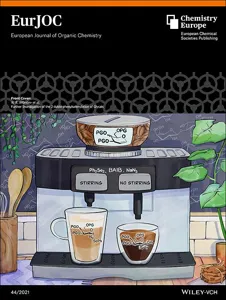
European Journal of Organic Chemistry
Hong-Yan Wang, Jia Liu, Jiefang Zhu, Stenbjörn Styring, Sascha Ott, Anders Thapper
DOI: 10.1039/C3CP54500H
Li-Min Liu, Shi-Jin Zhao
DOI: 10.1039/C3CP54333A
Grégoire Danger, Albert Rimola, Ninette Abou Mrad, Fabrice Duvernay, Gaël Roussin, Patrice Theule, Thierry Chiavassa
DOI: 10.1039/C3CP54034K
Bo Yan, Jing Ye, Xue Li, Yansheng Liu, Haiping You
DOI: 10.1039/C3CP54399D
Zahid Farooq, Dimitri A. Chestakov, Bin Yan, Gerrit C. Groenenboom, Wim J. van der Zande, David H. Parker
DOI: 10.1039/C3CP54696A
Chao Wang, Yuanxu Wang, Guangbiao Zhang, Chengxiao Peng, Gui Yang
DOI: 10.1039/C3CP54289K
Wei Li, Yanjuan Yang, Tian Luo, Jianling Zhang, Buxing Han
DOI: 10.1039/C3CP54537G
Yunxi Yao, D. Wayne Goodman
DOI: 10.1039/C3CP54997F
Helmuth Möhwald, Kenneth Suslick
DOI: 10.1039/C3CP52850B
(5-氨基吡唑-3-基)乙酸是一种无色至白色固体,分子量为174.15 g/mol。它在水中具有较好的溶解性,在有机溶剂中的溶解度较低。该化合物具有较好的反应活...
3-氟-4,5-二氯苯胺受到多项法规指南的约束,包括但不限于GHS(全球化学品统一分类和标签制度)的危险分类标准、欧盟的REACH法规(注册、评估、授权和限制)...
这是一种有机化合物,化学名为(R)-(+)-2,2',6,6'-四甲氧基-4,4'-联(二(3,5-二甲苯基基)膦基)-3,3'-二联吡啶,CAS号为44290...
1-氨基-2-氰基萘在医药、聚合物、传感器和半导体等行业中有应用。在医药领域,它可用作中间体合成某些药物。在聚合物行业,它可以用于制备具有特定性能的聚合物。此外...
处理含1-溴-4-(异丙氧基甲基)苯的废料时,首先应确保废液收集在防渗漏的容器中,避免泄露。然后,可以考虑采用化学降解法或物理吸附法进行处理。在特定条件下,可通...
6-氯-8-三氟甲基-2,3-二氢-4H-色喃-4-酮主要用于有机合成中的中间体,也可作为研究试剂使用。
7-乙氧基-2-萘酚通常通过N-乙氧基化反应合成,首先将2-萘酚与乙醇钠在乙醇中反应生成7-乙氧基-2-萘酚钠盐,再通过酸化进一步得到7-乙氧基-2-萘酚。该合...
该化合物需遵循一系列的法规指南,包括但不限于GHS全球统一分类和标签制度,其分类可能包括易燃液体和可能危害水生环境。在欧洲,还需遵循REACH法规,确保物质和混...
4-甲氧基苄基叠氮甲酸酯是一种无色液体,具有一定的挥发性。其分子量为198.16,熔点为-69°C,沸点为105°C。该化合物在水中溶解度较低,在有机溶剂如乙醇...
含有4-氯-2-氟嘧啶的废料应按照危险废物处理。首先,应收集并分类这些废料,避免与其他废物混合。然后,可以采用焚烧处理或者交由专业机构进行处置。在处理过程中,需...

Organic Chemistry Frontiers publishes high-quality research from across organic chemistry. Emphases are placed on studies that make significant contributions to the field of organic chemistry by reporting either new or significantly improved protocols or methodologies. Topics include, but are not limited to the following: Organic synthesis Development of synthetic methodologies Catalysis Natural products Functional organic materials Supramolecular and macromolecular chemistry Physical and computational organic chemistry
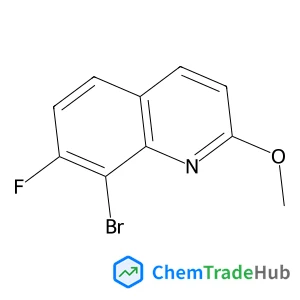
![1-{3-[4-Amino-3-(4-phenoxyphenyl)-1H-pyrazolo[3,4-d]pyrimidin-1-yl]-1-piperidinyl}-2,3-dihydroxy-1-propanone structure](https://cnstatic.chemtradehub.com/structs/122/1226872-27-0-e037.webp "1-{3-[4-Amino-3-(4-phenoxyphenyl)-1H-pyrazolo[3,4-d]pyrimidin-1-yl]-1-piperidinyl}-2,3-dihydroxy-1-propanone structure")
![N-{15-[(2,5-Dioxo-1-pyrrolidinyl)oxy]-15-oxo-3,6,9,12-tetraoxapentadec-1-yl}-2-(2-propyn-1-yloxy)acetamide structure](https://cnstatic.chemtradehub.com/structs/210/2101206-92-0-2eb5.webp "N-{15-[(2,5-Dioxo-1-pyrrolidinyl)oxy]-15-oxo-3,6,9,12-tetraoxapentadec-1-yl}-2-(2-propyn-1-yloxy)acetamide structure")