





Inserting an “atomic trap” for directional dopant migration in core/multi-shell quantum dots
文献信息
发布日期
2023-11-20
DOI
10.1039/D3SC04165D
影响因子
9.825
作者
Chun Chu, Elan Hofman, Chengpeng Gao, Shuya Li, Hanjie Lin, Walker MacSwain, John M. Franck, Robert W. Meulenberg, Arindam Chakraborty, Weiwei Zheng
查看原文
摘要
Diffusion of atoms or ions in solid crystalline lattice is crucial in many areas of solid-state technology. However, controlling ion diffusion and migration is challenging in nanoscale lattices. In this work, we intentionally insert a CdZnS alloyed interface layer, with small cationic size mismatch with Mn(II) dopant ions, as an “atomic trap” to facilitate directional (outward and inward) dopant migration inside core/multi-shell quantum dots (QDs) to reduce the strain from the larger cationic mismatch between dopants and host sites. Furthermore, it was found that the initial doping site/environment is critical for efficient dopant trapping and migration. Specifically, a larger Cd(II) substitutional site (92 pm) for the Mn(II) dopant (80 pm), with larger local lattice distortion, allows for efficient atomic trapping and dopant migration; while Mn(II) dopant ions can be very stable with no significant migration when occupying a smaller Zn(II) substitutional site (74 pm). Density functional theory calculations revealed a higher energy barrier for a Mn(II) dopant hopping from the smaller Zn substitutional tetrahedral (Td) site as compared to a larger Cd substitutional Td site. The controlled dopant migration by “atomic trapping” inside QDs provides a new way to fine tune the properties of doped nanomaterials.
相关文献
Cyanurate-guided self-assembly of a melamine-capped oligo(p-phenylenevinylene)
Shun Kubota, Kanako Unoike, Takashi Karatsu, Akihide Kitamura
2008-07-29
Communication
DOI: 10.1039/B808684B
Is catenation beneficial for hydrogenstorage in metal–organic frameworks?
Patrick Ryan, Linda J. Broadbelt, Randall Q. Snurr
2008-08-01
Communication
DOI: 10.1039/B804343D
Suzuki cross-coupling reactions on the surface of carbon-coated cobalt: expanding the applicability of core–shell nano-magnets
Chun Ghee Tan, Robert N. Grass
2008-07-16
Communication
DOI: 10.1039/B807741J
Mesogenic dipyrrins—building blocks for the fabrication of fluorescent and metal-containing materials
Christopher J. Wilson, Leanne James, Georg H. Mehl, Ross W. Boyle
2008-08-04
Communication
DOI: 10.1039/B806672H
Trapping Pd(0) in nanoparticle-assembled microcapsules: an efficient and reusable catalyst
Arlin Jose Amali, Rohit Kumar Rana
2008-07-15
Communication
DOI: 10.1039/B807736C
The convenient fluorescence turn-on detection of heparin with a silole derivative featuring an ammonium group
Ming Wang, Deqing Zhang, Guanxin Zhang, Daoben Zhu
2008-07-30
Communication
DOI: 10.1039/B808877B
Strategic synthesis of SBA-15 nanorods
Xiulei Ji, Kyu T. Lee, Muguette Monjauze, Linda F. Nazar
2008-06-20
Communication
DOI: 10.1039/B804327B
Hydroxylamine as an oxygen nucleophile. Chemical evidence from its reaction with a phosphate triester
Anthony J. Kirby, Bruno S. Souza, Michelle Medeiros, Jacks P. Priebe, Alex M. Manfredi, Faruk Nome
2008-08-13
Communication
DOI: 10.1039/B810408E
Multiple molecular logic functions and molecular calculations facilitated by surfactant’s versatility
Junhong Qian, Xuhong Qian, Yufang Xu, Shenyi Zhang
2008-07-23
Communication
DOI: 10.1039/B805876H
您可能还喜欢
化合物问答
6-氯-2H-1,4-苯并噁嗪-3(4H)-酮(CAS号:7652-29-1)应用于哪些行业?
6-氯-2H-1,4-苯并噁嗪-3(4H)-酮主要应用于医药、农药和聚合物等领域。在医药领域,该化合物可用于合成抗菌药物;在农药领域,可用作杀虫剂的中间体;在聚...
7652-29-16-Chloro-2H-1,4-benz...
化合物问答
活性氧化铝(CAS号:1302-74-5)应用于哪些行业?
活性氧化铝广泛应用于医药、聚合物、传感器、半导体和催化等领域。在医药行业,活性氧化铝用作吸附剂和干燥剂,有助于去除杂质和水分。在聚合物行业,它用作增白剂和抗结块...
1302-74-5aluminum;trihydrate
化合物问答
什么是硅胶(CAS号:112926-00-8)?
硅胶(Silica gel, pptd.,cryst.-free)是一种无定形、多孔的硅酸盐材料,主要成分为二氧化硅(SiO₂)。其结构由硅氧四面体构成,通过酸...
112926-00-8Silica gel, pptd.,cr...
化合物问答
二乙基甲基一氢硅烷(CAS号:760-32-7)的主要用途是什么?
二乙基甲基一氢硅烷主要用于有机合成、表面处理以及作为溶剂。它还被用作合成其他硅烷化合物的原料,以及在涂料、粘合剂和密封剂中的应用。
760-32-7Diethyl(methyl)silan...
化合物问答
在合成中是否有N-花生四烯酰基甘氨酸(CAS号:179113-91-8)的替代品?
在合成过程中,可以考虑使用类似结构的化合物作为替代品,例如N-亚油酰基甘氨酸或N-花生二烯酰基甘氨酸。这些替代品在结构上有类似的双键位置,但可能具有不同的物理化...
179113-91-8Glycine, N-[(5Z,8Z,1...
化合物问答
在合成中是否有1-(4-甲氧基苯基)丙烷-1,2-二酮(CAS号:10557-27-4)的替代品?
在合成过程中,可以考虑使用类似结构的化合物作为替代品,例如1-(3-甲氧基苯基)丙烷-1,2-二酮或1-(4-羟基苯基)丙烷-1,2-二酮。这些替代品具有相似的...
10557-27-41-(4-Methoxyphenyl)p...
化合物问答
N-(4-氨基-1-苄基-3-羟基-5-苯基戊基)-3-甲基-2-(2-氧代四氢嘧啶-1-基)-丁酰胺 5-氧代吡咯烷-2-甲酸(CAS号:192726-06-0)通常如何合成?
该化合物通常通过一系列复杂的有机合成步骤获得。首先,通过芳香族化合物的羟基化反应获得羟基化产物,然后通过酰化反应形成酰胺中间体,最后通过环化反应得到目标产物。常...
192726-06-05-Oxo-L-proline - (2...
化合物问答
(S)-2-氨基-3-喹啉-2-丙酸(CAS号:161513-46-8)的市场或研究趋势如何?
该化合物作为生物活性化合物,尤其是在药物化学领域表现出色。近年来,随着对新型抗炎、抗病毒和抗癌药物的研究增加,其市场和研究趋势持续增长。此外,其在神经科学领域的...
161513-46-8(S)-2-Amino-3-quinol...
化合物问答
核黄素磷酸钠(CAS号:130-40-5)安全吗?
核黄素磷酸钠在常规使用条件下安全,但高剂量可能引起刺激性反应。操作时需佩戴防护手套和护目镜,避免吸入粉尘。若接触皮肤或眼睛,应立即用大量清水冲洗。急救时需根据接...
130-40-5Sodium 1-deoxy-1-(7,...
化合物问答
盐酸丙胺卡因杂质A(EP) 标准品(CAS号:19281-31-3)通常如何合成?
盐酸丙胺卡因杂质A(EP) 标准品可通过重氮化反应和随后的酰胺化反应合成。首先,利用氯化反应将苯环上的氢原子转化为氯原子,然后通过芳香族重氮化反应引入氨基,最后...
19281-31-32-Chloro-N-(2-methyl...
来源期刊
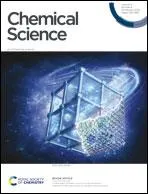
Chemical Science
CiteScore:
14.4
自引率:
3.9%
年发文量:
1413
Our journal has a wide-ranging scope which covers the full breadth of the chemical sciences. The research we publish contains the sorts of novel ideas, challenging questions and progressive thinking that bring undiscovered breakthroughs within reach. Your paper could focus on a single area, or cross many. It could be beyond the accepted bounds of the chemical sciences. It might address an immediate challenge, contribute to a future breakthrough or be wholly conceptual. We’re a team from every field of the chemical sciences, and know from experience that breakthroughs that drive the solutions to global challenges can come from anywhere, at any time. You could even start an entirely new area of research. Too bold? Too progressive? No such thing
推荐化合物
![5-Methyl-4,5,6,7-tetrahydropyrazolo[1,5-a]pyrazin-2-amine structure](https://cnstatic.chemtradehub.com/structs/122/1227210-33-4-8d64.webp "5-Methyl-4,5,6,7-tetrahydropyrazolo[1,5-a]pyrazin-2-amine structure")
推荐供应商



免责声明
本页面提供的学术期刊信息仅供参考和研究使用。我们与任何期刊出版商均无关联,也不处理投稿事宜。如有投稿相关咨询,请直接联系相关期刊出版商。
如发现页面信息有误,请发送邮件至 support@chemtradehub.com 联系我们。我们将及时核实并处理您的问题。