











A nanoscale surface engineered magneto-mechano-triboelectric nanogenerator enabled by reliable pattern replication for self-powered IoT devices
文献信息
发布日期
2024-01-04
DOI
10.1039/D3SE01206A
影响因子
6.367
作者
Srinivas Pattipaka, Tae Wan Park, Young Min Bae, Yujin Na, Kyeongwoon Chung, Kwi-Il Park, Jungho Ryu, Woon Ik Park, Geon-Tae Hwang
查看原文
摘要
The present work demonstrates a high-performance magneto-mechano-triboelectric nanogenerator (MMTENG) by utilizing a reliable pattern replication process to harvest electric energy from a magnetic field for powering Internet of Things (IoT) devices. This process enables the formation of a nanoscale structure on a triboelectric polymer film for improving contact triboelectrification and electrostatic induction. The surface-patterned MMTENG achieves a high open-circuit peak-to-peak voltage (Vpp = 521 V), short-circuit current (Imax = 177 μA), and maximum peak power (Pmax = 7 mW) under an 8 Oe magnetic field, which is 4.6 times higher than that of a non-patterned MMTENG device (Pmax = 1.5 mW). The harvested electric power from the MMTENG device is utilized to operate an IoT environmental (temperature and humidity) monitoring sensor.
相关文献
Quantitative formation of a tetraporphyrin [2]catenaneviacopper and zinc coordination
Maryline Beyler, Valérie Heitz, Jean-Pierre Sauvage
2008-09-17
Communication
DOI: 10.1039/B811013A
Paramagnetic gold nanostructures for dual modal bioimaging and phototherapy of cancer cells
Yong Taik Lim, Mi Young Cho, Bang Sil Choi, Jung Min Lee, Bong Hyun Chung
2008-08-26
Communication
DOI: 10.1039/B810240F
Multiply protonated betaine clusters are stable in the gas phase‡
2008-08-29
Communication
DOI: 10.1039/B808124G
Supramolecular aptamer–thrombin linear and branched nanostructures
Yossi Weizmann, Adam B. Braunschweig, Ofer I. Wilner, Zoya Cheglakov, Itamar Willner
2008-09-22
Communication
DOI: 10.1039/B812486H
Dynamic surface rearrangement and thermal stability of nitrogen functional groups on carbon nanotubes
Rosa Arrigo, Michael Hävecker, Robert Schlögl, Dang Sheng Su
2008-09-11
Communication
DOI: 10.1039/B812769G
Adsorption properties and structure of CO2 adsorbed on open coordination sites of metal–organic framework Ni2(dhtp) from gas adsorption, IR spectroscopy and X-ray diffraction
Pascal D. C. Dietzel, Rune E. Johnsen, Helmer Fjellvåg, Silvia Bordiga, Elena Groppo, Sachin Chavan, Richard Blom
2008-09-24
Communication
DOI: 10.1039/B810574J
Photopolymerization of metal nanoparticles on multiwall carbon nanotubes
Xichen Cai, Kelechi C. Anyaogu, Douglas C. Neckers
2008-09-01
Communication
DOI: 10.1039/B807407K
Electron transfer through a stable phenanthrenyl pair in DNA
Nikolay A. Grigorenko, Christian J. Leumann
2008-09-12
Communication
DOI: 10.1039/B810751C
Cross-conjugated poly(p-phenylene) aided supramolecular self-organization of fullerene nanocrystallites
Muhammad Hanafiah Nurmawati, Parayil Kumaran Ajikumar, Lili Amanda Heng, Hairong Li
2008-08-30
Communication
DOI: 10.1039/B808689C
A colorimetric and fluorescent turn-on sensor for pyrophosphate anion based on a dicyanomethylene-4H-chromene framework
Xiaomei Huang, Zhiqian Guo, Weihong Zhu, Yongshu Xie, He Tian
2008-09-09
Communication
DOI: 10.1039/B809983A
您可能还喜欢
化合物问答
3 - (二氟甲基)-1 -氟苯(CAS号:26029-52-7)适用哪些法规指南?
3 - (二氟甲基)-1 -氟苯需遵循联合国全球化学品统一分类和标签制度(GHS),包括急性毒性、皮肤腐蚀/刺激、严重眼损伤/眼刺激等分类。同时,该化合物还需符...
26029-52-71-(Difluoromethyl)-3...
化合物问答
3,5-二甲基苯胺(CAS号:108-69-0)通常如何合成?
3,5-二甲基苯胺通常通过乙苯的氨解反应合成。反应中使用硫酸作为催化剂,反应温度为120-130°C。乙苯在硫酸存在下与氨反应,生成3,5-二甲基苯胺和苯胺副产...
108-69-03,5-Dimethylaniline
化合物问答
3-甲基异噻唑-5-胺(CAS号:24340-76-9)安全吗?
3-甲基异噻唑-5-胺在适当使用和储存条件下是相对安全的,但在操作时应注意防护措施。应避免吸入粉尘,避免与皮肤和眼睛直接接触。在操作过程中,应穿戴适当的防护装备...
24340-76-93-Methyl-1,2-thiazol...
化合物问答
3-(1,3-Thiazol-2-yl)-1H-indole(CAS号:135531-86-1)通常如何合成?
3-(1,3-噻唑-2-基)-1H-吲哚通常通过多步合成方法制备。首先,由噻唑-2-基溴化物和吲哚进行偶联反应,得到中间体。然后,通过还原反应将中间体转化为所需...
135531-86-13-(1,3-Thiazol-2-yl)...
化合物问答
4-溴-2-氟苯甲基氯(CAS号:85510-82-3)的主要用途是什么?
4-溴-2-氟苯甲基氯主要用于有机合成中间体,特别是在医药、农药和染料等领域。作为一种具有特定结构的化合物,它在合成复杂有机分子时扮演重要角色。
85510-82-34-Bromo-1-(chloromet...
化合物问答
处理Fmoc-β-(3-噻吩基)-D-Ala-OH(CAS号:220497-90-5)时应注意哪些实验室安全事项?
处理Fmoc-β-(3-噻吩基)-D-Ala-OH时,应佩戴防护手套、护目镜和实验服。操作应在通风橱内进行。如发生泄露,应立即用大量水冲洗,并通知实验室管理人员...
220497-90-5N-[(9H-Fluoren-9-ylm...
化合物问答
氮化硅(CAS号:12033-89-5)通常如何合成?
氮化硅通常通过氮化硅的直接反应合成,即在高温下将四氯化硅与氨气反应。具体步骤是将四氯化硅和氨气混合并加热至1300-1700℃,在该条件下,四氯化硅与氨气反应生...
12033-89-5Trisilicon tetranitr...
化合物问答
Cetirizine EP Impurity B DiHCl(CAS号:1000690-91-4)通常如何合成?
Cetirizine EP Impurity B DiHCl通常通过一锅法合成,首先将4-氯苯基-苯甲基氯甲酸酯与1-哌嗪乙酸反应,生成相应的酸,然后与盐酸反应...
1000690-91-4{4-[(4-Chlorophenyl)...
化合物问答
如何储存1-哌啶-4-基丁-1-酮(CAS号:3509-15-7)?
1-哌啶-4-基丁-1-酮应储存在阴凉、干燥的地方,避免阳光直射。存储容器应密封,并确保通风良好。建议储存温度不超过25℃,湿度保持在相对较低的水平。
3509-15-71-Piperidin-4-ylbuta...
化合物问答
如何处理含有VORUCICLIB(CAS号:1000023-04-0)的废料?
含有VORUCICLIB的废料应进行专业的收集和处理,包括使用适当的容器进行隔离,避免与其他化学品接触。处理方法通常包括化学中和、沉淀反应或吸附过程,随后进行焚...
1000023-04-02-[2-Chloro-4-(trifl...
来源期刊
推荐化合物
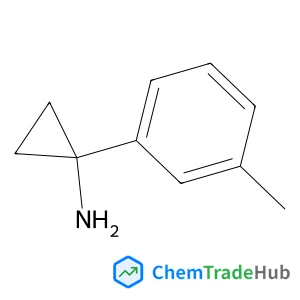
![tert-Butyl N-[(2-chloropyridin-4-yl)methyl]carbamate structure](https://cnstatic.chemtradehub.com/structs/916/916210-27-0-9f95.webp "tert-Butyl N-[(2-chloropyridin-4-yl)methyl]carbamate structure")

推荐供应商



免责声明
本页面提供的学术期刊信息仅供参考和研究使用。我们与任何期刊出版商均无关联,也不处理投稿事宜。如有投稿相关咨询,请直接联系相关期刊出版商。
如发现页面信息有误,请发送邮件至 support@chemtradehub.com 联系我们。我们将及时核实并处理您的问题。