


![(1R,6R)-6-({[(2-Methyl-2-propanyl)oxy]carbonyl}amino)-3-cyclohexene-1-carboxylic acid structure](https://cnstatic.chemtradehub.com/structs/865/865689-24-3-5fef.webp "(1R,6R)-6-({[(2-Methyl-2-propanyl)oxy]carbonyl}amino)-3-cyclohexene-1-carboxylic acid structure")
Facile synthesis of functionalized porous carbon from bitumite mixed with waste powder char for excellent wastewater purification
文献信息
发布日期
2023-04-13
DOI
10.1039/D3SU00064H
影响因子
0
作者
Yufeng Yin, Yiting Zhao, Jing Wang
查看原文
摘要
Waste powder char (WPC) is harmful to the environment and abundant in the production process of the coal chemical industry, but produces relatively low heat energy and releases large amounts of coal ash if it is burned directly. To efficiently solve this issue and create high value materials, three-dimensional hierarchical porous carbons (HPCs) with abundant oxygen-containing groups were prepared from Yulin bitumite (YL) mixed with WPC by combined pyrolysis carbonization and steam activation. The effects of preparation parameters, including WPC doping amount, activation temperature, and activation time, on pore structure development and adsorption capacity of methylene blue from wastewater were explored in detail. The obtained HPCs are microporous structures with additional mesopores and their largest specific surface area (SSA) reached 1299.75 m2 g−1 (8-YLHPC-950–3). Furthermore, 8-YLHPC-900–3 presents a high oxygen content of 15.92 wt%. The SSA and total pore volume (1081.67 m2 g−1 and 0.685 cm3 g−1) of the HPC with 8 wt% WPC doping are larger than those without WPC doping (1155.36 m2 g−1 and 0.755 cm3 g−1). Moreover, these HPCs show superior adsorption of methylene blue in aqueous solution (301 mg g−1 for 8-YLHPC-900–3 compared with 198 mg g−1 for 0-YLHPC-900–3), especially when the HPC was prepared with a WPC doping amount of 8 wt%, activation temperature of 900 °C, steam flow of 0.8 mL g−1 h−1, and activation time of 3 h. These conditions give an optimal adsorption capacity of 301 mg g−1 methylene blue adsorption value (MBV). We introduce a value-added utilization approach for coal-based solid waste and a potential feedstock for adsorption material in the purification of wastewater. The results achieved in this study provide a green and environmentally friendly method for the preparation of HPCs from waste powder char that not only is an industrial reference for the removal of methylene blue from wastewater by HPCs but also contributes to sustainable development in the coal chemical industry.
期刊推荐
European Journal of Wood and Wood Products
Molecular Pharmacology
Journal of Heterocyclic Chemistry
Nature
Journal of Organometallic Chemistry
Journal of Medicinal Chemistry
Journal of Catalysis
Proceedings of the National Academy of Sciences of the United States of America
Russian Chemical Reviews
Fibre Chemistry
相关文献
Binding site opening by loop C shift and chloride ion-pore interaction in the GABAA receptor model
S. Kraszewski, J. W. Mozrzymas
2017-04-10
Paper
DOI: 10.1039/C7CP00582B
Chemical pathways for poly-anionic isomerisation in the metastable anions of tetra-deprotonated naphthalene: an intra-molecular inter-ring proton-transfer
Vikas, Poonam Sangwan, Ramanpreet Kaur
2017-04-07
Paper
DOI: 10.1039/C7CP01006K
Formic acid catalyzed isomerization of protonated cytosine: a lower barrier reaction for tautomer production of potential biological importance
Lingxia Jin, Mengdan Lv, Mengting Zhao, Rui Wang, Caibin Zhao, Jiufu Lu, Ling Wang, Wenliang Wang, Yawen Wei
2017-04-26
Paper
DOI: 10.1039/C7CP01008G
Diels–Alder reactions of graphene oxides: greatly enhanced chemical reactivity by oxygen-containing groups
Shaobin Tang, Weihua Wu, Liangxian Liu, Zexing Cao, Xiaoxuan Wei, Zhongfang Chen
2017-03-31
Paper
DOI: 10.1039/C7CP01086A
Hydrogen purification performance of a nanoporous hexagonal boron nitride membrane: molecular dynamics and first-principle simulations
Masoud Darvish Ganji, Razieh Dodangeh
2017-04-11
Paper
DOI: 10.1039/C7CP01665D
Local chemical potential, local hardness, and dual descriptors in temperature dependent chemical reactivity theory
Paul W. Ayers, José L. Gázquez, Alberto Vela
2017-04-26
Paper
DOI: 10.1039/C7CP00692F
A new model of the chemistry of ionizing radiation in solids: CIRIS
Christopher N. Shingledecker
2017-04-05
Paper
DOI: 10.1039/C7CP01472D
The dimer-approach to characterize opto-electronic properties of and exciton trapping and diffusion in organic semiconductor aggregates and crystals
Bernd Engels, Volker Engel
2017-05-04
Perspective
DOI: 10.1039/C7CP01599B
Self-assembled core–polyethylene glycol–lipid shell nanoparticles demonstrate high stability in shear flow
Zhiqiang Shen, Huilin Ye, Martin Kröger, Ying Li
2017-04-21
Paper
DOI: 10.1039/C7CP01530E
您可能还喜欢
化合物问答
N-2,2-丙烯基-2-丙烯酰胺(CAS号:2555-13-7)通常如何合成?
N-2,2-丙烯基-2-丙烯酰胺通常通过丙烯酰胺与丙烯基卤化物的缩合反应合成。该反应通常在温和的条件下进行,使用适量的碱如吡啶作为催化剂。反应的选择性良好,产率...
2555-13-7N-Allylacrylamide
化合物问答
什么是1,2-二碘四氟代乙烷(CAS号:354-65-4)?
1,2-二碘四氟代乙烷是一种有机化合物,化学式为C2F4I2,CAS号为354-65-4。它是一种无色透明液体,具有特殊的化学性质和物理性质,包括高沸点、低挥发...
354-65-41,1,2,2-Tetrafluoro-...
化合物问答
3-溴-1H-吡咯[3,2-c]吡啶-4-碳腈(CAS号:1000341-71-8)适用哪些法规指南?
根据GHS(全球化学品统一分类和标签制度),3-溴-1H-吡咯[3,2-c]吡啶-4-碳腈被归类为第2类易燃液体。在欧盟,该化合物需要符合REACH法规的要求,...
1000341-71-83-Bromo-1H-pyrrolo[3...
化合物问答
1-氯甲基萘磺酸(CAS号:87491-79-0)安全吗?
1-氯甲基萘磺酸在使用时需要谨慎,因为它具有一定的刺激性和腐蚀性。操作时应佩戴适当的防护装备,如防化服、手套、护目镜等,避免直接接触皮肤和吸入其蒸汽。
87491-79-01-((Chloromethyl)sul...
化合物问答
二氯(二环戊二烯)铂(CAS号:12083-92-0)的主要用途是什么?
该化合物主要用于催化剂领域,特别是在有机合成中的催化氧化反应以及作为某些药物合成的中间体。此外,它还被研究用于纳米材料的制备。
12083-92-0(1S,7R)-Tricyclo[5.2...
化合物问答
3-溴-7-氯噻吩并[3,2-b]吡啶-6-甲腈(CAS号:798574-82-0)安全吗?
3-溴-7-氯噻吩并[3,2-b]吡啶-6-甲腈在处理时需要谨慎,因其含有溴和氯等强卤素,可能具有一定的刺激性和腐蚀性。使用时应佩戴适当的个人防护装备,避免皮肤...
798574-82-03-Bromo-7-chlorothie...
化合物问答
(R)-1-((R)-2-(2’-二环己基膦苯基)三戊铁基]乙基(双-3,5-三氟甲基苯基)膦(CAS号:494227-32-6)的主要用途是什么?
该化合物主要用于有机合成领域,特别是作为催化剂或配体,在有机合成反应中发挥重要作用。此外,它还可能应用于催化加氢反应、偶联反应等。
494227-32-6Walphos SL-W008-1
化合物问答
3-[6-(Diphenylphosphoryl)-2-naphthyl]-1,10-phenanthroline(CAS号:1480371-38-7)安全吗?
3-[6-(Diphenylphosphoryl)-2-naphthyl]-1,10-phenanthroline在正常使用条件下相对安全,但在操作时应穿戴适当...
1480371-38-73-[6-(Diphenylphosph...
化合物问答
在合成中是否有ETHYL 2-(4-(4,4,5,5-TETRAMETHYL-1,3,2-DIOXABOROLAN-2-YL)CYCLOHEX-3-ENYL)ACETATE(CAS号:1166829-70-4)的替代品?
可以考虑使用类似结构的化合物作为替代品,如2-(4-环戊基环己烯基)乙酸酯,这种化合物在结构上相似,可能在某些合成路径中作为替代品。
1166829-70-4Ethyl [4-(4,4,5,5-te...
化合物问答
如何处理含有3-(3-氨基丙基)丙酮缩甘油(CAS号:131606-42-3)的废料?
处理含有3-(3-氨基丙基)丙酮缩甘油的废料时,首先应确保遵守当地的环保法规。对于危险废物,应进行分类收集,然后送至专业的废物处理设施进行焚烧或安全填埋。在处理...
131606-42-33-[(2,2-Dimethyl-1,3...
来源期刊
推荐化合物
![Methyl 2-[5-(3-Phenoxyphenyl)-2H-tetrazol-2-yl]acetate structure](https://cnstatic.chemtradehub.com/structs/130/1305320-60-8-84b4.webp "Methyl 2-[5-(3-Phenoxyphenyl)-2H-tetrazol-2-yl]acetate structure")
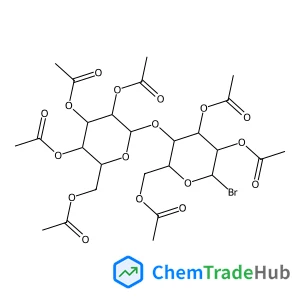
推荐供应商





免责声明
本页面提供的学术期刊信息仅供参考和研究使用。我们与任何期刊出版商均无关联,也不处理投稿事宜。如有投稿相关咨询,请直接联系相关期刊出版商。
如发现页面信息有误,请发送邮件至 support@chemtradehub.com 联系我们。我们将及时核实并处理您的问题。