





rGO coated cotton fabric and thermoelectric module arrays for efficient solar desalination and electricity generation
文献信息
发布日期
2023-11-29
DOI
10.1039/D3TA04715F
影响因子
12.732
作者
Amrit Kumar Thakur, Wayesh Qarony, Md Shamim Ahamed, Y. Ma
查看原文
摘要
One promising solution to the freshwater crisis is solar-driven interfacial evaporation-based desalination. However, an alternate strategy is needed to address both water and energy shortages in parallel. Additionally, the disposal of desalination brine necessitates specific consideration while designing a sustainable solar interfacial desalination system. Herein, we demonstrate a single system that utilizes incident solar irradiance to produce interfacial steam using reduced graphene oxide (rGO) coated cotton fabric (CF) to desalinate seawater with an evaporation efficiency of 86.98%. The high thermal conductivity and excellent optical absorption of rGO contribute to the absorption of a broad solar spectrum. The system also produces 339.26 mW of electricity simultaneously by deploying commercially available thermoelectric generator (TEG) modules that use the squandered heat, increasing the overall system efficiency by 7.3%. The use of a custom-made power electronics module ensures operating at the maximum power point which has also been verified by computer simulation. Finally, hydrogen gas with zero carbon emission is produced by electrolyzing the seawater utilizing the electricity generated by the TEG module using solar-induced heat at a rate of 0.52 mmol h−1. Converting brine into hydrogen and oxygen gas by electrolysis demonstrates a potential in situ approach for desalination waste remediation.
相关文献
On the urea induced hydrophobic collapse of a water soluble polymer
Francisco Rodríguez-Ropero, Nico F. A. van der Vegt
2015-02-10
Paper
DOI: 10.1039/C4CP05314A
Thermodynamic and spectroscopic properties of oxygen on silver under an oxygen atmosphere
Tulio C. R. Rocha, Axel Knop-Gericke, Catherine Stampfl, Robert Schlögl, Simone Piccinin
2015-03-03
Paper
DOI: 10.1039/C5CP00342C
Features of chemical bonds based on the overlap polarizabilities: diatomic and solid-state systems with the frozen-density embedding approach
Renaldo T. Moura Jr., Gian C. S. Duarte, Thiago E. da Silva, Oscar L. Malta, Ricardo L. Longo
2015-02-13
Paper
DOI: 10.1039/C4CP05283H
Activation of C–H and B–H bonds through agostic bonding: an ELF/QTAIM insight
2015-02-25
Paper
DOI: 10.1039/C4CP05728G
Theoretical examination of solvent and R group dependence in gold thiolate nanoparticle synthesis
Suzanne M. Neidhart, Brian M. Barngrover, Christine M. Aikens
2015-02-09
Paper
DOI: 10.1039/C4CP04314F
N lone-pair⋯π interaction: a rotational study of chlorotrifluoroethylene⋯ammonia
Qian Gou, Lorenzo Spada, Yannick Geboes, Wouter A. Herrebout, Sonia Melandri, Walther Caminati
2014-11-28
Paper
DOI: 10.1039/C4CP05167J
Tailored interface and enhanced elastic modulus in epoxy-based composites in presence of branched poly(ethyleneimine) grafted multiwall carbon nanotubes
Rani Rohini, Suryasarathi Bose
2015-02-11
Paper
DOI: 10.1039/C4CP06085G
Solvent-tuned dual emission: a structural and electronic interplay highlighting a novel planar ICT (OPICT)
S. Chevreux, R. Paulino Neto, C. Allain, K. Nakatani, P. Jacques, I. Ciofini, G. Lemercier
2015-02-17
Communication
DOI: 10.1039/C4CP05661B
Thermal relaxation of lithium dendrites
Asghar Aryanfar, Daniel J. Brooks, Agustín J. Colussi, Boris V. Merinov, William A. Goddard III, Michael R. Hoffmann
2015-02-23
Paper
DOI: 10.1039/C4CP05786D
Oxygen-assisted water partial dissociation on copper: a model study
Ying-Qi Wang, Li-Fen Yan
2015-02-12
Paper
DOI: 10.1039/C4CP05817H
您可能还喜欢
化合物问答
如何处理含有顺-二(2,2'-联吡啶)二氯化钌(II)二水合物(CAS号:67776-38-9)的废料?
处理含有该化合物的废料时,应先收集并分类,然后根据其危险特性选择合适的处理方法。推荐采用焚烧或由专业机构进行安全处理,以确保符合环保法规的要求。处理过程中应佩戴...
67776-38-93-{[(2R,3R,4S,5R,6R)...
化合物问答
4-amino-2-bromo-3-iodopyridine(CAS号:1300750-77-9)的市场或研究趋势如何?
4-氨基-2-溴-3-碘吡啶主要应用于药物合成和研究领域,尤其是在抗病毒和抗癌药物的研发中。随着新型药物的需求增加,该化合物的研究趋势较好。市场方面,由于其特殊...
1300750-77-92-bromo-3-iodopyridi...
化合物问答
4-乙酰基氨基-2-氨基-苯甲酸(CAS号:43134-76-5)的市场或研究趋势如何?
当前,4-乙酰基氨基-2-氨基-苯甲酸(CAS号:43134-76-5)在医药和化工领域有一定的应用。随着药物研发的进展,该化合物在新型药物设计中的应用可能增加...
43134-76-54-Acetamido-2-aminob...
化合物问答
庚a氟-1-(1-碘-1,2,2,2-四氟乙氧基)丙烷(CAS号:107432-46-2)的市场或研究趋势如何?
该化合物目前主要用于特定的工业应用,如氟聚合物的合成。市场趋势显示,由于其独特的结构和性能,未来可能在新型氟材料和特种化学品领域有更多的应用。研究趋势方面,主要...
107432-46-21,1,1,2,2,3,3-Heptaf...
化合物问答
在合成中是否有Propargyl-PEG13-bromide(CAS号:2055105-25-2)的替代品?
可以考虑使用1,3-丁二烯-1-炔-3-基-聚乙二醇-13-溴化物作为Propargyl-PEG13-bromide的替代品,因为两者在结构上相似,均可用于合成...
2055105-25-2Propargyl-peg13-brom...
化合物问答
2-氨基-6-甲氧基嘌呤(CAS号:20535-83-5)安全吗?
2-氨基-6-甲氧基嘌呤在正常使用条件下相对安全,但在操作时仍需注意防护措施,如佩戴手套和护目镜,避免吸入或接触皮肤和眼睛。
20535-83-56-Methoxy-7H-purin-2...
化合物问答
2-甲基-3-溴苯乙酸乙酯(CAS号:1261862-72-9)适用哪些法规指南?
该化合物根据其化学性质和潜在危害,可能适用于GHS(全球化学品统一分类和标签制度)的分类标准。具体分类需依据其毒性和燃烧危险性进行评估。此外,欧洲化学品管理局(...
1261862-72-9Ethyl (3-bromo-2-met...
化合物问答
4,4-二甲基吡咯烷-3-羧酸盐酸盐(CAS号:1351343-41-3)应用于哪些行业?
4,4-二甲基吡咯烷-3-羧酸盐酸盐在医药、聚合物和传感器领域有应用。在医药领域,它可以作为某些药物的中间体;在聚合物领域,它可用作某些聚合物的稳定剂;在传感器...
1351343-41-34,4-Dimethyl-3-pyrro...
化合物问答
处理5-Hydroxy-7-methoxy-2-(4-methoxyphenyl)-4-oxo-4H-chromen-6-yl 2-O-beta-D-xylopyranosyl-beta-D-glucopyranoside(CAS号:149998-39-0)时应注意哪些实验室安全事项?
处理该化合物时应注意使用个人防护装备(如手套、护目镜和实验服),在通风橱中操作。避免直接接触皮肤和吸入,泄漏时应立即清理并使用适当的吸收材料。参考安全数据表(S...
149998-39-05-Hydroxy-7-methoxy-...
化合物问答
7-甲基-1,2,3,4-四氢-吖啶-9-甲酸(CAS号:345621-27-4)的市场或研究趋势如何?
该化合物在医药研究中具有潜在应用价值,特别是在抗癌药物研发方面。随着研究的深入,对其合成方法的优化和生物活性的进一步探索将成为研究热点。
345621-27-47-Methyl-1,2,3,4-tet...
来源期刊
Journal of Materials Chemistry A
CiteScore:
19.5
自引率:
4.7%
年发文量:
2211
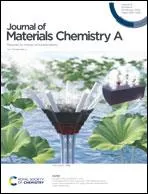
Journal of Materials Chemistry A, B & C cover high quality studies across all fields of materials chemistry. The journals focus on those theoretical or experimental studies that report new understanding, applications, properties and synthesis of materials. The journals have a strong history of publishing quality reports of interest to interdisciplinary communities and providing an efficient and rigorous service through peer review and publication. The journals are led by an international team of Editors-in-Chief and Associate Editors who are all active researchers in their fields. Journal of Materials Chemistry A, B & C are separated by the intended application of the material studied. Broadly, applications in energy and sustainability are of interest to Journal of Materials Chemistry A, applications in biology and medicine are of interest to Journal of Materials Chemistry B, and applications in optical, magnetic and electronic devices are of interest to Journal of Materials Chemistry C. More than one Journal of Materials Chemistry journal may be suitable for certain fields and researchers are encouraged to submit their paper to the journal that they feel best fits for their particular article. Example topic areas within the scope of Journal of Materials Chemistry A are listed below. This list is neither exhaustive nor exclusive. Artificial photosynthesis Batteries Carbon dioxide conversion Catalysis Fuel cells Gas capture/separation/storage Green/sustainable materials Hydrogen generation Hydrogen storage Photocatalysis Photovoltaics Self-cleaning materials Self-healing materials Sensors Supercapacitors Thermoelectrics Water splitting Water treatment
推荐化合物
推荐供应商





免责声明
本页面提供的学术期刊信息仅供参考和研究使用。我们与任何期刊出版商均无关联,也不处理投稿事宜。如有投稿相关咨询,请直接联系相关期刊出版商。
如发现页面信息有误,请发送邮件至 support@chemtradehub.com 联系我们。我们将及时核实并处理您的问题。