


![6,6-Dimethylbicyclo[3.1.1]hept-2-ene-2-carbaldehyde structure](https://cnstatic.chemtradehub.com/structs/564/564-94-3-e746.webp "6,6-Dimethylbicyclo[3.1.1]hept-2-ene-2-carbaldehyde structure")
The intrinsic activity descriptor of TM-N3-C single-atom catalysts for electrochemical CO2 reduction: a DFT study
文献信息
发布日期
2023-10-27
DOI
10.1039/D3TA04806C
影响因子
12.732
作者
Linmeng Wang, Zhiyuan Liu, Rushuo Li, Ping Yang, Wei Wang, Xiangdong Xue, Shihao Feng, Lingjing Yu, Ge Wang
查看原文
摘要
Developing catalysts for the high efficiency of CO2 utilization and conversion is a hot topic and has attracted significant interest. Using systematic density functional theory (DFT) calculations, the stability and catalytic performance of TM-N3-C catalysts are determined by the element of the metal site and influenced by the local environment around TM atoms during CO2RR, which is mainly attributed to tailoring the electronic structure of the active center and its coordinated atoms. The influence of inherent features of the catalyst on properties was clarified. It is worth noting that an intrinsic descriptor (Ψ) of activity and selectivity for CO2-to-CH4 was assembled by inherent characteristics of electrocatalysts, such as the number of valence electrons (V), electronegativity (χ), and Hirshfeld charges (Q); the elevation altitude (H) from TM center to N3-C substrate; average bond length (d) of the TM atom and the nearest neighbor atoms; and metal-coordinated number (N). The volcano-shaped physical curves were established between Ψ and the limiting potential, and three promising TM-N3-C (Ru-II, Rh-II, and Pd-II) with moderate VM, QM, d, and H, and larger χM are distributed close to the summit of the volcano curve. This study is meaningful for understanding the mechanism of electrocatalytic CO2 reduction and the design of efficient electrocatalysts for CO2RR.
期刊推荐

Journal of Chemical Sciences

Cellulose

Journal of Asian Natural Products Research

Main Group Chemistry

Herald of the Russian Academy of Sciences

Atomization and Sprays

Bioorganic & Medicinal Chemistry Letters
Critical Reviews in Solid State and Materials Sciences

Bioorganic & Medicinal Chemistry

Topics in Catalysis
相关文献
Structural features and protonation site of epibatidine in the gas phase: an investigation through infrared multiphoton dissociation spectroscopy and computational chemistry
Alexandre P. Atkinson, Aurélien Planchat, Jérôme Graton, Gilles Grégoire, Jean-Yves Le Questel
2010-12-06
Paper
DOI: 10.1039/C0CP01605E
Temperature-cycle single-molecule FRET microscopy on polyprolines
Haifeng Yuan, Ted Xia, Benjamin Schuler, Michel Orrit
2010-12-10
Paper
DOI: 10.1039/C0CP01772H
Interactions of TRIS [tris(hydroxymethyl)aminomethane] and related buffers with peptide backbone: Thermodynamic characterization
Mohamed Taha, Ming-Jer Lee
2010-08-27
Paper
DOI: 10.1039/C0CP00253D
Inorganic nanocrystals self ordered in 2D superlattices: how versatile are the physical and chemical properties?
M. P. Pileni
2010-08-25
Perspective
DOI: 10.1039/C0CP00456A
Differential capacitance of the double layer at the electrode/ionic liquids interface
Vera Lockett, Mike Horne, Rossen Sedev, Theo Rodopoulos, John Ralston
2010-08-19
Paper
DOI: 10.1039/C0CP00170H
Pd(ii) immobilized on mesoporous silica by N-heterocyclic carbeneionic liquids and catalysis for hydrogenation‡
Gang Liu, Minqiang Hou, Tianbin Wu, Tao Jiang, Honglei Fan, Guanying Yang, Buxing Han
2011-01-12
Paper
DOI: 10.1039/C0CP01213K
The role of aromatic interactions in the structure and energetics of benzyl ketones
Carlos F. R. A. C. Lima, Carlos A. D. Sousa, José E. Rodriguez-Borges, André Melo, John N. Low, Luís M. N. B. F. Santos
2010-07-28
Paper
DOI: 10.1039/C003941A
Wave packet calculations on the effect of the femtosecond pulse width in the time-resolved photodissociation of CH3I in the A-band
A. García-Vela, L. Bañares
2010-11-25
Paper
DOI: 10.1039/C0CP01508C
Theoretical investigation into molecular diodes integrated in series using the non-equilibrium Green's function method
Hongmei Liu, Nan Wang, Peng Li, Xing Yin, Cui Yu, Nengyue Gao, Jianwei Zhao
2010-12-09
Paper
DOI: 10.1039/C0CP00118J
您可能还喜欢
化合物问答
什么是2,6-二溴-4,8-双[(2-乙基己基)氧基]苯并[1,2-b:4,5-b']二噻吩(CAS号:1226782-13-3)?
2,6-二溴-4,8-双[(2-乙基己基)氧基]苯并[1,2-b:4,5-b']二噻吩是一种有机化合物,分子式为C23H32Br2O2S2。该化合物具有芳香性和...
1226782-13-32,6-Dibromo-4,8-bis[...
化合物问答
木聚硫钠(CAS号:37319-17-8)的物理化学性质是什么?
木聚硫钠通常为无色或白色结晶性粉末,具有吸湿性。其分子量约为121.11 g/mol。木聚硫钠易溶于水,不溶于醇类和其他非极性溶剂。在酸性或碱性溶液中,木聚硫钠...
37319-17-8Pentosan
化合物问答
2-甲氧基-4-(三氟甲基)苄溴, JRD(CAS号:886500-59-0)适用哪些法规指南?
该化合物在合成、储存和运输过程中需遵循《全球化学品统一分类和标签制度》(GHS)的健康、环境和物理危险分类。在欧洲还需符合《化学品注册、评估、授权和限制》(RE...
886500-59-02-Methoxy-4-(trifluo...
化合物问答
1,4-Diazoniabicyclo[2.2.2]octane-1,4-disulfinate(CAS号:119752-83-9)的主要用途是什么?
1,4-二氮杂双环[2.2.2]辛烷-1,4-二硫酸二酯主要用于有机合成中的保护基团,特别是在保护胺基和硫醇基方面具有广泛应用。此外,它还用于一些特殊化学反应的...
119752-83-91,4-Diazabicyclo[2.2...
化合物问答
如何处理含有4-(Bromomethyl)-2-fluorobenzenesulphonamide(CAS号:1645275-47-3)的废料?
含有4-(Bromomethyl)-2-fluorobenzenesulphonamide的废液应首先进行中和处理,以降低pH值,避免对环境造成腐蚀性影响。随后...
1645275-47-34-(Bromomethyl)-2-fl...
化合物问答
Loureiriol(CAS号:479195-44-3)的物理化学性质是什么?
Loureiriol是一种天然化合物,其分子式为C15H22O4。Loureiriol为无色结晶性粉末,具有较高的熔点和良好的热稳定性。其相对分子质量为262....
479195-44-3Loureiriol
化合物问答
在合成中是否有3-氨基苯甲酰苯胺(CAS号:14315-16-3)的替代品?
在合成过程中,可以考虑使用类似结构的化合物作为3-氨基苯甲酰苯胺的替代品,例如N-苯基-3-氰基苯胺或N-苯基-3-硝基苯胺等,这些化合物具有相似的化学性质,可...
14315-16-33-Amino-N-phenylbenz...
化合物问答
4-异氰酰苯基硼酸频哪醇酯(CAS号:380430-64-8)的市场或研究趋势如何?
4-异氰酰苯基硼酸频哪醇酯主要应用于有机合成、药物化学和材料科学领域。随着绿色化学的发展,该化合物因其高效的官能团转化能力和环境友好性而受到越来越多的关注。近年...
380430-64-82-(4-Isocyanatopheny...
化合物问答
如何储存3β-乙酰氧基-7,25-甘遂二烯-24(R)-醇(CAS号:1352001-09-2)?
3β-乙酰氧基-7,25-甘遂二烯-24(R)-醇应储存在阴凉、干燥、通风良好的地方,避免直接光照。储存容器应密封,防止空气中的水分和氧气影响化合物的稳定性。建...
1352001-09-23β-acetoxy-eupha- 7,...
化合物问答
如何储存4-氟-2-甲基-1H-吲哚(CAS号:1260383-51-4)?
应将4-氟-2-甲基-1H-吲哚存放在阴凉、干燥、通风良好的地方,避免直接暴露在光照下。容器应密封,避免与空气中的水蒸气接触。建议在避光、温度不超过25℃的环境...
1260383-51-44-Fluoro-2-methyl-1H...
来源期刊
Journal of Materials Chemistry A
CiteScore:
19.5
自引率:
4.7%
年发文量:
2211
Journal of Materials Chemistry A, B & C cover high quality studies across all fields of materials chemistry. The journals focus on those theoretical or experimental studies that report new understanding, applications, properties and synthesis of materials. The journals have a strong history of publishing quality reports of interest to interdisciplinary communities and providing an efficient and rigorous service through peer review and publication. The journals are led by an international team of Editors-in-Chief and Associate Editors who are all active researchers in their fields. Journal of Materials Chemistry A, B & C are separated by the intended application of the material studied. Broadly, applications in energy and sustainability are of interest to Journal of Materials Chemistry A, applications in biology and medicine are of interest to Journal of Materials Chemistry B, and applications in optical, magnetic and electronic devices are of interest to Journal of Materials Chemistry C. More than one Journal of Materials Chemistry journal may be suitable for certain fields and researchers are encouraged to submit their paper to the journal that they feel best fits for their particular article. Example topic areas within the scope of Journal of Materials Chemistry A are listed below. This list is neither exhaustive nor exclusive. Artificial photosynthesis Batteries Carbon dioxide conversion Catalysis Fuel cells Gas capture/separation/storage Green/sustainable materials Hydrogen generation Hydrogen storage Photocatalysis Photovoltaics Self-cleaning materials Self-healing materials Sensors Supercapacitors Thermoelectrics Water splitting Water treatment
推荐化合物
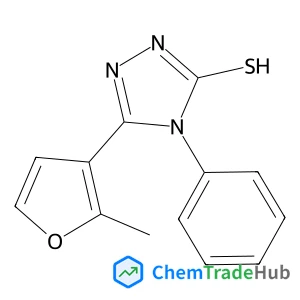
5-(2-Methyl-3-furyl)-4-phenyl-2,4-dihydro-3H-1,2,4-triazole-3-thione
CAS号:
346464-59-3
分子式:
C13H11N3OS
![Ethyl 4-[8-chloro(5,5,6,6,7-~2~H_5_)-5,6-dihydro-11H-benzo[5,6]cyclohepta[1,2-b]pyridin-11-ylidene]-1-piperidinecarboxylate structure](https://cnstatic.chemtradehub.com/structs/102/1020719-57-6-37e2.webp "Ethyl 4-[8-chloro(5,5,6,6,7-~2~H_5_)-5,6-dihydro-11H-benzo[5,6]cyclohepta[1,2-b]pyridin-11-ylidene]-1-piperidinecarboxylate structure")
推荐供应商




免责声明
本页面提供的学术期刊信息仅供参考和研究使用。我们与任何期刊出版商均无关联,也不处理投稿事宜。如有投稿相关咨询,请直接联系相关期刊出版商。
如发现页面信息有误,请发送邮件至 support@chemtradehub.com 联系我们。我们将及时核实并处理您的问题。