









Stability improvement of carbon-based electrodes in aqueous electrocapacitive devices
文献信息
发布日期
2023-12-21
DOI
10.1039/D3TA06158B
影响因子
12.732
作者
Ao Wang, Chang Tan, Dichao Wu, Mengmeng Fan, Kang Sun, Jianchun Jiang, Steven Boles, Bei Li, Junli Liu
查看原文
摘要
Activated carbon (AC) electrodes are irreplaceable in many electrochemical cells due to their unique combination of specific surface area and relative abundance. However, in many devices the aqueous conditions at the surface of carbon will lead to irreversible parasitic faradaic reactions, resulting in the formation of oxygenated functional groups and a reduction in electrode service life. In this study, we employ capacitive deionization (CDI) as an ideal system to investigate the cycling stability of different AC electrodes with modified surface chemistry, so as to reveal the coupled reaction-degradation phenomena that are often limiting deployment of aqueous electrocapacitive devices. It is found that the incorporation of AC cathodes with rich oxygen-containing surface groups significantly alleviates an inversion effect during long-term operation of a CDI system. At the same time, the salt adsorption capacity (SAC), the charge efficiency and the SAC retention rate of cells with modified commercially available AC improve significantly as compared to those with unmodified commercially available AC. To pinpoint the responsible faradaic processes, multiple parameters of the effluent are monitored to quantify the generation rate of OH− species, which leads to a beneficial acidic-electrolyte environment. Consequently, the carbon-oxidation reactions are suppressed due to the increased redox potential in an acid environment and the potential of the zero charge (PZC) of the aged anode remains nearly unchanged after long-term cycling. Importantly, the carbon treatment methods demonstrated herein are industrially scalable, and combined with the unraveled mechanism, suggest many opportunities to stimulate the design of the specialized AC materials with extreme stability for enabling a new generation of aqueous electrocapacitive technologies.
期刊推荐
相关文献
Magneto-optical FeGa2O4nanoparticles as dual-modality high contrast efficacy T2 imaging and cathodoluminescent agents
Chih-Chia Huang, Mei-Yi Liao, Chen-Sheng Yeh
2009-05-29
Communication
DOI: 10.1039/B907782K
Structure of endohedral fullerene Eu@C74
Dmitrij Rappoport, Filipp Furche
2009-06-10
Paper
DOI: 10.1039/B902098E
Structure and bonding of [VIVO(acac)2] on the surface of AlF3 as studied by pulsed electron nuclear double resonance and hyperfine sublevel correlation spectroscopy
Vijayasarathi Nagarajan, Barbara Müller, Oksana Storcheva, Klaus Köhler, Andreas Pöppl
2009-06-10
Paper
DOI: 10.1039/B903826B
The effect of the NH2 substituent on NH3: hydrazine as an alternative for ammonia in hydrogen release in the presence of boranes and alanes
Saartje Swinnen, Myrna H. Matus, David A. Dixon
2009-05-29
Paper
DOI: 10.1039/B823358F
Exchangeable oxygens in the vicinity of the molybdenum center of the high-pH form of sulfite oxidase and sulfite dehydrogenase
Andrei V. Astashkin, Eric L. Klein, Dmitry Ganyushin, Kayunta Johnson-Winters, Frank Neese, Ulrike Kappler, John H. Enemark
2009-07-13
Paper
DOI: 10.1039/B907029J
Intermolecular vibrations of (CH2)2O–HF and –DF hydrogen bonded complexes investigated by Fourier transform infrared spectroscopy and ab initio calculations
2010-08-18
Paper
DOI: 10.1039/C004100A
In situ infrared (FTIR) study of the mechanism of the borohydride oxidation reaction
B. Molina Concha, M. Chatenet, F. Maillard, E. A. Ticianelli, F. H. B. Lima, R. B. de Lima
2010-08-02
Paper
DOI: 10.1039/C003652H
Intramolecular competition in the photodissociation of C3D3 radicals at 248 and 193 nm
2010-08-16
Paper
DOI: 10.1039/C0CP00380H
Supramolecular interactions of fullerenes with (Cl)Fe- and Mn porphyrins. A theoretical study
Meng-Sheng Liao, John D. Watts, Ming-Ju Huang
2009-05-18
Paper
DOI: 10.1039/B904782D
Structural and hygroscopic changes of soot during heterogeneous reaction with O3
Yongchun Liu, Chang Liu, Jinzhu Ma, Qingxin Ma, Hong He
2010-07-23
Paper
DOI: 10.1039/C0CP00402B
您可能还喜欢
化合物问答
十二烷基磺酸钠(CAS号:2386-53-0)的主要用途是什么?
十二烷基磺酸钠主要用作表面活性剂,广泛应用于洗涤剂、肥皂、化妆品和工业清洁产品中。它能有效去除油脂和污垢,常用于制造洗发水、沐浴露、洗衣粉和金属清洗剂。此外,它...
2386-53-01-Dodecanesulfonic a...
化合物问答
5-羟基异喹啉(CAS号:2439-04-5)适用哪些法规指南?
5-羟基异喹啉作为化学品,主要适用的法规包括GHS全球化学品统一分类和标签制度,REACH法规等。GHS将5-羟基异喹啉分类为皮肤腐蚀/刺激类别2,严重眼损伤/...
2439-04-55-Isoquinolinol
化合物问答
在合成中是否有FIDAS-5 | Wnt(CAS号:1391934-98-7)的替代品?
合成中可以考虑使用类似结构的化合物,如4-[(E)-2-(2-氯-6-氟苯基)乙烯基]-N-甲基苯胺的类似物或衍生物作为替代品。这类化合物可能具有相似的生物活性...
1391934-98-74-[(E)-2-(2-Chloro-6...
化合物问答
(R)-tert-Butyl 2-(5-bromo-1H-imidazol-2-yl)pyrrolidine-1-carboxylate(CAS号:1370600-56-8)通常如何合成?
该化合物通常通过如下步骤合成:首先,将4-溴-1H-咪唑与对甲苯磺酸在乙酸乙酯中反应,得到中间体5-溴-1H-咪唑-2-甲酸乙酯。然后,该中间体与2-甲基-2-...
1370600-56-82-Methyl-2-propanyl ...
化合物问答
处理4-(吡咯烷-1-基)环己酮(CAS号:10421-18-8)时应注意哪些实验室安全事项?
处理4-(吡咯烷-1-基)环己酮时,应佩戴手套、护目镜和实验室外套,以防止直接接触或吸入。在通风橱中操作,确保良好的通风条件。一旦发生泄漏,应立即清理并使用适当...
10421-18-84-(Pyrrolidin-1-yl)c...
化合物问答
如何处理含有异麦芽糖醇(CAS号:534-73-6)的废料?
含有异麦芽糖醇的废液应首先进行分类收集,避免与其他化学品混合。对于小规模的废液,可以通过焚烧或加入特定的化学试剂进行无害化处理。对于大规模的废液,建议联系专业的...
534-73-66-O-alpha-D-Glucopyr...
化合物问答
7-甲基壬酸(CAS号:41653-89-8)的主要用途是什么?
7-甲基壬酸主要用于有机合成领域,作为合成其他化合物的原料。此外,它还可能作为一种中间体用于药品制造和香料合成,但具体用途需要根据其具体的化学结构和反应特性来确...
41653-89-87-Methylnonanoic aci...
化合物问答
N-甲氧基-N-甲基甲基吡啶羧酰胺(CAS号:148493-07-6)应用于哪些行业?
N-甲氧基-N-甲基甲基吡啶羧酰胺在医药领域有一定的应用,作为一种潜在的药物前体或中间体。此外,该化合物也可能应用于聚合物改性剂、传感器材料等。由于其独特的化学...
148493-07-6N-Methoxy-N-methylpi...
化合物问答
什么是惕各酸香叶酯(CAS号:7785-33-3)?
惕各酸香叶酯是一种化合物,化学名称为(2E)-3,7-二甲基-2,6-辛二烯-1-基(2E)-2-甲基-2-丁烯酸酯。它是一种具有香叶香气的化合物,分子式为C1...
7785-33-3(2E)-3,7-Dimethyl-2,...
化合物问答
1-环丁基哌嗪(CAS号:132800-13-6)安全吗?
1-环丁基哌嗪在适当的操作条件下是相对安全的,但如遇明火或高热会释放有毒气体。操作时应佩戴防护眼镜和手套,避免吸入或接触皮肤、眼睛。
132800-13-61-Cyclobutylpiperazi...
来源期刊
Journal of Materials Chemistry A
CiteScore:
19.5
自引率:
4.7%
年发文量:
2211
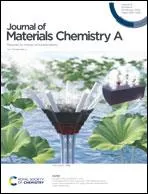
Journal of Materials Chemistry A, B & C cover high quality studies across all fields of materials chemistry. The journals focus on those theoretical or experimental studies that report new understanding, applications, properties and synthesis of materials. The journals have a strong history of publishing quality reports of interest to interdisciplinary communities and providing an efficient and rigorous service through peer review and publication. The journals are led by an international team of Editors-in-Chief and Associate Editors who are all active researchers in their fields. Journal of Materials Chemistry A, B & C are separated by the intended application of the material studied. Broadly, applications in energy and sustainability are of interest to Journal of Materials Chemistry A, applications in biology and medicine are of interest to Journal of Materials Chemistry B, and applications in optical, magnetic and electronic devices are of interest to Journal of Materials Chemistry C. More than one Journal of Materials Chemistry journal may be suitable for certain fields and researchers are encouraged to submit their paper to the journal that they feel best fits for their particular article. Example topic areas within the scope of Journal of Materials Chemistry A are listed below. This list is neither exhaustive nor exclusive. Artificial photosynthesis Batteries Carbon dioxide conversion Catalysis Fuel cells Gas capture/separation/storage Green/sustainable materials Hydrogen generation Hydrogen storage Photocatalysis Photovoltaics Self-cleaning materials Self-healing materials Sensors Supercapacitors Thermoelectrics Water splitting Water treatment
推荐化合物
![2-Hydroxy-4-[({[(4-methylphenyl)sulfonyl]oxy}acetyl)amino]benzoic acid structure](https://cnstatic.chemtradehub.com/structs/501/501919-59-1-579f.webp "2-Hydroxy-4-[({[(4-methylphenyl)sulfonyl]oxy}acetyl)amino]benzoic acid structure")
2-Hydroxy-4-[({[(4-methylphenyl)sulfonyl]oxy}acetyl)amino]benzoic acid
CAS号:
501919-59-1
分子式:
C16H15NO7S
推荐供应商







免责声明
本页面提供的学术期刊信息仅供参考和研究使用。我们与任何期刊出版商均无关联,也不处理投稿事宜。如有投稿相关咨询,请直接联系相关期刊出版商。
如发现页面信息有误,请发送邮件至 support@chemtradehub.com 联系我们。我们将及时核实并处理您的问题。