





Bulletin of Environmental Contamination and Toxicology
基本信息
期刊简写:
B ENVIRON CONTAM TOX
影响因子:
2.7
ISSN:
0007-4861
研究领域:
ENVIRONMENTAL SCIENCE AND ECOLOGY
h-index:
63
自引率:
3.7%
年发文量:
183
SCI收录来源:
Science Citation Index Expanded
期刊官网:
https://www.springer.com/128
期刊介绍:
Past Editors-in-Chief John Hylin (1966 – 1978), University of Hawaii, Honolulu, HI, USA Yutaka Iwata (1978 – 1983), University of California, Riverside, CA, USA Herbert N. Nigg (1983 – 2012), University of Florida, Lake Alfred, FL, USA The Bulletin of Environmental Contamination and Toxicology (BECT) is a peer-reviewed journal that offers rapid review and publication. Accepted submissions will be presented as clear, concise reports of current research for a readership concerned with environmental contamination and toxicology. Scientific quality and clarity are paramount. As indicated in the Instructions for Authors, articles suitable for inclusion in BECT should be brief; complete manuscripts, including title, authors/affiliations, abstract, text, figures, tables, and references, must not exceed 8 (eight) pages. All manuscripts must be prepared and submitted in accordance with Instructions for Authors. BECT does not have the capacity to publish Supplementary Information, so manuscripts must be complete in the submitted form. Research papers that present a variation, extension, or confirmation of topics that have already been extensively studied or are not considered to be of immediate interest to readers will be returned. BECT will not accept a series of short papers on the same or closely related topics. Review articles, abstracts, and archival papers will not be accepted for publication. Authors of archival articles should consider submitting their manuscripts to Archives of Environmental Contamination and Toxicology. (http://www.springer.com/environment/ environmental+toxicology/journal/244). Authors of review articles should consider submitting their manuscripts to Reviews of Environmental Contamination and Toxicology (http://www.springer.com/series/398). Experimental design and objective(s) must be clearly articulated, and the data must be analyzed and interpreted using appropriate statistical methods. Manuscripts are expected to address one or more of the following themes: Analytical Methodology The editors welcome manuscripts on innovative analytical methods pertaining to chemicals of environmental interest. It is imperative that any new technique be compared with older techniques. Manuscripts describing methods that are simply repeats of older methods with a different substrate will be considered, but the onus will be on the author to explain innovative aspects of the method. Manuscripts presenting methods for analyses for which methods have been standardized and for which copious data are available will not be considered for publication unless the new method can be demonstrated to have clear advantages associated with economy, improved performance, and/or reductions in waste or use of hazardous substances. Descriptions of new methods, procedures, or techniques must be sufficiently detailed to permit their adoption in other laboratories. All reports of new methods must characterize analytical precision and accuracy, recoveries (for extraction or pre-concentration techniques), limits of detection and quantitation, and the operating parameters used with analytical instrumentation. Analytical methods-related manuscripts are rejected at a high rate because many of thesubmitted manuscripts do not significantly improve upon an existing method. Environmental Distribution Environmental distribution studies document the concentrations of chemicals in environmental media. Editors welcome submission of manuscripts reporting results of studies that demonstrate how chemicals partition between environmental media in natural and anthropogenically altered environments. BECT will not accept manuscripts that simply document concentrations of chemicals in the environment without interpretation; e.g., the presentation of temporal monitoring data without an explanation of the findings and their potential significance. Environmental Dissipation Investigations of this type should consider the potential fate of the studied chemical(s) in surrounding environmental media rather than reporting only dissipation measurements and discussing potential human exposure. The focus of these studies should include characterizing spatial or temporal patterns of contamination, the transfer and fate of contaminants, and/or characterizing exposures to chemicals in various media. Distribution and dissipation studies linking model outputs with empirical data (i.e., model calibration or validation) are welcome. All papers reporting chemical concentrations must specify the QA/QC procedures, the analytical limits of detection and quantitation, and the operating parameters of analytical instrumentation. Contemporary measurement techniques using chemical-specific separation and detection are expected. Exposure, Bioaccumulation, and Remediation BECT invites the submission of papers with the objective of characterizing and quantifying chemical exposure in humans and wildlife. Papers in this theme should characterize variations in chemical concentrations in environmental media (air, water, food) and provide linkages to exposure thresholds such as tolerable daily intakes, predicted no-effect concentrations, environmental quality guidelines, or relevant toxicological information used for hazard/risk assessment. Bioaccumulation studies may involve calibration of toxicokinetic parameters, model development, or empirical descriptions of chemical movement in organisms and/or food webs. As noted for manuscripts with an environmental distribution theme, manuscripts reporting concentrations also must report QA/QC procedures, limits of detection and quantitation and the operating parameters for analytical instrumentation. The journal will also consider submissions describing techniques for remediation of contaminants in environmental matrixes (e.g., soil, water, air), with a particular emphasis on low-cost solutions that do not require advanced treatment technologies. Toxicology Studies Toxicology studies uncover the mode of action and effects of chemical exposure at all levels of biological organization (i.e., molecular, biochemical, cellular, tissue, whole organism, population, community). BECT welcomes toxicology studies using in vitro techniques, molecular techniques, toxicogenomics, tissue pathology, model organisms and non-traditional laboratory organisms. Toxicology studies that are human-focused or use rodent models exclusively for human risk analysis and epidemiology should be submitted elsewhere. Toxicology studies should involve appropriate controls (including positive controls), treatments with multiple doses or concentrations and should be interpreted using appropriate statistical methods. Manuscripts will not be accepted if test dosages or concentrations in exposure media are not analytically confirmed. Additionally, papers that do not report the results of studies representing environmentally realistic exposures will be rejected. Wildlife Toxicology Wildlife toxicology includes studies on the effects of environmental pollutants on populations of free-ranging and captive animals. Where appropriate, experimental designs must be replicated, use appropriate controls or reference sites and be interpreted using the appropriate statistical analyses. Unreplicated experiments will be considered only if they involve examination or the non-lethal collection of tissues or fluids for investigating cause of death or contaminant exposure/effects in threatened, endangered, or otherwise rare or difficult to sample species. Biological end points may include biomarker responses, endocrine effects, immunotoxicity, genotoxicity or integrative effects on growth, reproduction, behavior, deformities, or mortality. Studies on epizootics are encouraged where clear linkages between biological effects and exposure to chemical pollutants can be established. Microbial Studies BECT invites submissions of papers with the objective of characterizing the effectiveness of microorganisms to degrade and/or remediate contaminants in various environmental media. Note that in vitro studies using a single organism isolate or multiple organism isolates to degrade environmental contaminants must be field-validated or they will not be accepted. In addition, all papers in this area must fulfill the basic research requirements related to the above topic areas.
CiteScore
CiteScore
5.6
SJR
0.665
SNIP
0.615
| 学科 | 排名 | 百分位 |
|---|---|---|
Environmental SciencePollution |
60 / 167 | 64% |
期刊统计
Monthly
期/年
Submission to first decision (median): 13 days
审稿周期
£2390/$3690/€2790
论文处理费
投稿信息
投稿网址:
https://www.editorialmanager.com/bect/期刊推荐
相关文献
Investigation of the interactions between alkanethiol self-assembled monolayers and a liquid overlayer using impedance spectroscopy
Janelle D. S. Newman, G. J. Blanchard
2007-10-17
Paper
DOI: 10.1039/B711212B
Investigations on the gas-phase photolysis and OH radical kinetics of methyl-2-nitrophenols
Ian Barnes, Romeo Olariu, Shouming Zhou, Peter Wiesen, Thorsten Benter
2007-09-07
Paper
DOI: 10.1039/B709464G
Low-volatility poly-oxygenates in the OH-initiated atmospheric oxidation of α-pinene: impact of non-traditional peroxyl radical chemistry
L. Vereecken, J.-F. Müller, J. Peeters
2007-08-02
Paper
DOI: 10.1039/B708023A
Silica-supported chromium oxide: colloids as building blocks‡
Ive Hermans, Eric Breynaert, Hilde Poelman, Roger De Gryse, Duoduo Liang, Gustaaf Van Tendeloo, André Maes, Jozef Peeters, Pierre Jacobs
2007-08-09
Paper
DOI: 10.1039/B706601E
Titanium oxidefullerenes: electronic structure and basic trends in their stability
2007-09-24
Paper
DOI: 10.1039/B712094J
Interrogation of living cells using alternating current scanning electrochemical microscopy (AC-SECM)
Piotr M. Diakowski, Zhifeng Ding
2007-10-09
Paper
DOI: 10.1039/B711448F
Frequency-dependent response properties and excitation energies from one-electron density matrix functionals
Jerzy Cioslowski
2007-07-23
Perspective
DOI: 10.1039/B704797E
Kinetic analysis of supported Ni-catalyzed CO2/CH4 reactions using photoacoustic spectroscopy
Ji-Woong Kim, Jae-Au Ha, Hun Jung, Byung-II Ahn, Sung-Han Lee, Joong-Gill Choi
2007-09-25
Paper
DOI: 10.1039/B709102H
Localized orbital theory and ammonia triborane
Joseph E. Subotnik, Alex Sodt, Martin Head-Gordon
2007-08-29
Paper
DOI: 10.1039/B709171K
您可能还喜欢
化合物问答
4-[4-三氟甲基苯基]恶唑(CAS号:1126636-40-5)通常如何合成?
4-[4-三氟甲基苯基]恶唑通常通过将4-三氟甲基苯酚与异硫氰酸苯酯在有机溶剂中进行酯化反应合成。该反应可在无水条件下,使用适当的催化剂,如四丁基氢氧化铵,以提...
1126636-40-54-(4-(Trifluoromethy...
59729-32-71-[3-(Dimethylamino)...
化合物问答
RockPhos Pd G3(CAS号:2009020-38-4)通常如何合成?
RockPhos Pd G3 通常通过钯催化偶联反应合成,使用配体 (2'-Amino-2-biphenylyl)(methanesulfonato-kappa...
2009020-38-4(2'-Amino-2-biphenyl...
化合物问答
1-哌啶甲酰胺(CAS号:2158-03-4)的市场或研究趋势如何?
1-哌啶甲酰胺作为有机合成中的重要中间体,其市场需求主要受医药、农药、染料等行业推动。近年来,随着新药开发和绿色化学的发展,该化合物的研究趋势集中在开发更高效、...
2158-03-41-Piperidinecarboxam...
化合物问答
2-(二苯基膦基)乙胺(CAS号:4848-43-5)适用哪些法规指南?
2-(二苯基膦基)乙胺适用于多种法规指南,包括但不限于《全球化学品统一分类和标签制度》(GHS),欧盟《化学品注册、评估、授权和限制》法规(REACH),以及美...
4848-43-52-(Diphenylphosphino...
化合物问答
如何储存间苯二甲酸二烯丙酯(CAS号:1087-21-4)?
间苯二甲酸二烯丙酯应储存在阴凉、干燥、通风良好的地方,远离火源和热源。储存容器应密封,避免光照和高温。储存温度应控制在25℃以下,相对湿度应低于80%。避免与其...
1087-21-4Diallyl isophthalate
化合物问答
什么是间甲苯异硫代异氰酸酯(CAS号:621-30-7)?
间甲苯异硫代异氰酸酯是一种有机化合物,分子式为C7H7NO2S,具有刺激性气味。它是一种重要的有机合成中间体,在合成其他化合物时广泛应用。
621-30-71-Isothiocyanato-3-m...
化合物问答
在合成中是否有N-Boc-D-苯丙氨醇(CAS号:106454-69-7)的替代品?
在合成中,可以考虑使用N-Cbz-D-苯丙氨醇或N-Fmoc-D-苯丙氨醇作为替代品。这些化合物同样具有保护氨基的功能,且在合成过程中表现出良好的反应性能。
106454-69-72-Methyl-2-propanyl ...
化合物问答
3-羟甲基-2-氧异丙基吡啶(CAS号:954240-50-7)的主要用途是什么?
3-羟甲基-2-氧异丙基吡啶主要用于有机合成领域,可以作为合成其他药物、农药或精细化学品的中间体。此外,它还可能在实验室研究中作为特定反应的前体或溶剂。
954240-50-7(2-Isopropoxy-3-pyri...
化合物问答
6-氨基-9-甲基嘌呤(CAS号:700-00-5)应用于哪些行业?
6-氨基-9-甲基嘌呤目前主要应用于医药行业,作为某些药物的中间体。此外,它还可能用于聚合物、传感器和半导体的某些领域,作为功能性单体或掺杂剂。
700-00-59-Methyl-9H-purin-6-...
推荐化合物
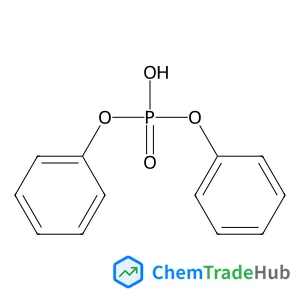
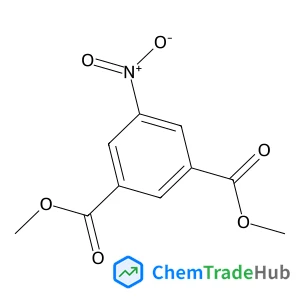
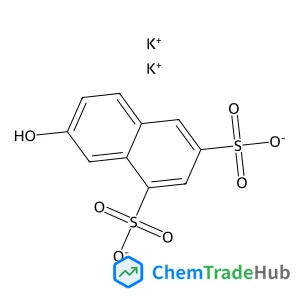
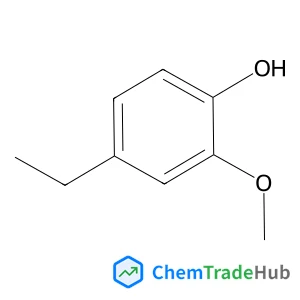
推荐供应商





免责声明
本页面提供的学术期刊信息仅供参考和研究使用。我们与任何期刊出版商均无关联,也不处理投稿事宜。如有投稿相关咨询,请直接联系相关期刊出版商。
如发现页面信息有误,请发送邮件至 support@chemtradehub.com 联系我们。我们将及时核实并处理您的问题。