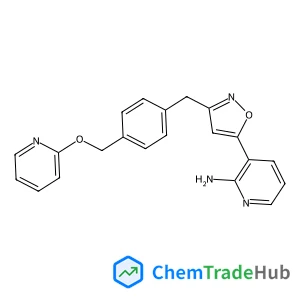
3-(3-(4-((Pyridin-2-yloxy)methyl)benzyl)isoxazol-5-yl)pyridin-2-amine
CAS号:
936339-60-5
分子式:
C21H18N4O2
Environment International is a multi-disciplinary, Open Access journal publishing high quality and novel information within the broad field of 'Public and Environmental Health Sciences'. Coverage includes, but is not limited to, the following research topics: 1) Public Health and Health Impact Assessment, Environmental Epidemiology (Prof. Mark Nieuwenhuijsen) 2) Environmental Health and Risk Assessment, Environmental Chemistry (Prof. Adrian Covaci) 3) Environmental Toxicology and Biodiversity, Environmental Processes (Prof. Frederic Coulon) 4) Environmental Technology for Environmental Health Protection (Prof. Thanh Huong (Helen) Nguyen) The journal has published before on many of the above-mentioned topics, and thus they are familiar to authors, readers, reviewers, and editors. In particular, the following specific topics are welcome (non-exhaustive list), as long as they have strong environmental health applicability and relevance and if they discuss 'interactions between the environment and humans' in the broadest sense. 1) Public Health and Health Impact Assessment, Environmental Epidemiology (Prof. Mark Nieuwenhuijsen) The section overseen by Prof. Nieuwenhuijsen covers novel topics related to the exposure assessment and epidemiology of indoor and outdoor air quality, noise, green space, temperature and other environmental exposures, the assessment and health effect of urban and transport planning and the built environment. We also welcome innovative research on women, children, migrants and the elderly as specific and vulnerable sub-populations. Other topics of interest relate to the health implications and impacts of climate change with specific reference to sustainable development, including planetary health and urban health. 2) Environmental Health and Risk Assessment, Environmental Chemistry (Prof. Adrian Covaci) The section overseen by Prof. Covaci covers novel topics related to the environmental and health risk assessment, modelling and impact of chemicals of emerging concern on human exposure and human exposome in general. We also welcome novel and innovative approaches for human biomonitoring, human exposome and environmental "omics", for a broad range of Persistent Organic Pollutants, Endocrine Disruptors and Emerging Contaminants, including microplastics. These tools are pivotal for the correct evaluation of source apportionment, exposure, fate, bioavailability, and biotransformation of environmental and food contaminants. We are also interested to receive innovative papers investigating the link between ecosystem health and human health and their input on chemicals policy and regulation. We strongly encourage the submission of systematic reviews related to environmental and human health risk assessment. 3) Environmental Toxicology and Biodiversity, Environmental Processes (Prof. Frederic Coulon) The section overseen by Prof. Coulon covers functioning ecosystems with a focus on environmental processes and human activities on biodiversity disturbance in the context of human and environmental health. We particularly welcome novel and innovative research submissions addressing biogeochemical processes in terrestrial and aquatic ecosystems, and their influence on the status and fate of contaminants. We also welcome novel areas of environmental toxicology studies, particularly on the chemical and molecular mechanisms of emerging contaminants and population dynamics under contamination. We also welcome innovative and novel topics addressing fundamental interactions between environmental health and biodiversity, in the context of human and environmental health. 4) Environmental Technology for Environmental Health Protection (Prof. Thanh Huong (Helen) Nguyen The Environmental Technology section, overseen by Prof. Nguyen, responds to increasing attention on technological solutions which will lead to an improvement of Public and Environmental Health. We are particularly interested in interdisciplinary research that connects environmental technologies to public and environmental health, resource recovery, social economics, and sustainability. We consider innovative research on, but not limited to: technologies for minimizing and treating contaminants, and/or maximizing recovery of valuable resources from wastes such as energy, nutrients, and water; technologies for sensing and monitoring the quality of water, air, and other environmental compartments; and technologies for analysing emerging contaminants via chemical and microbiological methods. We welcome both applied and fundamental research that develops innovative technologies with a strong potential for public and environmental health protection, that address key limitations of existing technologies, and/or demonstrate technologies in the real-world using methods with strong scientific merit. Environment International is a fully open access journal for which you need to pay an APC. Once published, your article will be immediately and permanently available for readers to read, download, and share. Full guidance about how to submit your special issue proposal can be found here.
| 学科 | 排名 | 百分位 |
|---|---|---|
Environmental ScienceGeneral Environmental Science |
3 / 233 | 98% |
Jun-Song Zhong, Yi Yu, Zhaojiang Shi, Ke-Yin Ye
DOI: 10.1039/D0QO01227K
Xinwei Hu, Zheng Tan, Zhipeng Liu, Fengjuan Chen, Huanfeng Jiang, Wei Zeng
DOI: 10.1039/D0QO01426E
Cassandra C. Shaffer, Bradley D. Smith
DOI: 10.1039/D0QO01562H
Roger R. Hill, David Birch, Graham E. Jeffs, Michael North
DOI: 10.1039/B211914E
Xiao-De An
DOI: 10.1039/D0QO01502D
Anan Wang, Xuesong Liu, Yi Kong, Jing Wang, Tao-Shan Jiang
DOI: 10.1039/D0QO01416H
Mingjun Zhang, Xin Ding, Aidang Lu, Jin Kang, Yongyue Gao, Ziwen Wang, Hongyan Li, Qingmin Wang
DOI: 10.1039/D0QO01413C
Jianhua Liao, Xiao Yang, Lu Ouyang, Yinlong Lai, Jiuzhong Huang, Renshi Luo
DOI: 10.1039/D0QO01453B
David E. Hibbs, Jane R. Hanrahan, Michael B. Hursthouse, David W. Knight, Jacob Overgaard, Peter Turner, Ross O. Piltz, Mark P. Waller
DOI: 10.1039/B210698A
4-[4-三氟甲基苯基]恶唑通常通过将4-三氟甲基苯酚与异硫氰酸苯酯在有机溶剂中进行酯化反应合成。该反应可在无水条件下,使用适当的催化剂,如四丁基氢氧化铵,以提...
RockPhos Pd G3 通常通过钯催化偶联反应合成,使用配体 (2'-Amino-2-biphenylyl)(methanesulfonato-kappa...
1-哌啶甲酰胺作为有机合成中的重要中间体,其市场需求主要受医药、农药、染料等行业推动。近年来,随着新药开发和绿色化学的发展,该化合物的研究趋势集中在开发更高效、...
2-(二苯基膦基)乙胺适用于多种法规指南,包括但不限于《全球化学品统一分类和标签制度》(GHS),欧盟《化学品注册、评估、授权和限制》法规(REACH),以及美...
间苯二甲酸二烯丙酯应储存在阴凉、干燥、通风良好的地方,远离火源和热源。储存容器应密封,避免光照和高温。储存温度应控制在25℃以下,相对湿度应低于80%。避免与其...
间甲苯异硫代异氰酸酯是一种有机化合物,分子式为C7H7NO2S,具有刺激性气味。它是一种重要的有机合成中间体,在合成其他化合物时广泛应用。
在合成中,可以考虑使用N-Cbz-D-苯丙氨醇或N-Fmoc-D-苯丙氨醇作为替代品。这些化合物同样具有保护氨基的功能,且在合成过程中表现出良好的反应性能。
3-羟甲基-2-氧异丙基吡啶主要用于有机合成领域,可以作为合成其他药物、农药或精细化学品的中间体。此外,它还可能在实验室研究中作为特定反应的前体或溶剂。
6-氨基-9-甲基嘌呤目前主要应用于医药行业,作为某些药物的中间体。此外,它还可能用于聚合物、传感器和半导体的某些领域,作为功能性单体或掺杂剂。
![4-{(2R,3R)-3-Methyl-5-[(1E)-1-propen-1-yl]-2,3-dihydro-1-benzofuran-2-yl}phenol structure](https://cnstatic.chemtradehub.com/structs/221/221666-27-9-20a9.webp "4-{(2R,3R)-3-Methyl-5-[(1E)-1-propen-1-yl]-2,3-dihydro-1-benzofuran-2-yl}phenol structure")
![4-Chloro-1-[(4-methylphenyl)sulfonyl]-1H-pyrrolo[2,3-b]pyridine structure](https://cnstatic.chemtradehub.com/structs/348/348640-05-1-7db8.webp "4-Chloro-1-[(4-methylphenyl)sulfonyl]-1H-pyrrolo[2,3-b]pyridine structure")
![(S,S)-2-{1-Carboxy-2-[3-(3,5-dichloro-benzyl)-3H-imidazol-4-YL]-ethylamino}-4-methyl-pentanoic acid structure](https://cnstatic.chemtradehub.com/structs/305/305335-31-3-1724.webp "(S,S)-2-{1-Carboxy-2-[3-(3,5-dichloro-benzyl)-3H-imidazol-4-YL]-ethylamino}-4-methyl-pentanoic acid structure")
![1,4-Dioxaspiro[4.5]dec-7-en-8-ylboronic acid structure](https://cnstatic.chemtradehub.com/structs/850/850567-90-7-6fff.webp "1,4-Dioxaspiro[4.5]dec-7-en-8-ylboronic acid structure")