






Pressure and temperature dependence of the gas-phase reaction of silylene with dimethyl ether
文献信息
发布日期
2001-06-29
DOI
10.1039/B100068N
影响因子
3.676
作者
Ula N. Alexander, Keith D. King, Warren D. Lawrance
查看原文
摘要
Gas-phase reaction rate constants for the reaction of silylene, SiH2, with dimethyl ether, CH3OCH3 have been determined over the temperature range 294–441 K and at total pressures of inert bath gas (Ar or SF6) over the range 30–850 Torr. The second-order rate constants are pressure dependent, even up to the maximum pressure investigated of 850 Torr, and the rate constants decrease with increasing temperature, indicating that the reaction proceeds ia the formation of a complex. At the highest temperature studied (441 K), the experimental decay curves do not return to the baseline. This is attributed to the system reaching equilibrium, with SiH2 being produced by dissociation of the complex, and provides direct experimental evidence for the formation of the complex. Analysis of the decay curves provided an experimental determination of the equilibrium constant, Keq, at 441 K. The high-pressure rate constants, obtained by extrapolation of the experimental data using RRKM/master equation modelling, yield the Arrhenius parameters log (A/cm3 molecule−1 s−1) = − 7.6 ± 0.4 and Ea = 9.3 ± 2.8 kJ mol−1. The RRKM/master equation modelling gives a well depth for the SiH2–CH3OCH3 complex of 87 kJ mol−1. This compares with a value of 88.4 ± 1.7 kJ mol−1 determined from Keq at 441 K. Ab initio calculations, performed at the MP2/6-311 + G** level of theory, give a well-depth for the complex of 82.9 kJ mol−1, in excellent agreement with this value.
相关文献
Hidden variety of biotin–streptavidin/avidin local interactions revealed by site-selective dynamic force spectroscopy
Atsushi Taninaka, Osamu Takeuchi, Hidemi Shigekawa
2010-08-20
Paper
DOI: 10.1039/C0CP00259C
Wavelength-tunable excited-state absorption and optical limiting effects in the Q band region based on silicon phthalocyanine oligomers
Kazuyuki Ishii, Naoko Sakai
2010-10-13
Communication
DOI: 10.1039/C0CP01172J
High resolution Dopplerimetry of correlated angular and quantum state-resolved CO2 scattering dynamics at the gas–liquid interface
Bradford G. Perkins, Jr., David J. Nesbitt
2010-10-01
Paper
DOI: 10.1039/C0CP00578A
A chemistry/physics pathway with nanofibrous scaffolds for gene delivery
Fen Wan, Zhaohui Tang, Weidong He, Benjamin Chu
2010-08-19
Perspective
DOI: 10.1039/C002515A
Structural and dynamic properties of oxygen vacancies in perovskite oxides—analysis of defect chemistry by modern multi-frequency and pulsed EPR techniques
Rüdiger-A. Eichel
2010-11-17
Perspective
DOI: 10.1039/B918782K
A structure–activity relationship for the rate coefficient of H-migration in substituted alkoxy radicals
L. Vereecken, J. Peeters
2010-08-23
Paper
DOI: 10.1039/C0CP00387E
Hydrolysis of tetravalent group IV metal ions: an ab initio simulation study
Len Herald V. Lim, Anirban Bhattacharjee, Bernhard R. Randolf, Bernd M. Rode
2010-08-31
Communication
DOI: 10.1039/C0CP00459F
Decoration of nitrogen vacancies by oxygen atoms in boron nitride nanotubes
Mladen Petravic, Robert Peter, Ivna Kavre, Lu Hua Li, Ying Chen, Liang-Jen Fan, Yaw-Wen Yang
2010-10-22
Communication
DOI: 10.1039/C0CP00984A
Thermodynamic investigations of methyl tert-butyl ether and water mixtures
Troels Bach Nielsen, Søren Hvidt, Søren Rud Keiding, Christian Petersen, Peter Westh, Kristian Keiding
2010-11-12
Paper
DOI: 10.1039/C0CP00494D
您可能还喜欢
化合物问答
什么是2-Bromo-1-(pyrimidin-2-yl)ethanone hydrobromide(CAS号:1588441-02-4)?
2-Bromo-1-(pyrimidin-2-yl)ethanone hydrobromide是一种有机化合物,分子式为C6H5Br2N2O2。它是一种溴代化合...
1588441-02-42-Bromo-1-(2-pyrimid...
化合物问答
在合成中是否有1-正-丁基-3-甲基咪唑鎓三氟甲烷磺酸盐(CAS号:174899-66-2)的替代品?
在合成中,可以考虑使用1-正-丁基-3-甲基咪唑鎓溴酸盐或1-正-丁基-3-甲基咪唑鎓氯酸盐作为替代品。这些化合物在性能上与1-正-丁基-3-甲基咪唑鎓三氟甲烷...
174899-66-21-Butyl-3-methyl-1H-...
化合物问答
2-methyl-5-thiophen-2-ylfuran-3-carboxylic acid(CAS号:651005-90-2)的市场或研究趋势如何?
目前,2-methyl-5-thiophen-2-ylfuran-3-carboxylic acid的研究主要集中在药物化学和新型材料领域。随着生物医药和有机合...
651005-90-22-Methyl-5-(thien-2-...
化合物问答
格列吡嗪杂质H(CAS号:13554-93-3)的主要用途是什么?
格列吡嗪杂质H主要作为药物中间体或副产物存在,并无特定的工业应用。在药物生产中,它可能需要被处理掉以保证最终药物的质量。
13554-93-3Ethyl (2-(4-((cycloh...
化合物问答
如何储存(9ci)-4-甲氧基-1H-苯并咪唑-2-乙腈(CAS号:317817-41-7)?
(9ci)-4-甲氧基-1H-苯并咪唑-2-乙腈应储存在阴凉、干燥、通风良好的地方,避免阳光直射。使用密封的玻璃或塑料容器储存,并确保容器的密封性良好,以防止挥...
317817-41-7(4-Methoxy-1H-benzim...
化合物问答
4,5,9,10-四氢苯芘(CAS号:781-17-9)应用于哪些行业?
4,5,9,10-四氢苯芘在医药行业用于作为某些药物的中间体,在聚合物行业用作添加剂提升材料的热稳定性,在传感器领域作为传感器的敏感材料,在半导体行业中用作掺杂...
781-17-94,5,9,10-Tetrahydrop...
化合物问答
处理叶酸-D4(CAS号:171777-72-3)时应注意哪些实验室安全事项?
处理叶酸-D4时应佩戴个人防护装备(PPE),如手套和实验服。操作应在通风橱内进行,以避免吸入蒸汽或粉尘。如果不慎泄露,应立即用大量清水冲洗,并通知安全人员。参...
171777-72-3Folic Acid-d4
化合物问答
如何处理含有6-溴-2-(三氟乙酰基)-1,2,3,4-四氢异喹啉(CAS号:252331-63-8)的废料?
含有该化合物的废料应收集到专用的容器中,并进行密封以防止挥发和泄漏。在处理前,需进行危险性评估,以确定是否需要进行化学处理。最终处置需遵循当地的危险废物管理规定...
252331-63-81-(6-bromo-3,4-dihyd...
化合物问答
4,5-二氟-2-甲氧基苯甲醛(CAS号:145742-34-3)的主要用途是什么?
4,5-二氟-2-甲氧基苯甲醛主要用作有机合成中的中间体,特别是在制药和农药领域。它可以作为合成其他有机化合物的原料。
145742-34-34,5-difluoro-2-metho...
化合物问答
5-溴-6-三氟甲基吲哚(CAS号:1198475-24-9)安全吗?
5-溴-6-三氟甲基吲哚作为一种化学试剂,具有一定的毒性,需要在通风橱中操作,并采取适当的安全措施以避免吸入、皮肤接触和眼睛刺激。应避免与皮肤和眼睛直接接触,并...
1198475-24-95-bromo-6-(trifluoro...
来源期刊
Physical Chemistry Chemical Physics

CiteScore:
5.5
自引率:
10.3%
年发文量:
3036
Physical Chemistry Chemical Physics (PCCP) is an international journal co-owned by 19 physical chemistry and physics societies from around the world. This journal publishes original, cutting-edge research in physical chemistry, chemical physics and biophysical chemistry. To be suitable for publication in PCCP, articles must include significant innovation and/or insight into physical chemistry; this is the most important criterion that reviewers and Editors will judge against when evaluating submissions. The journal has a broad scope and welcomes contributions spanning experiment, theory, computation and data science. Topical coverage includes spectroscopy, dynamics, kinetics, statistical mechanics, thermodynamics, electrochemistry, catalysis, surface science, quantum mechanics, quantum computing and machine learning. Interdisciplinary research areas such as polymers and soft matter, materials, nanoscience, energy, surfaces/interfaces, and biophysical chemistry are welcomed if they demonstrate significant innovation and/or insight into physical chemistry. Joined experimental/theoretical studies are particularly appreciated when complementary and based on up-to-date approaches.
推荐化合物
![Sodium 6-amino-3-[(E)-{4-[(E)-(4-aminophenyl)diazenyl]-2-methoxy-5-methylphenyl}diazenyl]-4-hydroxy-2-naphthalenesulfonate structure](https://cnstatic.chemtradehub.com/structs/294/2945-96-2-092f.webp "Sodium 6-amino-3-[(E)-{4-[(E)-(4-aminophenyl)diazenyl]-2-methoxy-5-methylphenyl}diazenyl]-4-hydroxy-2-naphthalenesulfonate structure")
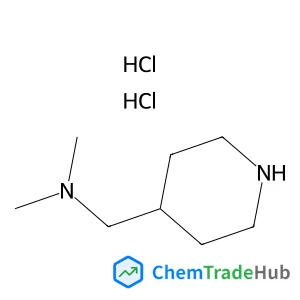
![2-Methyl-2-propanyl 1,6-diazaspiro[3.4]octane-6-carboxylate structure](https://cnstatic.chemtradehub.com/structs/115/1158749-79-1-81ee.webp "2-Methyl-2-propanyl 1,6-diazaspiro[3.4]octane-6-carboxylate structure")
![2-(Methylsulfonyl)-2,4,5,6-tetrahydropyrrolo[3,4-c]pyrazole structure](https://cnstatic.chemtradehub.com/structs/122/1226781-80-1-09d5.webp "2-(Methylsulfonyl)-2,4,5,6-tetrahydropyrrolo[3,4-c]pyrazole structure")
推荐供应商




免责声明
本页面提供的学术期刊信息仅供参考和研究使用。我们与任何期刊出版商均无关联,也不处理投稿事宜。如有投稿相关咨询,请直接联系相关期刊出版商。
如发现页面信息有误,请发送邮件至 support@chemtradehub.com 联系我们。我们将及时核实并处理您的问题。