


![4-(4-{4-[4-Fluoro-3-(trifluoromethyl)phenyl]-1-methyl-1H-imidazol-2-yl}-1-piperidinyl)-1H-pyrazolo[3,4-d]pyrimidine 4-methylbenzenesulfonate (1:1) structure](https://cnstatic.chemtradehub.com/structs/108/1082949-68-5-00b6.webp "4-(4-{4-[4-Fluoro-3-(trifluoromethyl)phenyl]-1-methyl-1H-imidazol-2-yl}-1-piperidinyl)-1H-pyrazolo[3,4-d]pyrimidine 4-methylbenzenesulfonate (1:1) structure")
Raman spectroscopic analysis of dragon's blood resins—basis for distinguishing between Dracaena (Convallariaceae), Daemonorops (Palmae) and Croton (Euphorbiaceae)
文献信息
发布日期
2003-12-17
DOI
10.1039/B311072A
影响因子
4.616
作者
Howell G. M. Edwards, Hew D. V. Prendergast
查看原文
摘要
“Dragon′s blood” is the name applied to the deep-red coloured resin obtained from various plants. The original source in Roman times, used by many cultures and esteemed for its depth of colour and mystical association, was the dragon tree Dracaena cinnabari (Convallariaceae), found only on the Indian Ocean island of Socotra, (Yemen). Additional sources emerged later, including another species of Dracaena, D. draco, from the Canary Islands and Madeira, and species in the genera Daemonorops (Palmae) from South East Asia and Croton (Euphorbiaceae) from tropical parts of both the New and Old Worlds. In this study, examples of dragon's blood resins from the Economic Botany Collections at the Royal Botanic Gardens, Kew, dating from 1851 to 1993, have been analysed non-destructively using Raman spectroscopy. The Raman spectra of well-documented, provenanced specimens have been used to establish the source of specimens of questionable or unknown origin. It has also been possible from the Raman spectra to indicate whether processing of the resins has been undertaken in the preparation of the specimens before their deposition at Kew.
期刊推荐
Molecules
Angewandte Chemie International Edition
European Journal of Organic Chemistry
Advanced Engineering Materials
Current Pharmaceutical Biotechnology
Photochemical & Photobiological Sciences
Foundations of Chemistry
Journal of Enzyme inhibition and Medicinal Chemistry
Mini-Reviews in Medicinal Chemistry
Faraday Discussions
相关文献
Modular preparation of functional bimetallic spinels from metal–organic frameworks: a deep exploration from macro and micro perspectives
Qi Li, Yuan Zhu, Min Cheng, Li Du, Meihua Zhao, Gaoxia Zhang, Guangfu Wang, Wenjun Wang, Hongda Liu, Yongxi Chen, Wenjun Xiao
2023-11-21
Review Article
DOI: 10.1039/D3TA05478K
Recent advances in ambient electrochemical methane conversion to oxygenates using metal oxide electrocatalysts
Fengli Liu, Yong Yan, Ge Chen, Dong Wang
2023-12-06
Tutorial Review
DOI: 10.1039/D3GC03513A
A highly selective, efficient hydrogen gas sensor based on bimetallic (Pd–Au) alloy nanoparticle (NP)-decorated SnO2 nanorods
Gaurav Pandey, Shiv Dutta Lawaniya, Sanjay Kumar, Prabhat K. Dwivedi, Kamlendra Awasthi
2023-11-17
Paper
DOI: 10.1039/D3TA05878F
Direct measurement of the hydrogen adsorption entropy on shape-controlled Pt nanoparticles using electrochemical microcalorimetry
Luis E. Botello, José Solla-Gullón, Víctor Climent, Juan M. Feliu, Rolf Schuster
2023-10-26
Paper
DOI: 10.1039/D3TA04937J
Synthesis of Cu1Mg3Sc2(OH)12CO3 layered double hydroxide and its derived catalyst for hydrogenation of DMCD to CHDM
Zhili Chang, Boyong Ye, Zixin Zhong, Songlin Wang, Han Wang, Weichen Du
2023-11-29
Paper
DOI: 10.1039/D3TA06081K
Perovskite manganese oxides with tunable metal–oxygen covalency for efficient bisphenol A degradation
Yilan Jiang, Peifang Wang, Yiran Xiong, Tingyue Chen, Chi Zhang, Keyi Gao, Xiaoguang Duan, Dawei Wang
2023-11-16
Paper
DOI: 10.1039/D3TA06135C
Engineering 3D-printed carbon structures with atomic layer deposition coatings as photoelectrocatalysts for water splitting
Siowwoon Ng, Michela Sanna, Edurne Redondo
2023-12-05
Paper
DOI: 10.1039/D3TA04460B
Fiber-in-tube RuxCr1−xOy as highly efficient electrocatalysts for pH-universal water oxidation via facile bubble desorption
Chaewon Song, Dasol Jin, Subin Choi, Youngmi Lee
2023-10-30
Paper
DOI: 10.1039/D3TA05897B
Inorganic/organic composite fluorinated interphase layers for stabilizing ether-based electrolyte in high-voltage lithium metal batteries
Qimeng Ren, Qinglei Wang, Li Su, Guodong Liu, Yan Song, Xuehui Shangguan, Faqiang Li
2023-11-20
Paper
DOI: 10.1039/D3TA05506J
您可能还喜欢
化合物问答
如何处理含有顺-二(2,2'-联吡啶)二氯化钌(II)二水合物(CAS号:67776-38-9)的废料?
处理含有该化合物的废料时,应先收集并分类,然后根据其危险特性选择合适的处理方法。推荐采用焚烧或由专业机构进行安全处理,以确保符合环保法规的要求。处理过程中应佩戴...
67776-38-93-{[(2R,3R,4S,5R,6R)...
化合物问答
4-amino-2-bromo-3-iodopyridine(CAS号:1300750-77-9)的市场或研究趋势如何?
4-氨基-2-溴-3-碘吡啶主要应用于药物合成和研究领域,尤其是在抗病毒和抗癌药物的研发中。随着新型药物的需求增加,该化合物的研究趋势较好。市场方面,由于其特殊...
1300750-77-92-bromo-3-iodopyridi...
化合物问答
4-乙酰基氨基-2-氨基-苯甲酸(CAS号:43134-76-5)的市场或研究趋势如何?
当前,4-乙酰基氨基-2-氨基-苯甲酸(CAS号:43134-76-5)在医药和化工领域有一定的应用。随着药物研发的进展,该化合物在新型药物设计中的应用可能增加...
43134-76-54-Acetamido-2-aminob...
化合物问答
庚a氟-1-(1-碘-1,2,2,2-四氟乙氧基)丙烷(CAS号:107432-46-2)的市场或研究趋势如何?
该化合物目前主要用于特定的工业应用,如氟聚合物的合成。市场趋势显示,由于其独特的结构和性能,未来可能在新型氟材料和特种化学品领域有更多的应用。研究趋势方面,主要...
107432-46-21,1,1,2,2,3,3-Heptaf...
化合物问答
在合成中是否有Propargyl-PEG13-bromide(CAS号:2055105-25-2)的替代品?
可以考虑使用1,3-丁二烯-1-炔-3-基-聚乙二醇-13-溴化物作为Propargyl-PEG13-bromide的替代品,因为两者在结构上相似,均可用于合成...
2055105-25-2Propargyl-peg13-brom...
化合物问答
2-氨基-6-甲氧基嘌呤(CAS号:20535-83-5)安全吗?
2-氨基-6-甲氧基嘌呤在正常使用条件下相对安全,但在操作时仍需注意防护措施,如佩戴手套和护目镜,避免吸入或接触皮肤和眼睛。
20535-83-56-Methoxy-7H-purin-2...
化合物问答
2-甲基-3-溴苯乙酸乙酯(CAS号:1261862-72-9)适用哪些法规指南?
该化合物根据其化学性质和潜在危害,可能适用于GHS(全球化学品统一分类和标签制度)的分类标准。具体分类需依据其毒性和燃烧危险性进行评估。此外,欧洲化学品管理局(...
1261862-72-9Ethyl (3-bromo-2-met...
化合物问答
4,4-二甲基吡咯烷-3-羧酸盐酸盐(CAS号:1351343-41-3)应用于哪些行业?
4,4-二甲基吡咯烷-3-羧酸盐酸盐在医药、聚合物和传感器领域有应用。在医药领域,它可以作为某些药物的中间体;在聚合物领域,它可用作某些聚合物的稳定剂;在传感器...
1351343-41-34,4-Dimethyl-3-pyrro...
化合物问答
处理5-Hydroxy-7-methoxy-2-(4-methoxyphenyl)-4-oxo-4H-chromen-6-yl 2-O-beta-D-xylopyranosyl-beta-D-glucopyranoside(CAS号:149998-39-0)时应注意哪些实验室安全事项?
处理该化合物时应注意使用个人防护装备(如手套、护目镜和实验服),在通风橱中操作。避免直接接触皮肤和吸入,泄漏时应立即清理并使用适当的吸收材料。参考安全数据表(S...
149998-39-05-Hydroxy-7-methoxy-...
化合物问答
7-甲基-1,2,3,4-四氢-吖啶-9-甲酸(CAS号:345621-27-4)的市场或研究趋势如何?
该化合物在医药研究中具有潜在应用价值,特别是在抗癌药物研发方面。随着研究的深入,对其合成方法的优化和生物活性的进一步探索将成为研究热点。
345621-27-47-Methyl-1,2,3,4-tet...
来源期刊
Analyst

CiteScore:
7.8
自引率:
5.6%
年发文量:
653
Analyst publishes analytical and bioanalytical research that reports premier fundamental discoveries and inventions, and the applications of those discoveries, unconfined by traditional discipline barriers.
推荐化合物
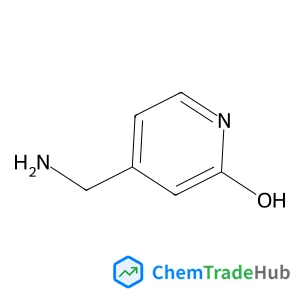
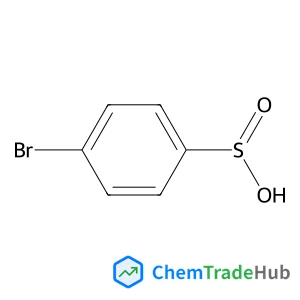
![4-Nitrophenyl N-{[(2-methyl-2-propanyl)oxy]carbonyl}-L-isoleucinate structure](https://cnstatic.chemtradehub.com/structs/169/16948-38-2-c88f.webp "4-Nitrophenyl N-{[(2-methyl-2-propanyl)oxy]carbonyl}-L-isoleucinate structure")
推荐供应商






免责声明
本页面提供的学术期刊信息仅供参考和研究使用。我们与任何期刊出版商均无关联,也不处理投稿事宜。如有投稿相关咨询,请直接联系相关期刊出版商。
如发现页面信息有误,请发送邮件至 support@chemtradehub.com 联系我们。我们将及时核实并处理您的问题。