


Label-free RNA aptamer-based capacitive biosensor for the detection of C-reactive protein
文献信息
发布日期
2010-07-20
DOI
10.1039/C004133E
影响因子
3.676
作者
Anjum Qureshi, Yasar Gurbuz, Saravan Kallempudi, Javed H. Niazi
查看原文
摘要
In this study, we report a novel aptamer-based capacitive label-free biosensor for monitoring transducing aptamer–protein recognition events, based on charge distribution under the applied frequency by non-Faradaic impedance spectroscopy (NFIS). This approach to capacitive biosensors is reported for the first time in this study, is reagent-less in processing and is developed using gold interdigitated (GID) capacitor arrays functionalized with synthetic RNA aptamers. The RNA atpamers served as biorecognition elements for C-reactive protein (CRP), a biomarker for cardiovascular disease risk (CVR). The signal is generated as a result of the change in relative capacitance occurring as a result of the formation of an RNA–CRP complex on GID capacitors with the applied AC electrical frequency (50–350 MHz). The dispersion peak of the capacitance curve was dependent on the CRP concentration and tends to shift toward lower frequencies, accompanied by the increase in relaxation time due to the increased size of the aptamer–CRP complex. The dissociation constant (Kd) calculated from the non-linear regression analysis of the relative capacitance change with the applied frequency showed that strong binding of CRP occurred at 208 MHz (Kd = 1.6 μM) followed by 150 MHz (Kd = 4.2 μM) and 306 MHz (Kd = 3.4 μM) frequencies. The dynamic detection range for CRP is determined to be within 100–500 pg ml−1. Our results demonstrates the behavior of an RNA–protein complex on GID capacitors under an applied electric field, which can be extended to other pairs of affinity biomolecules as well as for the development of electrical biosensor systems for different applications, including the early diagnosis of diseases.
期刊推荐
Electroanalysis

Herald of the Russian Academy of Sciences
Journal of Asian Natural Products Research
Polycyclic Aromatic Compounds

Journal of Chemical Sciences
Biocatalysis and Biotransformation

Acta Metallurgica Sinica-English Letters
Heteroatom Chemistry

Bioorganic & Medicinal Chemistry Letters

Topics in Catalysis
相关文献
An accurate full-dimensional potential energy surface and quasiclassical trajectory dynamics of the H + H2O2 two-channel reaction
Kejie Shao, Bina Fu, Xingan Wang, Dong H. Zhang
2018-08-15
Paper
DOI: 10.1039/C8CP04045A
The quest for determining one-electron redox potentials of azulene-1-carbonitriles by calculation
Nicolai Ree, Cecilie Lindholm Andersen, Martin Drøhse Kilde, Ole Hammerich, Mogens Brøndsted Nielsen, Kurt V. Mikkelsen
2018-02-19
Paper
DOI: 10.1039/C7CP08687C
A molecular quantum switch based on tunneling in meta-d-phenol C6H4DOH
Sieghard Albert, Ziqiu Chen, Robert Prentner, Martin Quack
2018-03-01
Communication
DOI: 10.1039/C8CP00133B
Complexes of gold and imidazole formed in helium nanodroplets
Marcelo Goulart, Lorenz Kranabetter, Martin Kuhn, Paul Martini, Paul Scheier
2018-02-27
Paper
DOI: 10.1039/C8CP00486B
Understanding proton capture and cation-induced dimerization of [Ag29(BDT)12]3− clusters by ion mobility mass spectrometry
Papri Chakraborty, Ananya Baksi, Sathish Kumar Mudedla, Abhijit Nag, Ganesan Paramasivam, Venkatesan Subramanian, Thalappil Pradeep
2018-02-12
Paper
DOI: 10.1039/C7CP08181B
Clarifying the role of cryo- and lyo-protectants in the biopreservation of proteins
Andrea Arsiccio, Roberto Pisano
2018-03-05
Paper
DOI: 10.1039/C7CP08029H
Macroscale precipitation kinetics: towards complex precipitate structure design
Nirmali Prabha Das, Brigitta Müller, Ágota Tóth, Dezső Horváth, Gábor Schuszter
2018-05-17
Paper
DOI: 10.1039/C8CP01798K
Non-covalent interactions for carbonaceous materials: impacts of doping, curving and their combination
Chang Zhu, Qian Wang, Jiena Yun, Qiaoli Hu, Gang Yang
2018-08-03
Paper
DOI: 10.1039/C8CP02286K
Understanding the quenching nature of Mn4+ in wide band gap inorganic compounds: design principles for Mn4+ phosphors with higher efficiency
Lei Wang, Zhaoxiang Dai, Rulong Zhou
2018-05-24
Paper
DOI: 10.1039/C8CP02569J
您可能还喜欢
化合物问答
4-[[6-(3-苯基苯基)-7H-嘌呤-2-基]氨基]苯磺酰胺(CAS号:2079895-42-2)适用哪些法规指南?
该化合物需遵循REACH法规以确保其安全使用和管理。同时,根据其潜在的生物降解性和毒性,也需要符合GHS分类中的相应要求。此外,若用于医药或食品相关领域,则还需...
2079895-42-24-{[6-(3-Biphenylyl)...
化合物问答
反式-度骨化醇(CAS号:74007-20-8)的物理化学性质是什么?
反式-度骨化醇是一种脂溶性维生素D3的衍生物,呈无色或白色结晶性粉末,不溶于水,溶于乙醇、丙酮、氯仿等有机溶剂。其分子式为C28H44O,分子量为404.65。...
74007-20-8trans-Doxercalcifero...
化合物问答
莲花掌苷(CAS号:59282-56-3)的市场或研究趋势如何?
莲花掌苷作为一种天然产物,近年来在抗炎、抗癌等生物活性研究方面显示出一定的潜力,因此市场需求逐渐增长。市场动态方面,随着天然产物开发的深入,预计该化合物的研究会...
59282-56-3Lindleyin
化合物问答
2-溴-6-(吡咯烷-1-基)吡啶-4-硼酸频那醇酯(CAS号:1150271-64-9)应用于哪些行业?
2-溴-6-(吡咯烷-1-基)吡啶-4-硼酸频那醇酯在医药领域有着广泛的应用,它可以用作药物合成中的中间体。此外,它还可以用于有机合成,特别是在构建复杂杂环化合...
1150271-64-92-Bromo-6-(1-pyrroli...
化合物问答
什么是methyl 2-(4-bromophenyl)-3-methylbutanoate(CAS号:1061284-70-5)?
methyl 2-(4-溴苯基)-3-甲基丁酸甲酯是一种化学物质,分子式为C12H13BrO2。它是一种有机化合物,具有一定的挥发性和易燃性。
1061284-70-52-(4-Bromo-phenyl)-3...
化合物问答
CJC1-295(CAS号:863288-34-0)的物理化学性质是什么?
CJC1-295是一种具有复杂肽链结构的化合物,其分子量约为1875 Da。该化合物在水中具有一定的溶解性,但在有机溶剂中的溶解性不佳。它是一种反应活性化合物,...
863288-34-0L-tyrosyl-D-alanyl-L...
化合物问答
三正丁基锍碘(CAS号:18146-62-8)的市场或研究趋势如何?
三正丁基锍碘作为一种重要的有机硫化合物,主要用于有机合成中作为亲电试剂。近年来,由于其在合成中的广泛应用,市场对其需求持续增长。此外,随着绿色化学的发展,对其替...
18146-62-8Tributylsulfonium io...
化合物问答
雌二醇-[13C3]同位素内标(CAS号:1261254-48-1)通常如何合成?
雌二醇-[13C3]同位素内标通常通过在雌二醇分子中引入[13C3]同位素来合成。常见的方法是通过化学标记反应,如与[13C3]标记的甲基溴化物进行亲核取代反应...
1261254-48-117beta-Estradiol-2,3...
化合物问答
N1-(2-吡啶甲基)-N2-(2-甲基-1-萘基)草酰胺(CAS号:2611225-93-3)的物理化学性质是什么?
N1-(2-吡啶甲基)-N2-(2-甲基-1-萘基)草酰胺为固体化合物,具有良好的结晶形态,分子量为340.34 g/mol。该化合物在水中的溶解度较低,但在有...
2611225-93-3N-(2-Methyl-1-naphth...
化合物问答
如何处理含有十五碳烯酸甲酯(顺-10)(C15:1)标准品(CAS号:90176-52-6)的废料?
含有十五碳烯酸甲酯(顺-10)(C15:1)标准品的废料应首先进行适当收集和储存,避免与其他化学品混合。然后,可采用焚烧或交由专业废物处理公司进行处理。处理过程...
90176-52-6(Z)-10-Pentadecenoic...
来源期刊
Physical Chemistry Chemical Physics

CiteScore:
5.5
自引率:
10.3%
年发文量:
3036
Physical Chemistry Chemical Physics (PCCP) is an international journal co-owned by 19 physical chemistry and physics societies from around the world. This journal publishes original, cutting-edge research in physical chemistry, chemical physics and biophysical chemistry. To be suitable for publication in PCCP, articles must include significant innovation and/or insight into physical chemistry; this is the most important criterion that reviewers and Editors will judge against when evaluating submissions. The journal has a broad scope and welcomes contributions spanning experiment, theory, computation and data science. Topical coverage includes spectroscopy, dynamics, kinetics, statistical mechanics, thermodynamics, electrochemistry, catalysis, surface science, quantum mechanics, quantum computing and machine learning. Interdisciplinary research areas such as polymers and soft matter, materials, nanoscience, energy, surfaces/interfaces, and biophysical chemistry are welcomed if they demonstrate significant innovation and/or insight into physical chemistry. Joined experimental/theoretical studies are particularly appreciated when complementary and based on up-to-date approaches.
推荐化合物
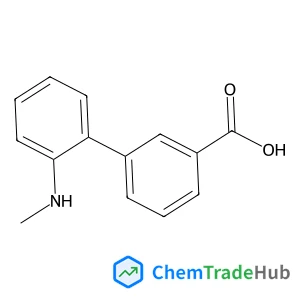
![4-Chloro-2-{[(2-chlorophenoxy)acetyl]amino}benzoic acid structure](https://cnstatic.chemtradehub.com/structs/351/351424-20-9-9467.webp "4-Chloro-2-{[(2-chlorophenoxy)acetyl]amino}benzoic acid structure")
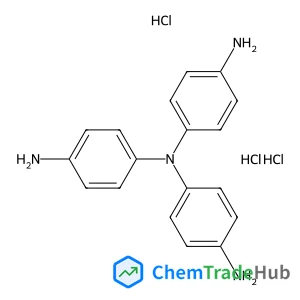
![tert-Butyl 6-chloro-4-oxospiro[chroman-2,4'-piperidine]-1'-carboxylate structure](https://cnstatic.chemtradehub.com/structs/101/1011482-37-3-88a5.webp "tert-Butyl 6-chloro-4-oxospiro[chroman-2,4'-piperidine]-1'-carboxylate structure")
tert-Butyl 6-chloro-4-oxospiro[chroman-2,4'-piperidine]-1'-carboxylate
CAS号:
1011482-37-3
分子式:
C18H22ClNO4
推荐供应商






免责声明
本页面提供的学术期刊信息仅供参考和研究使用。我们与任何期刊出版商均无关联,也不处理投稿事宜。如有投稿相关咨询,请直接联系相关期刊出版商。
如发现页面信息有误,请发送邮件至 support@chemtradehub.com 联系我们。我们将及时核实并处理您的问题。