



Unravelling the details of vitamin D photosynthesis by non-adiabatic molecular dynamics simulations
文献信息
发布日期
2011-10-21
DOI
10.1039/C1CP21292C
影响因子
3.676
作者
Enrico Tapavicza, Alexander M. Meyer, Filipp Furche
查看原文
摘要
We investigate the photodynamics of vitamin D derivatives by a fully analytical implementation of the linear response time-dependent density functional theory surface hopping method (LR-TDDFT-SH). Our study elucidates the dynamics of the processes involved in vitamin D formation at the molecular level and with femtosecond resolution. We explain the major experimental findings and provide new insights that cannot directly be obtained from experiments: firstly, we investigate the dynamics of the photoinduced ring-opening of provitamin D (Pro) and cyclohexadiene (CHD) and the subsequent rotational isomerization. In agreement with recent experiments and CC2 calculations, only the bright S1 state is involved in the ring-opening reaction. Our calculations confirm the experimentally reported 5 : 1 ratio between the excited state lifetimes of Pro and CHD. The longer lifetimes of Pro are attributed to steric constraints of the steroid skeleton and to temperature effects, both emerging directly from our simulations. For CHD and Pro, we present an explanation of the biexponential decay recently reported by Sension and coworkers [Tang et al., J. Phys. Chem., 2011, 134, 104503]: our calculations suggest that the fast and slow components arise from a reactive and an unreactive reaction pathway, respectively. Secondly, we assess the wavelength dependent photochemistry of previtamin D (Pre). Using replica exchange molecular dynamics we sample the Pre conformers present at thermal equilibrium. Based on this ensemble we explain the conformation dependent absorption and the essential features of Pre photochemistry. Consistent with the experiments, we find ring-closure to occur mostly after excitation of the cZc conformers and at lower energies, whereas Z/Eisomerization of the central double bond preferably occurs after excitation at higher energies. For the isomerization we provide the first theoretical evidence of the proposed hula-twist mechanism. Our results show that LR-TDDFT-SH is a highly valuable tool for studying the photochemistry of moderately large systems, even though challenges remain in the vicinity of conical intersections.
期刊推荐

NDT & E International

Electroanalysis
Bioorganic & Medicinal Chemistry Letters

Journal of Chemical Sciences

Journal of the Indian Institute of Science
Medicinal Chemistry Research

Heteroatom Chemistry
Bioorganic & Medicinal Chemistry

Journal of Asian Natural Products Research

Critical Reviews in Solid State and Materials Sciences
相关文献
Chelation-assisted C–N cross-coupling of phosphinamides and aryl boronic acids with copper powder at room temperature
Yao Peng, Jian Lei, Renhua Qiu, Lingteng Peng, Chak-Tong Au, Shuang-Feng Yin
2018-05-10
Communication
DOI: 10.1039/C8OB00907D
Regioselective nitration of anilines with Fe(NO3)3·9H2O as a promoter and a nitro source
Yang Gao, Yuanyou Mao, Biwei Zhang, Yingying Zhan, Yanping Huo
2018-05-03
Communication
DOI: 10.1039/C8OB00841H
Photoredox-catalyzed synthesis of sulfonated oxazolines from N-allylamides through the insertion of sulfur dioxide
Zhichao Chen, Hong Zhang, Shu-Feng Zhou, Xiuling Cui
2021-11-30
Research Article
DOI: 10.1039/D1QO01540K
Mild and efficient synthesis of indoles and isoquinolones via a nickel-catalyzed Larock-type heteroannulation reaction
Wei-Zhi Weng, Jian Xie, Bo Zhang
2018-05-04
Paper
DOI: 10.1039/C8OB00795K
Divergent synthesis of new α-glucosidase inhibitors obtained through a vinyl Grignard-mediated carbocyclisation
Ida M. B. Knudsen, Christinne Hedberg, Daisuke Ide, Anne Brinkø, Espen Z. Eikeland, Atsushi Kato, Henrik H. Jensen
2018-08-07
Paper
DOI: 10.1039/C8OB01433G
Asymmetric cycloisomerization/[3 + 2] cycloaddition for the synthesis of chiral spiroisobenzofuran-1,3′-pyrrolidine derivatives
Pei Dong, Long Chen, Zhendong Yang, Shunxi Dong, Xiaoming Feng
2021-10-08
Research Article
DOI: 10.1039/D1QO01194D
Three decades of unveiling the complex chemistry of C-nitroso species with computational chemistry
Pauline Bianchi, Jean-Christophe M. Monbaliu
2021-11-09
Review Article
DOI: 10.1039/D1QO01415C
A desulphurization strategy for Sonogashira couplings by visible light/copper catalysis
Xuan Li, Xiaolong Zhu, Xiuyan Song, Qirong Deng, Jian Lv
2021-12-02
Research Article
DOI: 10.1039/D1QO01548F
2-Pyridinylmethyl borrowing: base-promoted C-alkylation of (pyridin-2-yl)-methyl alcohols with ketones via cleavage of unstrained C(sp3)–C(sp3) bonds
Chuan-Ming Hong, Fei-Fei Zou, Xin Zhuang, Zhen Luo, Zheng-Qiang Liu, Li-Qing Ren, Qing-Hua Li, Tang-Lin Liu
2021-11-23
Research Article
DOI: 10.1039/D1QO01446C
您可能还喜欢
化合物问答
如何处理含有8-氯咪唑并[1,2-A]吡嗪(CAS号:69214-33-1)的废料?
处理含有8-氯咪唑并[1,2-A]吡嗪的废料时,应首先将其收集并进行化学回收或降解。如果无法回收,需采用安全的化学处理方法,如中和、氧化还原或沉淀。处理过程中需...
69214-33-18-chloroimidazo[1,2-...
化合物问答
Calhex 231 hydrochloride(CAS号:2387505-78-2)适用哪些法规指南?
Calhex 231 hydrochloride 需要遵循《全球化学品统一分类和标签制度》(GHS)的分类和标签要求,以及欧盟的《化学品注册、评估、授权和限制条...
2387505-78-24-Chloro-N-[(1S,2S)-...
化合物问答
11-Beta,17-alpha,21-三羟基-5-beta-孕烯-3,20-二酮(CAS号:1482-50-4)的物理化学性质是什么?
11-Beta,17-alpha,21-三羟基-5-beta-孕烯-3,20-二酮是一种无色结晶性粉末,分子量为372.45 g/mol。该化合物在水中的溶解度...
1482-50-45β-Dihydrocortisol
化合物问答
处理5-异丙基-1,3,4-恶二唑-2-羧酸(CAS号:944907-13-5)时应注意哪些实验室安全事项?
处理5-异丙基-1,3,4-恶二唑-2-羧酸时应注意以下安全事项:穿戴适当的个人防护装备,包括实验室外套、手套和护目镜;操作应在通风橱中进行,以减少吸入或接触有...
944907-13-55-Isopropyl-1,3,4-ox...
化合物问答
benzyl 3-bromopropanoate(CAS号:90841-55-7)安全吗?
Benzyl 3-bromopropanoate属于有毒物质,吸入、摄入或皮肤接触均可能对人体造成伤害。操作时应佩戴防护眼镜、口罩和手套,避免吸入蒸汽和直接接触...
90841-55-7Benzyl 3-bromopropan...
化合物问答
什么是(R)-N-苄氧羰基-3,4-二氢-1H-异喹啉羧酸(CAS号:151004-88-5)?
(R)-N-苄氧羰基-3,4-二氢-1H-异喹啉羧酸是一种含有苄氧羰基和异喹啉环结构的化合物,分子式为C17H15NO3。它是一种有机化合物,具有一定的生物活性...
151004-88-5(1R)-2-[(Benzyloxy)c...
化合物问答
在合成中是否有1-苄基吡啶嗡-3-羧酸盐(CAS号:15990-43-9)的替代品?
可以考虑使用1-苄基吡啶-3-羧酸盐作为1-苄基吡啶嗡-3-羧酸盐的替代品。此外,还可以探索其他类似物,如1-苄基吡啶-3-氨基甲酸酯等。具体的替代品选择需根据...
15990-43-91-Benzyl-3-pyridiniu...
化合物问答
(2,6-二甲基吡啶-3-基)甲醇(CAS号:582303-10-4)安全吗?
(2,6-二甲基吡啶-3-基)甲醇在使用时需注意安全,应避免吸入其蒸汽,接触皮肤和眼睛。操作应在通风良好的环境中进行,佩戴适当的个人防护装备。
582303-10-4(2,6-Dimethyl-3-pyri...
化合物问答
5-溴-2-乙烯基吡啶(CAS号:226883-52-9)的物理化学性质是什么?
5-溴-2-乙烯基吡啶是一种有机化合物,外观为白色固体,具有良好的结晶性。分子量约为190.03 g/mol。它的溶解性在水中较差,但在有机溶剂如二氯甲烷、甲醇...
226883-52-95-Bromo-2-vinylpyrid...
化合物问答
2-羟基-3-硝基-5-甲基吡啶(CAS号:7464-14-4)应用于哪些行业?
2-羟基-3-硝基-5-甲基吡啶主要应用于医药、聚合物和半导体行业。在医药领域,它可以用作合成其他药物的中间体。在聚合物领域,它可以作为功能性单体参与聚合反应,...
7464-14-45-Methyl-3-nitro-2(1...
来源期刊
Physical Chemistry Chemical Physics

CiteScore:
5.5
自引率:
10.3%
年发文量:
3036
Physical Chemistry Chemical Physics (PCCP) is an international journal co-owned by 19 physical chemistry and physics societies from around the world. This journal publishes original, cutting-edge research in physical chemistry, chemical physics and biophysical chemistry. To be suitable for publication in PCCP, articles must include significant innovation and/or insight into physical chemistry; this is the most important criterion that reviewers and Editors will judge against when evaluating submissions. The journal has a broad scope and welcomes contributions spanning experiment, theory, computation and data science. Topical coverage includes spectroscopy, dynamics, kinetics, statistical mechanics, thermodynamics, electrochemistry, catalysis, surface science, quantum mechanics, quantum computing and machine learning. Interdisciplinary research areas such as polymers and soft matter, materials, nanoscience, energy, surfaces/interfaces, and biophysical chemistry are welcomed if they demonstrate significant innovation and/or insight into physical chemistry. Joined experimental/theoretical studies are particularly appreciated when complementary and based on up-to-date approaches.
推荐化合物
![N-[(9H-Fluoren-9-ylmethoxy)carbonyl]-beta-phenyl-L-phenylalanine structure](https://cnstatic.chemtradehub.com/structs/201/201484-50-6-c2fc.webp "N-[(9H-Fluoren-9-ylmethoxy)carbonyl]-beta-phenyl-L-phenylalanine structure")
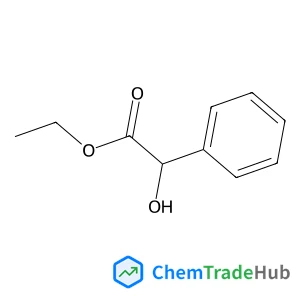
![N-[(5,6-Dichloro-1H-benzimidazol-2-yl)methyl]-9-(1-methyl-1H-pyrazol-4-yl)-2-(4-morpholinyl)-9H-purin-6-amine structure](https://cnstatic.chemtradehub.com/structs/238/2387704-62-1-25f4.webp "N-[(5,6-Dichloro-1H-benzimidazol-2-yl)methyl]-9-(1-methyl-1H-pyrazol-4-yl)-2-(4-morpholinyl)-9H-purin-6-amine structure")
推荐供应商




免责声明
本页面提供的学术期刊信息仅供参考和研究使用。我们与任何期刊出版商均无关联,也不处理投稿事宜。如有投稿相关咨询,请直接联系相关期刊出版商。
如发现页面信息有误,请发送邮件至 support@chemtradehub.com 联系我们。我们将及时核实并处理您的问题。