


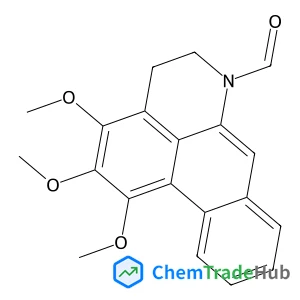
One-pot ionic liquid pretreatment and saccharification of switchgrass
文献信息
发布日期
2013-07-09
DOI
10.1039/C3GC40545A
影响因子
10.182
作者
Noppadon Sathitsuksanoh, Pavan Kambam, Lucas Sandoval, Debjani Mitra, Sonny Zhang
查看原文
摘要
Biomass pretreatment using certain ionic liquids (ILs), such as 1-ethyl-3-methylimidazolium acetate ([C2mim][OAc]), can be highly effective at reducing the recalcitrance of lignocellulosic biomass to enzymatic degradation. However, current commercial enzyme cocktails, derived from filamentous fungi and developed for dilute acid pretreatment, are inhibited by the most effective ILs used for pretreatment and require excessive amounts of water to remove the ILs from biomass after pretreatment in order to be effective. The associated IL recycling and waste disposal costs of this process pose significant economic and process engineering challenges for the commercial scale-up of IL pretreatment-based technologies. For the first time, we have demonstrated a one-pot, wash-free process that combines IL pretreatment and saccharification into a single vessel. After treating the switchgrass with [C2mim][OAc] and dilution with water to a final IL concentration of 10–20%, the pretreatment slurry was directly hydrolyzed using a thermostable IL tolerant enzyme cocktail previously developed at the Joint BioEnergy Institute (JBEI). This one-pot process liberated 81.2% glucose and 87.4% xylose (monomers and oligomers) at 72 h at 70 °C with an enzyme loading of 5.75 mg g−1 of biomass at 10% [C2mim][OAc]. Glucose and xylose were selectively separated by liquid–liquid extraction with over 90% efficiency, thus eliminating extensive water washing as a unit operation. This study opens avenues for developing more efficient and cost effective processes for product recovery and IL recycling.
期刊推荐

Acta Metallurgica Sinica-English Letters

Chinese Journal of Chemistry

NDT & E International

Bioorganic & Medicinal Chemistry Letters
Atomization and Sprays

Biocatalysis and Biotransformation

Journal of the Indian Institute of Science

Medicinal Chemistry Research

Topics in Catalysis
Journal of Asian Natural Products Research
相关文献
Copper nitrate-mediated chemo- and regioselective annulation from two different alkynes: a direct route to isoxazoles
Yingying Li, Mingchun Gao, Bingxin Liu
2016-12-20
Research Article
DOI: 10.1039/C6QO00704J
Palladium-catalyzed β-selective C(sp2)–H carboxamidation of enamides by isocyanide insertion: synthesis of N-acyl enamine amides
Zhuang Xiong, Dongdong Liang, Shuang Luo
2017-02-27
Research Article
DOI: 10.1039/C7QO00049A
Quasi-planar diazadithio and diazodiseleno[8]circulenes: synthesis, structures and properties
Xiaodong Xiong, Chun-Lin Deng, Zhiming Li
2016-12-07
Research Article
DOI: 10.1039/C6QO00662K
Asymmetric organocatalytic conjugated addition of pyrazolin-5-ones to ortho-quinomethanes: construction of vicinal tertiary and all-carbon quaternary stereocenters
Ming-Ming Chu, Suo-Suo Qi, Wan-Zhen Ju, Yi-Feng Wang, Xue-Yang Chen, Dan-Qian Xu, Zhen-Yuan Xu
2019-02-27
Research Article
DOI: 10.1039/C9QO00011A
Synthesis of 2,3-diaza-anthraquinones via the bidentate Lewis acid catalysed inverse electron-demand Diels–Alder (IEDDA) reaction
Longcheng Hong, Sebastian Ahles, Marcel A. Strauss, Christian Logemann, Hermann A. Wegner
2017-04-05
Research Article
DOI: 10.1039/C7QO00172J
Iron-catalyzed boration of cinnamyl carbonates: a highly stereoselective approach to cyclopropylboronates
Yang Liu, Yuhan Zhou, Dong Li, Han Chen, Jinfeng Zhao, Jingping Qu
2019-02-20
Research Article
DOI: 10.1039/C8QO01163J
A copper-catalyzed arylation/nucleophilic addition/fragmentation/C–S bond formation cascade: synthesis of bis(arylthio)imines
Wei-Si Guo, Yuan-Chao Wang, Qian Dou, Li-Rong Wen, Ming Li
2017-01-03
Research Article
DOI: 10.1039/C6QO00739B
Efficient synthesis of multiply substituted butenolides from keto acids and terminal alkynes promoted by combined acids
Wenbin Mao
2017-02-14
Research Article
DOI: 10.1039/C6QO00820H
您可能还喜欢
化合物问答
如何储存8-溴-4-羟基-6-(三氟甲氧基)喹啉-3-羧酸乙酯(CAS号:1072944-81-0)?
8-溴-4-羟基-6-(三氟甲氧基)喹啉-3-羧酸乙酯应储存在阴凉、干燥的地方,避免光照和高温。建议使用密封容器进行储存,以防止水分和空气的影响。
1072944-81-0Ethyl 8-bromo-4-hydr...
化合物问答
2,2-二(2-呋喃基)丙烷(CAS号:17920-88-6)的市场或研究趋势如何?
2,2-二(2-呋喃基)丙烷的研究趋势主要集中在新型材料的开发和应用,如高分子材料、有机光电材料等。市场趋势方面,随着环保要求的提高和新材料的应用,该化合物的需...
17920-88-62,2'-(2,2-Propanediy...
化合物问答
如何处理含有螺[呋喃并[3,4-b]吡啶-5(7H),4'-哌啶]-7-酮盐酸盐(CAS号:475152-31-9)的废料?
对于含有螺[呋喃并[3,4-b]吡啶-5(7H),4'-哌啶]-7-酮盐酸盐的废料,应首先进行分类和分离,以减少危险物质的数量。随后,可以考虑通过化学氧化、生物...
475152-31-97H-Spiro[furo[3,4-b]...
化合物问答
Cinnamyl 3-aminobut-2-enoate(CAS号:113898-97-8)安全吗?
Cinnamyl 3-氨基丁-2-烯酸在接触皮肤和眼睛时可能会引起刺激。应避免吸入其粉尘和烟雾。操作时应穿戴适当的个人防护装备,如手套、护目镜和实验室外套。
113898-97-8Cinnamyl 3-aminobut-...
化合物问答
反式-2-十二碳烯二酸(CAS号:6402-36-4)的市场或研究趋势如何?
反式-2-十二碳烯二酸在医药、材料科学等领域有一定的应用,但其市场相对较小。近年来,由于环保意识的提升,对环境友好型化学品的需求增加,研究倾向于开发更绿色的合成...
6402-36-4Traumatic Acid
化合物问答
什么是(9ci)-1H-苯并咪唑-5-乙酸(CAS号:473895-86-2)?
(9ci)-1H-苯并咪唑-5-乙酸是一种含氮杂环化合物,其化学结构为1H-苯并咪唑-5-乙酸。该化合物具有特定的分子式C8H7NO2,属于有机酸类化合物。
473895-86-21H-Benzimidazol-5-yl...
化合物问答
酞菁蓝(CAS号:147-14-8)的主要用途是什么?
酞菁蓝主要用作颜料和染料,广泛应用于塑料、油墨、涂料、纺织品及橡胶工业中。它也用于光敏材料,如太阳能电池和光刻胶。在医疗领域,酞菁蓝因其光敏特性被用于某些光动力...
147-14-8Copper(2+) phthalocy...
化合物问答
5-甲基-1,2,3,4-四氢异喹啉(CAS号:123593-99-7)安全吗?
5-甲基-1,2,3,4-四氢异喹啉在使用和储存时需要谨慎处理。它具有一定的毒性,应避免吸入其蒸气或直接接触皮肤和眼睛。操作此化合物时,建议佩戴防护眼镜、实验服...
123593-99-75-Methyl-1,2,3,4-tet...
化合物问答
如何处理含有3',4',5'-三甲氧基苯乙酮(CAS号:1136-86-3)的废料?
含有3',4',5'-三甲氧基苯乙酮的废液应首先确保其是否为危险废物,根据当地法规确定处理方法。通常,这类有机废液可以采用中和反应降低其pH值,然后通过蒸馏或萃...
1136-86-31-(3,4,5-Trimethoxyp...
化合物问答
如何储存KI-7(CAS号:1489263-00-4)?
KI-7应储存在通风良好的干燥环境中,避免光照和高温。建议使用密封容器储存,并保持在阴凉处。储存温度应控制在室温范围内,一般建议不超过25°C。避免与氧化剂接触...
1489263-00-42-(1-Benzyl-1H-indol...
来源期刊
Green Chemistry
CiteScore:
16.1
自引率:
7.5%
年发文量:
944
Green Chemistry provides a unique forum for the publication of innovative research on the development of alternative green and sustainable technologies. The scope of Green Chemistry is based on, but not limited to, the definition proposed by Anastas and Warner (Green Chemistry: Theory and Practice, P T Anastas and J C Warner, Oxford University Press, Oxford, 1998). Green chemistry is the utilisation of a set of principles that reduces or eliminates the use or generation of hazardous substances in the design, manufacture and application of chemical products. Green Chemistry is at the frontiers of this continuously-evolving interdisciplinary science and publishes research that attempts to reduce the environmental impact of the chemical enterprise by developing a technology base that is inherently non-toxic to living things and the environment. Submissions on all aspects of research relating to the endeavour are welcome. The journal publishes original and significant cutting-edge research that is likely to be of wide general appeal. To be published, work must present a significant advance in green chemistry. Papers must contain a comparison with existing methods and demonstrate advantages over those methods before publication can be considered. For more information please see this Editorial. Coverage includes the following, but is not limited to: Design (e.g. biomimicry, design for degradation/recycling/reduced toxicity…) Reagents & Feedstocks (e.g. renewables, CO2, solvents, auxiliary agents, waste utilization…) Synthesis (e.g. organic, inorganic, synthetic biology…) Catalysis (e.g. homogeneous, heterogeneous, enzyme, whole cell…) Process (e.g. process design, intensification, separations, recycling, efficiency…) Energy (e.g. renewable energy, fuels, photovoltaics, fuel cells, energy storage, energy carriers…) Applications (e.g. electronics, dyes, consumer products, coatings, pharmaceuticals, preservatives, building materials, chemicals for industry/agriculture/mining…) Impact (e.g. safety, metrics, LCA, sustainability, (eco)toxicology…) Green chemistry is, by definition, a continuously-evolving frontier. Therefore, the inclusion of a particular material or technology does not, of itself, guarantee that a paper is suitable for the journal. To be suitable, the novel advance should have the potential for reduced environmental impact relative to the state of the art. Green Chemistry does not normally deal with research associated with 'end-of-pipe' or remediation issues.
推荐化合物
推荐供应商






免责声明
本页面提供的学术期刊信息仅供参考和研究使用。我们与任何期刊出版商均无关联,也不处理投稿事宜。如有投稿相关咨询,请直接联系相关期刊出版商。
如发现页面信息有误,请发送邮件至 support@chemtradehub.com 联系我们。我们将及时核实并处理您的问题。