


![5-Methyl-4,5,6,7-tetrahydropyrazolo[1,5-a]pyrazin-2-amine structure](https://cnstatic.chemtradehub.com/structs/122/1227210-33-4-8d64.webp "5-Methyl-4,5,6,7-tetrahydropyrazolo[1,5-a]pyrazin-2-amine structure")
Contents list
文献信息
发布日期
DOI
10.1039/C3GC90045B
影响因子
10.182
作者
查看原文
摘要
The first page of this article is displayed as the abstract.
期刊推荐

Acta Metallurgica Sinica-English Letters

Heteroatom Chemistry

Critical Reviews in Solid State and Materials Sciences
Journal of Asian Natural Products Research

Bioorganic & Medicinal Chemistry Letters

Journal of the Indian Institute of Science

Medicinal Chemistry Research
Bioorganic & Medicinal Chemistry

Main Group Chemistry

Herald of the Russian Academy of Sciences
相关文献
A colorimetric probe for the real-time naked eye detection of cyanide and hydroxide ions in tap water: experimental and theoretical studies
Veikko Uahengo, Johannes Naimhwaka, Likius S. Daniel, Ateeq Rahman, Mohamed I. Elzagheid, Ping Cai
2019-09-18
Paper
DOI: 10.1039/C9AN01481K
Immunoassay for tumor markers in human serum based on Si nanoparticles and SiC@Ag SERS-active substrate
Lu Zhou, Jun Zhou, Zhao Feng, Fuyan Wang, Shushen Xie, Shizhong Bu
2016-03-15
Paper
DOI: 10.1039/C6AN00003G
2-(1-Pyrenyl) benzimidazole as a ratiometric and “turn-on” fluorescent probe for iron(iii) ions in aqueous solution
Meili Zhao, Zhifu Deng, Jian Tang, Xiufen Zhou, Zhi Chen, Xutian Li, Liting Yang
2016-02-10
Paper
DOI: 10.1039/C5AN02565F
Recent advances in flow injection analysis
Kamila Kołacińska
2016-02-03
Critical Review
DOI: 10.1039/C5AN02522B
Profiling embryonic stem cell differentiation by MALDI TOF mass spectrometry: development of a reproducible and robust sample preparation workflow
Rachel E. Heap, Anna Segarra-Fas, Alasdair P. Blain, Greg M. Findlay, Matthias Trost
2019-09-30
Paper
DOI: 10.1039/C9AN00771G
Lateral resolution of desorption nanoelectrospray: a nanospray tip without nebulizing gas as a source of primary charged droplets
L. Hartmanová, I. Lorencová, M. Volný, P. Fryčák, H. Chmelíčková, T. Ingr, K. Lemr
2016-03-01
Communication
DOI: 10.1039/C5AN02665B
Novel structurally tuned DAMN receptor for “in situ” diagnosis of bicarbonate in environmental waters
2016-03-02
Communication
DOI: 10.1039/C6AN00218H
Fullerenes in asphaltenes and other carbonaceous materials: natural constituents or laser artifacts
Vanessa G. Santos, Marcos A. Pudenzi, Clécio F. Klitzke, Heliara L. Nascimento, Rosana C. L. Pereira, Wagner L. Bastos, Marcos N. Eberlin
2016-01-07
Paper
DOI: 10.1039/C5AN02333E
A review on electronic bio-sensing approaches based on non-antibody recognition elements
Alagappan Palaniappan, Mark Platt
2016-03-09
Critical Review
DOI: 10.1039/C5AN02623G
Development of a ratiometric two-photon fluorescent probe for imaging of hydrogen peroxide in ischemic brain injury
Baoping Zhai, Wei Hu, Ruilin Hao, Wenjing Ni, Zhihong Liu
2019-08-21
Paper
DOI: 10.1039/C9AN01326A
您可能还喜欢
化合物问答
3 - (二氟甲基)-1 -氟苯(CAS号:26029-52-7)适用哪些法规指南?
3 - (二氟甲基)-1 -氟苯需遵循联合国全球化学品统一分类和标签制度(GHS),包括急性毒性、皮肤腐蚀/刺激、严重眼损伤/眼刺激等分类。同时,该化合物还需符...
26029-52-71-(Difluoromethyl)-3...
化合物问答
3,5-二甲基苯胺(CAS号:108-69-0)通常如何合成?
3,5-二甲基苯胺通常通过乙苯的氨解反应合成。反应中使用硫酸作为催化剂,反应温度为120-130°C。乙苯在硫酸存在下与氨反应,生成3,5-二甲基苯胺和苯胺副产...
108-69-03,5-Dimethylaniline
化合物问答
3-甲基异噻唑-5-胺(CAS号:24340-76-9)安全吗?
3-甲基异噻唑-5-胺在适当使用和储存条件下是相对安全的,但在操作时应注意防护措施。应避免吸入粉尘,避免与皮肤和眼睛直接接触。在操作过程中,应穿戴适当的防护装备...
24340-76-93-Methyl-1,2-thiazol...
化合物问答
3-(1,3-Thiazol-2-yl)-1H-indole(CAS号:135531-86-1)通常如何合成?
3-(1,3-噻唑-2-基)-1H-吲哚通常通过多步合成方法制备。首先,由噻唑-2-基溴化物和吲哚进行偶联反应,得到中间体。然后,通过还原反应将中间体转化为所需...
135531-86-13-(1,3-Thiazol-2-yl)...
化合物问答
4-溴-2-氟苯甲基氯(CAS号:85510-82-3)的主要用途是什么?
4-溴-2-氟苯甲基氯主要用于有机合成中间体,特别是在医药、农药和染料等领域。作为一种具有特定结构的化合物,它在合成复杂有机分子时扮演重要角色。
85510-82-34-Bromo-1-(chloromet...
化合物问答
处理Fmoc-β-(3-噻吩基)-D-Ala-OH(CAS号:220497-90-5)时应注意哪些实验室安全事项?
处理Fmoc-β-(3-噻吩基)-D-Ala-OH时,应佩戴防护手套、护目镜和实验服。操作应在通风橱内进行。如发生泄露,应立即用大量水冲洗,并通知实验室管理人员...
220497-90-5N-[(9H-Fluoren-9-ylm...
化合物问答
氮化硅(CAS号:12033-89-5)通常如何合成?
氮化硅通常通过氮化硅的直接反应合成,即在高温下将四氯化硅与氨气反应。具体步骤是将四氯化硅和氨气混合并加热至1300-1700℃,在该条件下,四氯化硅与氨气反应生...
12033-89-5Trisilicon tetranitr...
化合物问答
Cetirizine EP Impurity B DiHCl(CAS号:1000690-91-4)通常如何合成?
Cetirizine EP Impurity B DiHCl通常通过一锅法合成,首先将4-氯苯基-苯甲基氯甲酸酯与1-哌嗪乙酸反应,生成相应的酸,然后与盐酸反应...
1000690-91-4{4-[(4-Chlorophenyl)...
化合物问答
如何储存1-哌啶-4-基丁-1-酮(CAS号:3509-15-7)?
1-哌啶-4-基丁-1-酮应储存在阴凉、干燥的地方,避免阳光直射。存储容器应密封,并确保通风良好。建议储存温度不超过25℃,湿度保持在相对较低的水平。
3509-15-71-Piperidin-4-ylbuta...
化合物问答
如何处理含有VORUCICLIB(CAS号:1000023-04-0)的废料?
含有VORUCICLIB的废料应进行专业的收集和处理,包括使用适当的容器进行隔离,避免与其他化学品接触。处理方法通常包括化学中和、沉淀反应或吸附过程,随后进行焚...
1000023-04-02-[2-Chloro-4-(trifl...
来源期刊
Green Chemistry
CiteScore:
16.1
自引率:
7.5%
年发文量:
944
Green Chemistry provides a unique forum for the publication of innovative research on the development of alternative green and sustainable technologies. The scope of Green Chemistry is based on, but not limited to, the definition proposed by Anastas and Warner (Green Chemistry: Theory and Practice, P T Anastas and J C Warner, Oxford University Press, Oxford, 1998). Green chemistry is the utilisation of a set of principles that reduces or eliminates the use or generation of hazardous substances in the design, manufacture and application of chemical products. Green Chemistry is at the frontiers of this continuously-evolving interdisciplinary science and publishes research that attempts to reduce the environmental impact of the chemical enterprise by developing a technology base that is inherently non-toxic to living things and the environment. Submissions on all aspects of research relating to the endeavour are welcome. The journal publishes original and significant cutting-edge research that is likely to be of wide general appeal. To be published, work must present a significant advance in green chemistry. Papers must contain a comparison with existing methods and demonstrate advantages over those methods before publication can be considered. For more information please see this Editorial. Coverage includes the following, but is not limited to: Design (e.g. biomimicry, design for degradation/recycling/reduced toxicity…) Reagents & Feedstocks (e.g. renewables, CO2, solvents, auxiliary agents, waste utilization…) Synthesis (e.g. organic, inorganic, synthetic biology…) Catalysis (e.g. homogeneous, heterogeneous, enzyme, whole cell…) Process (e.g. process design, intensification, separations, recycling, efficiency…) Energy (e.g. renewable energy, fuels, photovoltaics, fuel cells, energy storage, energy carriers…) Applications (e.g. electronics, dyes, consumer products, coatings, pharmaceuticals, preservatives, building materials, chemicals for industry/agriculture/mining…) Impact (e.g. safety, metrics, LCA, sustainability, (eco)toxicology…) Green chemistry is, by definition, a continuously-evolving frontier. Therefore, the inclusion of a particular material or technology does not, of itself, guarantee that a paper is suitable for the journal. To be suitable, the novel advance should have the potential for reduced environmental impact relative to the state of the art. Green Chemistry does not normally deal with research associated with 'end-of-pipe' or remediation issues.
推荐化合物
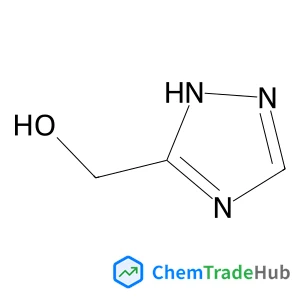
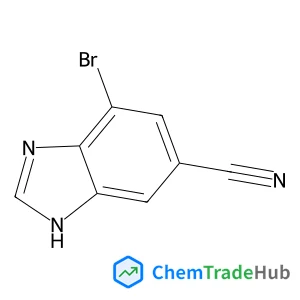
![6-Benzyl-4,5,6,7-tetrahydro-1H-pyrazolo[3,4-c]pyridin-3(2H)-one structure](https://cnstatic.chemtradehub.com/structs/909/909187-64-0-f54f.webp "6-Benzyl-4,5,6,7-tetrahydro-1H-pyrazolo[3,4-c]pyridin-3(2H)-one structure")
![Pyrazolo[1,5-a]pyridine-3-carbothioamide structure](https://cnstatic.chemtradehub.com/structs/885/885275-44-5-aae0.webp "Pyrazolo[1,5-a]pyridine-3-carbothioamide structure")
推荐供应商





免责声明
本页面提供的学术期刊信息仅供参考和研究使用。我们与任何期刊出版商均无关联,也不处理投稿事宜。如有投稿相关咨询,请直接联系相关期刊出版商。
如发现页面信息有误,请发送邮件至 support@chemtradehub.com 联系我们。我们将及时核实并处理您的问题。