


A dipole-assisted solid-phase extraction microchip combined with inductively coupled plasma-mass spectrometry for online determination of trace heavy metals in natural water
文献信息
发布日期
2014-11-26
DOI
10.1039/C4AN01421A
影响因子
4.616
作者
Tsung-Ting Shih, I-Hsiang Hsu, Shun-Niang Chen, Ping-Hung Chen, Ming-Jay Deng, Yu Chen, Yang-Wei Lin, Yuh-Chang Sun
查看原文
摘要
We employed a polymeric material, poly(methyl methacrylate) (PMMA), for fabricating a microdevice and then implanted the chlorine (Cl)-containing solid-phase extraction (SPE) functionality into the PMMA chip to develop an innovative on-chip dipole-assisted SPE technique. Instead of the ion–ion interactions utilized in on-chip SPE techniques, the dipole–ion interactions between the highly electronegative C–Cl moieties in the channel interior and the positively charged metal ions were employed to facilitate the on-chip SPE procedures. Furthermore, to avoid labor-intensive manual manipulation, a programmable valve manifold was designed as an interface combining the dipole-assisted SPE microchip and inductively coupled plasma-mass spectrometry (ICP-MS) to achieve the fully automated operation. Under the optimized operation conditions for the established system, the detection limits for each analyte ion were obtained based on three times the standard deviation of seven measurements of the blank eluent solution. The limits ranged from 3.48 to 20.68 ng L−1, suggesting that this technique appears uniquely suited for determining the levels of heavy metal ions in natural water. Indeed, a series of validation procedures demonstrated that the developed method could be satisfactorily applied to the determination of trace heavy metals in natural water. Remarkably, the developed device was durable enough to be reused more than 160 times without any loss in its analytical performance. To the best of our knowledge, this is the first study reporting on the combination of a dipole-assisted SPE microchip and elemental analysis instrument for the online determination of trace heavy metal ions.
期刊推荐

Pharmacological Reviews
Russian Chemical Reviews

Planta Medica
Journal of Medicinal Chemistry

Helvetica Chimica Acta

Kinetics and Catalysis

Israel Journal of Chemistry

Proceedings of the National Academy of Sciences of the United States of America

Pure and Applied Chemistry

Journal of Physics and Chemistry of Solids
相关文献
Withapubesides A–D: natural inducible nitric oxide synthase (iNOS) inhibitors from Physalis pubescens
Bing-Yang Zhang, Yang Li, Ning Kang, Shi-Jie Cao, Li-Qin Ding, Li-Xia Chen, Feng Qiu
2017-11-13
Paper
DOI: 10.1039/C7OB02551C
Palladium-catalyzed tandem reaction of 2-chloroquinoline-3-carbaldehydes and isocyanides
Morteza Shiri, Maryam Ranjbar, Zahra Yasaei, Fatemeh Zamanian, Behrouz Notash
2017-11-09
Paper
DOI: 10.1039/C7OB02043K
Benzannulation strategies for the synthesis of carbazoles, indolocarbazoles, benzocarbazoles, and carbolines
Ankush Banerjee, Samrat Kundu, Arya Bhattacharyya, Samrat Sahu, Modhu Sudan Maji
2021-03-15
Review Article
DOI: 10.1039/D1QO00092F
Microwave-assisted synthesis of hydroxyl-containing isoquinolines by metal-free radical cyclization of vinyl isocyanides with alcohols
Dengqi Xue, Hao Chen, Yulong Xu, Haihua Yu, Linqian Yu, Wei Li, Qiong Xie
2017-11-02
Paper
DOI: 10.1039/C7OB02221B
Regioselective synthesis of 2,3′-biindoles mediated by an NBS-induced homo-coupling of indoles
Panpan Huang, Xiangjun Peng, Dan Hu, Huiwu Liao, Shaobin Tang, Liangxian Liu
2017-10-31
Paper
DOI: 10.1039/C7OB02312J
A fluorescent combinatorial logic gate with Na+, H+-enabled OR and H+-driven low-medium-high ternary logic functions‡
Jasmine M. A. Spiteri, Carl J. Mallia, Glenn J. Scerri, David C. Magri
2017-11-16
Paper
DOI: 10.1039/C7OB01828B
Recent progress on the construction of axial chirality through transition-metal-catalyzed benzannulation
Qian Zhao, Yu-Ting Wang
2021-03-15
Review Article
DOI: 10.1039/D1QO00307K
Efficient cross-coupling of aryl/alkenyl triflates with acyclic secondary alkylboronic acids
Tengda Si, Bowen Li, Wenrui Xiong, Bin Xu, Wenjun Tang
2017-11-13
Paper
DOI: 10.1039/C7OB02531A
Recent advances in sustainable synthesis of N-heterocycles following acceptorless dehydrogenative coupling protocol using alcohols
Milan Maji, Dibyajyoti Panja, Ishani Borthakur, Sabuj Kundu
2021-02-23
Review Article
DOI: 10.1039/D0QO01577F
您可能还喜欢
化合物问答
十二烷基磺酸钠(CAS号:2386-53-0)的主要用途是什么?
十二烷基磺酸钠主要用作表面活性剂,广泛应用于洗涤剂、肥皂、化妆品和工业清洁产品中。它能有效去除油脂和污垢,常用于制造洗发水、沐浴露、洗衣粉和金属清洗剂。此外,它...
2386-53-01-Dodecanesulfonic a...
化合物问答
5-羟基异喹啉(CAS号:2439-04-5)适用哪些法规指南?
5-羟基异喹啉作为化学品,主要适用的法规包括GHS全球化学品统一分类和标签制度,REACH法规等。GHS将5-羟基异喹啉分类为皮肤腐蚀/刺激类别2,严重眼损伤/...
2439-04-55-Isoquinolinol
化合物问答
在合成中是否有FIDAS-5 | Wnt(CAS号:1391934-98-7)的替代品?
合成中可以考虑使用类似结构的化合物,如4-[(E)-2-(2-氯-6-氟苯基)乙烯基]-N-甲基苯胺的类似物或衍生物作为替代品。这类化合物可能具有相似的生物活性...
1391934-98-74-[(E)-2-(2-Chloro-6...
化合物问答
(R)-tert-Butyl 2-(5-bromo-1H-imidazol-2-yl)pyrrolidine-1-carboxylate(CAS号:1370600-56-8)通常如何合成?
该化合物通常通过如下步骤合成:首先,将4-溴-1H-咪唑与对甲苯磺酸在乙酸乙酯中反应,得到中间体5-溴-1H-咪唑-2-甲酸乙酯。然后,该中间体与2-甲基-2-...
1370600-56-82-Methyl-2-propanyl ...
化合物问答
处理4-(吡咯烷-1-基)环己酮(CAS号:10421-18-8)时应注意哪些实验室安全事项?
处理4-(吡咯烷-1-基)环己酮时,应佩戴手套、护目镜和实验室外套,以防止直接接触或吸入。在通风橱中操作,确保良好的通风条件。一旦发生泄漏,应立即清理并使用适当...
10421-18-84-(Pyrrolidin-1-yl)c...
化合物问答
如何处理含有异麦芽糖醇(CAS号:534-73-6)的废料?
含有异麦芽糖醇的废液应首先进行分类收集,避免与其他化学品混合。对于小规模的废液,可以通过焚烧或加入特定的化学试剂进行无害化处理。对于大规模的废液,建议联系专业的...
534-73-66-O-alpha-D-Glucopyr...
化合物问答
7-甲基壬酸(CAS号:41653-89-8)的主要用途是什么?
7-甲基壬酸主要用于有机合成领域,作为合成其他化合物的原料。此外,它还可能作为一种中间体用于药品制造和香料合成,但具体用途需要根据其具体的化学结构和反应特性来确...
41653-89-87-Methylnonanoic aci...
化合物问答
N-甲氧基-N-甲基甲基吡啶羧酰胺(CAS号:148493-07-6)应用于哪些行业?
N-甲氧基-N-甲基甲基吡啶羧酰胺在医药领域有一定的应用,作为一种潜在的药物前体或中间体。此外,该化合物也可能应用于聚合物改性剂、传感器材料等。由于其独特的化学...
148493-07-6N-Methoxy-N-methylpi...
化合物问答
什么是惕各酸香叶酯(CAS号:7785-33-3)?
惕各酸香叶酯是一种化合物,化学名称为(2E)-3,7-二甲基-2,6-辛二烯-1-基(2E)-2-甲基-2-丁烯酸酯。它是一种具有香叶香气的化合物,分子式为C1...
7785-33-3(2E)-3,7-Dimethyl-2,...
化合物问答
1-环丁基哌嗪(CAS号:132800-13-6)安全吗?
1-环丁基哌嗪在适当的操作条件下是相对安全的,但如遇明火或高热会释放有毒气体。操作时应佩戴防护眼镜和手套,避免吸入或接触皮肤、眼睛。
132800-13-61-Cyclobutylpiperazi...
来源期刊
Analyst

CiteScore:
7.8
自引率:
5.6%
年发文量:
653
Analyst publishes analytical and bioanalytical research that reports premier fundamental discoveries and inventions, and the applications of those discoveries, unconfined by traditional discipline barriers.
推荐化合物
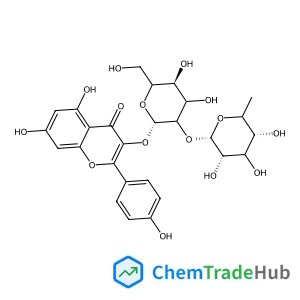
![2-Hydroxy-4-[({[(4-methylphenyl)sulfonyl]oxy}acetyl)amino]benzoic acid structure](https://cnstatic.chemtradehub.com/structs/501/501919-59-1-579f.webp "2-Hydroxy-4-[({[(4-methylphenyl)sulfonyl]oxy}acetyl)amino]benzoic acid structure")
2-Hydroxy-4-[({[(4-methylphenyl)sulfonyl]oxy}acetyl)amino]benzoic acid
CAS号:
501919-59-1
分子式:
C16H15NO7S
推荐供应商





免责声明
本页面提供的学术期刊信息仅供参考和研究使用。我们与任何期刊出版商均无关联,也不处理投稿事宜。如有投稿相关咨询,请直接联系相关期刊出版商。
如发现页面信息有误,请发送邮件至 support@chemtradehub.com 联系我们。我们将及时核实并处理您的问题。