






![2-[({[(2-Methyl-2-propanyl)oxy]carbonyl}amino)methyl]isonicotinic acid structure](https://cnstatic.chemtradehub.com/structs/473/473924-63-9-973b.webp "2-[({[(2-Methyl-2-propanyl)oxy]carbonyl}amino)methyl]isonicotinic acid structure")
2-[({[(2-Methyl-2-propanyl)oxy]carbonyl}amino)methyl]isonicotinic acid
CAS号:
473924-63-9
分子式:
C12H16N2O4
Claudia Ventura, Paul Thornton, Silvia Giordani, Andreas Heise
The synthesis of photo-responsive polymers with high density of spiropyran (SP) groups has been investigated. Initially the ATRP synthesis of star-shaped polymer using acrylated benzospiropyran (BSP) was attempted but results suggested an incompatibility of ATRP with BSP preventing the formation of polymers or polymer architectures with a higher chain length or density of spiropyran side chains. Alternatively, copper catalyzed cycloaddition (click chemistry) was successfully employed to obtain spiropyran functionalized polymers. Well-defined poly(6-benzospiropyran hexylmethacrylate)s bearing a BSP moiety on the side chain of each unit of the polymer with linear, star-like and molecular brush architectures and narrow molecular weight distributions were successfully synthesized combining ATRP and click chemistry. All polymers exhibited conventional photochromism as confirmed by absorption and emission spectroscopy. The linear and star-like polymers showed similar behavior with comparable ring-closure kinetics and photostability, while the kinetics of the molecular brush architecture was two times slower and its photostability significantly greater.
DOI: 10.1039/C2CP23002J
Tanja Drobek, Tobias Balmer
DOI: 10.1039/C2CP40255F
David P. Penaloza, Jr., Koichiro Hori, Atsuomi Shundo
DOI: 10.1039/C2CP40284J
Huai-Qian Wang, Xiao-Yu Kuang
DOI: 10.1039/C2CP40112F
Zoi A. Makrodimitri, Dominik J. M. Unruh
DOI: 10.1039/C2CP23471H
Luhui Zhang, Enzheng Shi, Zhen Li, Peixu Li, Yi Jia, Chunyan Ji, Jinquan Wei, Kunlin Wang, Hongwei Zhu, Dehai Wu, Anyuan Cao
DOI: 10.1039/C2CP00024E
Hiroyuki Asakura, Kentaro Teramura, Tetsuya Shishido, Tsunehiro Tanaka, Ning Yan, Chaoxian Xiao, Siyu Yao, Yuan Kou
DOI: 10.1039/C2CP23070D
G. Ennas, A. Scano, E. Agostinelli, D. Fiorani
DOI: 10.1039/C2CP22473A
Lin Tang, Quanmin Guo
DOI: 10.1039/C2CP23871C
Bo Yang, Xue-Qing Gong
DOI: 10.1039/C2CP23755E
(3-氨苯基)环丙基甲酮主要用于合成化学中间体,特别是在药物化学领域作为原料。它还可以用于有机合成反应中,作为催化剂或反应物。
亚胺菌应储存在干燥、阴凉处,避免直接暴露于光线下。建议使用密封容器储存,防止吸潮和污染。具体的储存条件应参考产品的安全数据表(MSDS)或药品说明书。
2-氯-2,2-二氟乙酰胺在医药、聚合物、传感器、半导体等领域有广泛应用。在医药领域,它作为中间体用于合成其他药物;在聚合物领域,用作聚合引发剂或稳定剂;在传感...
在处理4-甲基-3-硝基-1,1-联苯时,应佩戴手套、护目镜和实验室外套等个人防护装备(PPE),确保在通风橱中操作以减少吸入风险。若发生泄露,应立即使用沙子或...
该化合物广泛应用于医药、聚合物和半导体行业。在医药领域,它是某些药物中间体的重要组成部分;在聚合物领域,可用作增塑剂;在半导体行业,可用于制造光刻胶。
芬苯哒唑砜-D3标准品的替代品可能包括类似的苯并咪唑类化合物,如芬苯哒唑本身或其非同位素标记版本。这些替代品在结构上与芬苯哒唑砜-D3相似,但在具体应用中需进行...
2-氟-4-硝基苯乙酸可以通过一系列化学反应合成,通常是从4-氟苯胺开始,首先进行硝化反应生成4-氟-2-硝基苯胺,然后进行乙酰化反应得到目标产物。具体的合成步...
2-氟-4-甲氧基苯乙酸通常通过将4-甲氧基苯乙酸与氟化试剂(如氟化氰)反应来合成。反应通常在无水条件下进行,使用催化剂如六氟磷酸锂或四氟硼酸锂以提高选择性和产...
4SC 202;4SC202是一种化学化合物,其化学名称为(2E)-N-(2-氨基苯基)-3-(1-{[4-(1-甲基-1H-吡唑-4-基)苯基]磺酰基}-1H...

Polymer Chemistry welcomes submissions in all areas of polymer science that have a strong focus on macromolecular chemistry. Manuscripts may cover a broad range of fields, yet no direct application focus is required.
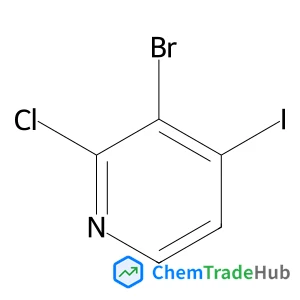
![2-Methyl-2-propanyl [(2S)-1-hydroxy-3-(4-hydroxyphenyl)-2-propanyl]carbamate structure](https://cnstatic.chemtradehub.com/structs/833/83345-46-4-eec2.webp "2-Methyl-2-propanyl [(2S)-1-hydroxy-3-(4-hydroxyphenyl)-2-propanyl]carbamate structure")