







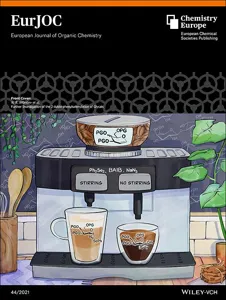
Surface activation of CNT Webs towards layer by layer assembly of biosensors
文献信息
发布日期
2016-01-21
DOI
10.1039/C5AN02547H
影响因子
4.616
作者
Mustafa Musameh, Chi P. Huynh, Mark Hickey, Ilias Louis Kyratzis
查看原文
摘要
Several surface activation methods such as chemical, electrochemical and plasma have been used for enhancing the electrochemical performance of carbon based electrodes for various applications. However, some of these surface activation methods may not be useful depending on the chemical and physical properties of the activated surface. Herein we investigate the surface activation of carbon nanotube (CNT) webs by electrochemical and plasma techniques to enhance their electrochemical performance and enable the fabrication of a biosensor using the layer-by-layer (LBL) approach. The pretreated CNT webs were characterized by SEM, TEM, Raman, XPS and electrochemical methods. TEM images and Raman analysis showed an increase in the level of surface defects upon pretreatment with higher number of defects after electrochemical pretreatment. XPS analysis showed an increase in the level of oxygen functional groups after pretreatment (4 to 5 times increase) which resulted in enhanced water wettability especially for plasma pretreated CNT webs. The pretreated CNT web electrodes also showed an enhanced electrochemical activity towards the oxidation and reduction of different redox probes with higher sensitivity for the electrochemically pretreated CNT web electrode that was accompanied by a higher level of noise in amperometric measurements. A highly linear response was obtained for the untreated and the electrochemically pretreated CNT web electrodes towards the amperometric detection of NADH (R2 of 0.9996 and 0.9986 respectively) while a non-linear response was observed for the plasma pretreated CNT web electrode (R2 of 0.8538). The pretreated CNT web electrodes enabled the fabrication of a LBL biosensor for alcohol detection with highest operational stability obtained for the plasma pretreated CNT web surface.
相关文献
Neural network force fields for simple metals and semiconductors: construction and application to the calculation of phonons and melting temperatures
Mário R. G. Marques, Jakob Wolff, Conrad Steigemann, Miguel A. L. Marques
2019-03-07
Paper
DOI: 10.1039/C8CP05771K
Excitation of singlet–triplet coherences in pairs of nearly-equivalent spins
Christian Bengs, Joseph T. Hill-Cousins, Lynda J. Brown, Richard C. D. Brown, Giuseppe Pileio, Malcolm H. Levitt
2019-02-18
Paper
DOI: 10.1039/C9CP00451C
Raising glass transition temperature of polymer nanofilms as a function of negative interface energy
Xue Yao, Yaru Wang, Xingyou Lang, Yongfu Zhu, Qing Jiang
2019-02-07
Paper
DOI: 10.1039/C8CP07267A
Tuning the magnetic properties of beryllium chains
Noelia Faginas-Lago, Thierry Leininger, Stefano Evangelisti
2019-02-27
Paper
DOI: 10.1039/C8CP07159D
Electronic and magnetic properties of CoPc and FePc molecules on graphene: the substrate, defect, and hydrogen adsorption effects
Xiaoguang Li, Jinlong Yang
2019-02-12
Paper
DOI: 10.1039/C8CP07091A
Effective modulation of intramolecular ferromagnetic interaction of diradicals by functionalization of cross-conjugated coupler
Francis Kirby B. Burnea, Kyoung Chul Ko
2018-07-20
Paper
DOI: 10.1039/C8CP03689F
Fabrication and simulation of V-shaped Ag nanorods as high-performance SERS substrates
Jianghao Li, Yihang Fan, Xiaotian Xue, Lingwei Ma, Sumeng Zou, Zhu Fei, Zheng Xie
2018-09-21
Paper
DOI: 10.1039/C8CP05533E
Magnetic-field-tuned phase transition of a molecular material from the isolated-spin to the coupled-spin regime
Ana M. Plutín, Eduardo E. Castellano, Alzir A. Batista, Rafael Calvo, Otaciro R. Nascimento
2019-02-07
Paper
DOI: 10.1039/C8CP06719H
Role of suppressed oxygen vacancies in the BiFeO3 nanofiller to improve the polar phase and multifunctional performance of poly(vinylidene fluoride)
Abhishek Sasmal, Shrabanee Sen, P. Sujatha Devi
2019-02-21
Paper
DOI: 10.1039/C8CP07281G
A honeycomb-like monolayer of HfO2 and the calculation of static dielectric constant eliminating the effect of vacuum spacing
Junhui Weng, Shang-Peng Gao
2018-09-17
Paper
DOI: 10.1039/C8CP04743J
您可能还喜欢
化合物问答
6-氯-2H-1,4-苯并噁嗪-3(4H)-酮(CAS号:7652-29-1)应用于哪些行业?
6-氯-2H-1,4-苯并噁嗪-3(4H)-酮主要应用于医药、农药和聚合物等领域。在医药领域,该化合物可用于合成抗菌药物;在农药领域,可用作杀虫剂的中间体;在聚...
7652-29-16-Chloro-2H-1,4-benz...
化合物问答
活性氧化铝(CAS号:1302-74-5)应用于哪些行业?
活性氧化铝广泛应用于医药、聚合物、传感器、半导体和催化等领域。在医药行业,活性氧化铝用作吸附剂和干燥剂,有助于去除杂质和水分。在聚合物行业,它用作增白剂和抗结块...
1302-74-5aluminum;trihydrate
化合物问答
什么是硅胶(CAS号:112926-00-8)?
硅胶(Silica gel, pptd.,cryst.-free)是一种无定形、多孔的硅酸盐材料,主要成分为二氧化硅(SiO₂)。其结构由硅氧四面体构成,通过酸...
112926-00-8Silica gel, pptd.,cr...
化合物问答
二乙基甲基一氢硅烷(CAS号:760-32-7)的主要用途是什么?
二乙基甲基一氢硅烷主要用于有机合成、表面处理以及作为溶剂。它还被用作合成其他硅烷化合物的原料,以及在涂料、粘合剂和密封剂中的应用。
760-32-7Diethyl(methyl)silan...
化合物问答
在合成中是否有N-花生四烯酰基甘氨酸(CAS号:179113-91-8)的替代品?
在合成过程中,可以考虑使用类似结构的化合物作为替代品,例如N-亚油酰基甘氨酸或N-花生二烯酰基甘氨酸。这些替代品在结构上有类似的双键位置,但可能具有不同的物理化...
179113-91-8Glycine, N-[(5Z,8Z,1...
化合物问答
在合成中是否有1-(4-甲氧基苯基)丙烷-1,2-二酮(CAS号:10557-27-4)的替代品?
在合成过程中,可以考虑使用类似结构的化合物作为替代品,例如1-(3-甲氧基苯基)丙烷-1,2-二酮或1-(4-羟基苯基)丙烷-1,2-二酮。这些替代品具有相似的...
10557-27-41-(4-Methoxyphenyl)p...
化合物问答
N-(4-氨基-1-苄基-3-羟基-5-苯基戊基)-3-甲基-2-(2-氧代四氢嘧啶-1-基)-丁酰胺 5-氧代吡咯烷-2-甲酸(CAS号:192726-06-0)通常如何合成?
该化合物通常通过一系列复杂的有机合成步骤获得。首先,通过芳香族化合物的羟基化反应获得羟基化产物,然后通过酰化反应形成酰胺中间体,最后通过环化反应得到目标产物。常...
192726-06-05-Oxo-L-proline - (2...
化合物问答
(S)-2-氨基-3-喹啉-2-丙酸(CAS号:161513-46-8)的市场或研究趋势如何?
该化合物作为生物活性化合物,尤其是在药物化学领域表现出色。近年来,随着对新型抗炎、抗病毒和抗癌药物的研究增加,其市场和研究趋势持续增长。此外,其在神经科学领域的...
161513-46-8(S)-2-Amino-3-quinol...
化合物问答
核黄素磷酸钠(CAS号:130-40-5)安全吗?
核黄素磷酸钠在常规使用条件下安全,但高剂量可能引起刺激性反应。操作时需佩戴防护手套和护目镜,避免吸入粉尘。若接触皮肤或眼睛,应立即用大量清水冲洗。急救时需根据接...
130-40-5Sodium 1-deoxy-1-(7,...
化合物问答
盐酸丙胺卡因杂质A(EP) 标准品(CAS号:19281-31-3)通常如何合成?
盐酸丙胺卡因杂质A(EP) 标准品可通过重氮化反应和随后的酰胺化反应合成。首先,利用氯化反应将苯环上的氢原子转化为氯原子,然后通过芳香族重氮化反应引入氨基,最后...
19281-31-32-Chloro-N-(2-methyl...
来源期刊
Analyst

CiteScore:
7.8
自引率:
5.6%
年发文量:
653
Analyst publishes analytical and bioanalytical research that reports premier fundamental discoveries and inventions, and the applications of those discoveries, unconfined by traditional discipline barriers.
推荐化合物
![Methyl 4-({[(2-methyl-2-propanyl)oxy]carbonyl}amino)bicyclo[2.2.2]octane-1-carboxylate structure](https://cnstatic.chemtradehub.com/structs/943/943845-74-7-b7e5.webp "Methyl 4-({[(2-methyl-2-propanyl)oxy]carbonyl}amino)bicyclo[2.2.2]octane-1-carboxylate structure")
![Pyrazolo[1,5-a]pyridine-3-carbothioamide structure](https://cnstatic.chemtradehub.com/structs/885/885275-44-5-aae0.webp "Pyrazolo[1,5-a]pyridine-3-carbothioamide structure")
推荐供应商




免责声明
本页面提供的学术期刊信息仅供参考和研究使用。我们与任何期刊出版商均无关联,也不处理投稿事宜。如有投稿相关咨询,请直接联系相关期刊出版商。
如发现页面信息有误,请发送邮件至 support@chemtradehub.com 联系我们。我们将及时核实并处理您的问题。