










Thermo-responsive polymer aided spheroid culture in cryogel based platform for high throughput drug screening
文献信息
发布日期
2016-03-30
DOI
10.1039/C6AN00356G
影响因子
4.616
作者
J. Sarkar, A. Kumar
查看原文
摘要
In high throughput cell culture, the paradigm is now shifting from 2D to 3D systems. However, in 3D cell culture systems, it is important that the cells form spheroids with robust cell–cell interactions. We fabricated poly(N-isopropylacrylamide-co-gelatin) cryogel scaffolds for cell culture and inserted them into open-ended 96-well plates that formed a drainage and leakage protected, easy to handle high throughput platform. This platform was used to screen for the optimal concentration of poly(N-isopropylacrylamide) (pNIPAAm) as an external aid to the formation of cellular spheroids. It was found that hepatic cells (Hep G2) seeded in the presence of 0.03% pNIPAAm formed better hepatic spheroids in terms of morphology (as assessed by microscopic analysis and formation of bile canaliculi-like structures) and functionality by day 5 of culture. An increase of 44.22%, 15.75%, 36.44%, 32.05% and 27.02% was observed in glucose consumption (1.925 mM per day per 104 cells), albumin synthesis (164.18 ng per day per 104 cells), CYP1A1 (304.92 pg per min per 104 cells), CYP2A6 (441.23 nM per min per 104 cells) and phase II metabolic activity (386.18 nM per min−1 per 104 cells), respectively, upon using 0.03% pNIPAAm, as compared to the 3D control. The platform was tested with other cells such as breast and lung cancer cells and found to be compatible. The cell spheroids were subjected to drug toxicity screening in cryogel based open-ended platforms. It was observed that the spheroids were more resistant to anticancer drugs, as compared to 2D and 3D controls, with approximately 11%–67% increase in the IC50 values of tamoxifen and paclitaxel. The platform also showed dose dependent and reproducible responses to drugs.
相关文献
A facile approach to fabricate functionalized superparamagnetic copolymer-silica nanocomposite spheres
Dechao Niu, Yongsheng Li, Xiaoli Qiao, Liang Li, Wenru Zhao, Hangrong Chen, Qiaoling Zhao, Zhi Ma
2008-07-29
Communication
DOI: 10.1039/B807781A
Is catenation beneficial for hydrogenstorage in metal–organic frameworks?
Patrick Ryan, Linda J. Broadbelt, Randall Q. Snurr
2008-08-01
Communication
DOI: 10.1039/B804343D
Cyanide-bridged tetradecanuclear RuII3MII11clusters (MII = ZnII and CuII) based on the high connectivity building block [Ru3(HAT)(CN)12]6−: structural and photophysical properties‡
Juan Manuel Herrera, Enrique Colacio, Corine Mathonière, Duane Choquesillo-Lazarte, Michael D. Ward
2008-07-25
Communication
DOI: 10.1039/B807364C
Fused tetracycles with a benzene or cyclohexadiene core: [2 + 2 + 2] cycloadditions on macrocyclic systems
Sandra Brun, Lídia Garcia, Iván González, Anna Torrent, Anna Dachs, Anna Pla-Quintana, Teodor Parella, Anna Roglans
2008-07-16
Communication
DOI: 10.1039/B806524A
Open cellular reactive porous membranes from high internal phase emulsions
Peter Krajnc
2008-07-30
Communication
DOI: 10.1039/B807095D
Nanostructured polymers with embedded self-assembled reactive gel networks
Jamie R. Moffat, Gordon J. Seeley, Jeff T. Carter, Andrew Burgess, David K. Smith
2008-08-01
Communication
DOI: 10.1039/B809077G
Ni(ii)-catalyzed enantioselective Nazarov cyclizations
Irene Walz, Antonio Togni
2008-07-17
Communication
DOI: 10.1039/B806870D
Hierarchical carbon nanotube assemblies created by sugar–boric or boronic acid interactions
Shingo Tamesue, Munenori Numata, Kenji Kaneko, Tony D. James, Seiji Shinkai
2008-07-30
Communication
DOI: 10.1039/B808599D
B–H Activation by frustrated Lewis pairs: borenium or boryl phosphonium cation?
Meghan A. Dureen, A. Lough, Thomas M. Gilbert, Douglas W. Stephan
2008-07-16
Communication
DOI: 10.1039/B808348G
Fine control over the morphology and structure of mesoporous silica nanomaterials by a dual-templating approach
Junhui He
2008-07-28
Communication
DOI: 10.1039/B807787H
您可能还喜欢
化合物问答
6-氯-2H-1,4-苯并噁嗪-3(4H)-酮(CAS号:7652-29-1)应用于哪些行业?
6-氯-2H-1,4-苯并噁嗪-3(4H)-酮主要应用于医药、农药和聚合物等领域。在医药领域,该化合物可用于合成抗菌药物;在农药领域,可用作杀虫剂的中间体;在聚...
7652-29-16-Chloro-2H-1,4-benz...
化合物问答
活性氧化铝(CAS号:1302-74-5)应用于哪些行业?
活性氧化铝广泛应用于医药、聚合物、传感器、半导体和催化等领域。在医药行业,活性氧化铝用作吸附剂和干燥剂,有助于去除杂质和水分。在聚合物行业,它用作增白剂和抗结块...
1302-74-5aluminum;trihydrate
化合物问答
什么是硅胶(CAS号:112926-00-8)?
硅胶(Silica gel, pptd.,cryst.-free)是一种无定形、多孔的硅酸盐材料,主要成分为二氧化硅(SiO₂)。其结构由硅氧四面体构成,通过酸...
112926-00-8Silica gel, pptd.,cr...
化合物问答
二乙基甲基一氢硅烷(CAS号:760-32-7)的主要用途是什么?
二乙基甲基一氢硅烷主要用于有机合成、表面处理以及作为溶剂。它还被用作合成其他硅烷化合物的原料,以及在涂料、粘合剂和密封剂中的应用。
760-32-7Diethyl(methyl)silan...
化合物问答
在合成中是否有N-花生四烯酰基甘氨酸(CAS号:179113-91-8)的替代品?
在合成过程中,可以考虑使用类似结构的化合物作为替代品,例如N-亚油酰基甘氨酸或N-花生二烯酰基甘氨酸。这些替代品在结构上有类似的双键位置,但可能具有不同的物理化...
179113-91-8Glycine, N-[(5Z,8Z,1...
化合物问答
在合成中是否有1-(4-甲氧基苯基)丙烷-1,2-二酮(CAS号:10557-27-4)的替代品?
在合成过程中,可以考虑使用类似结构的化合物作为替代品,例如1-(3-甲氧基苯基)丙烷-1,2-二酮或1-(4-羟基苯基)丙烷-1,2-二酮。这些替代品具有相似的...
10557-27-41-(4-Methoxyphenyl)p...
化合物问答
N-(4-氨基-1-苄基-3-羟基-5-苯基戊基)-3-甲基-2-(2-氧代四氢嘧啶-1-基)-丁酰胺 5-氧代吡咯烷-2-甲酸(CAS号:192726-06-0)通常如何合成?
该化合物通常通过一系列复杂的有机合成步骤获得。首先,通过芳香族化合物的羟基化反应获得羟基化产物,然后通过酰化反应形成酰胺中间体,最后通过环化反应得到目标产物。常...
192726-06-05-Oxo-L-proline - (2...
化合物问答
(S)-2-氨基-3-喹啉-2-丙酸(CAS号:161513-46-8)的市场或研究趋势如何?
该化合物作为生物活性化合物,尤其是在药物化学领域表现出色。近年来,随着对新型抗炎、抗病毒和抗癌药物的研究增加,其市场和研究趋势持续增长。此外,其在神经科学领域的...
161513-46-8(S)-2-Amino-3-quinol...
化合物问答
核黄素磷酸钠(CAS号:130-40-5)安全吗?
核黄素磷酸钠在常规使用条件下安全,但高剂量可能引起刺激性反应。操作时需佩戴防护手套和护目镜,避免吸入粉尘。若接触皮肤或眼睛,应立即用大量清水冲洗。急救时需根据接...
130-40-5Sodium 1-deoxy-1-(7,...
化合物问答
盐酸丙胺卡因杂质A(EP) 标准品(CAS号:19281-31-3)通常如何合成?
盐酸丙胺卡因杂质A(EP) 标准品可通过重氮化反应和随后的酰胺化反应合成。首先,利用氯化反应将苯环上的氢原子转化为氯原子,然后通过芳香族重氮化反应引入氨基,最后...
19281-31-32-Chloro-N-(2-methyl...
来源期刊
Analyst

CiteScore:
7.8
自引率:
5.6%
年发文量:
653
Analyst publishes analytical and bioanalytical research that reports premier fundamental discoveries and inventions, and the applications of those discoveries, unconfined by traditional discipline barriers.
推荐化合物
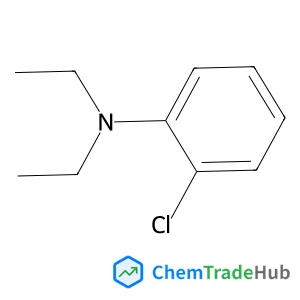
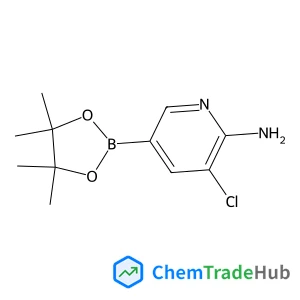
3-Chloro-5-(4,4,5,5-tetramethyl-1,3,2-dioxaborolan-2-yl)-2-pyridinamine
CAS号:
1032758-99-8
分子式:
C11H16BClN2O2
推荐供应商






免责声明
本页面提供的学术期刊信息仅供参考和研究使用。我们与任何期刊出版商均无关联,也不处理投稿事宜。如有投稿相关咨询,请直接联系相关期刊出版商。
如发现页面信息有误,请发送邮件至 support@chemtradehub.com 联系我们。我们将及时核实并处理您的问题。