


![4-[(2-Oxo-1,2,3,4-tetrahydroquinolin-7-yl)oxy]butanoic acid structure](https://cnstatic.chemtradehub.com/structs/588/58899-27-7-1f86.webp "4-[(2-Oxo-1,2,3,4-tetrahydroquinolin-7-yl)oxy]butanoic acid structure")
A turn-on fluorescence chemosensor based on a tripodal amine [tris(pyrrolyl-α-methyl)amine]-rhodamine conjugate for the selective detection of zinc ions
文献信息
发布日期
2016-06-20
DOI
10.1039/C6AN00486E
影响因子
4.616
作者
Rathinam Balamurugan, Wen-I Chang, Yandison Zhang, Sri Fitriyani, Jui-Hsiang Liu
查看原文
摘要
A novel tetradendate ligand derived from a tris(pyrrolyl-α-methyl)amine (H3tpa) and rhodamine-based conjugate (PR) has been designed for use as a sensor, synthesized and characterized spectroscopically. PR {(tris(5-rhodamineiminopyrrol-2-ylmethyl)amine)} serves as a selective colorimetric as well as a fluorescent chemosensor for Zn2+ in acetonitrile/water (1 : 1, v/v). In the presence of Zn2+, PR exhibited obvious absorption (558 nm) and emission (577 nm) peaks whose intensity increased along with increasing Zn2+ concentrations. Titration experiments revealed that a large excess of Zn2+ was required to saturate the absorption (λmax) and emission intensities. Upon the addition of 1000 equivalents of Zn2+, the fluorescence intensity of the PR underwent an ∼500-fold increase (Φf = 0.34) with the emission maximum at 580 nm. These kinetics studies demonstrated that the absorption and emission changes were proportional to the Zn2+ concentration. The color of the solution changed from colorless to a dark pink color. The fluorescence of the PR-Zn2+ complex can be reversibly restored by using ammonium water or by heating. Competitive ion tests revealed that the intensity of PR-Zn2+ was not suppressed by excess amounts of other metal ions. The counter anions did not exert obvious influences on the absorption and emission profiles. 1H-NMR and FT-IR spectroscopic investigations of PR and PR-Zn2+ revealed that the pyrrole motifs, –CN– groups and spirolactam of rhodamine B are capable of coordinating cation guest species. Because each arm of the tripodal ligand tautomerizes independently, only moderate fluorescence enhancement could be seen until all three –CN– groups were coordinated by zinc, which may be due to the spirolactam ring opening mechanism of the rhodamine unit. Once all three –CN– groups were locked by coordinating with excess of Zn2+, the isomerization was arrested, and PR exhibited highly enhanced fluorescence. In addition, energy optimized structures of PR were found to be cage-like by Gaussian 09, further supporting that it can access a large excess of Zn2+. Intriguingly, imaging of HeLa cells by using a confocal microscope revealed that this PR probe could be used for biological applications.
期刊推荐
Journal of Organometallic Chemistry

Journal of Catalysis
Molecular Pharmacology

Proceedings of the National Academy of Sciences of the United States of America

Journal of Physics and Chemistry of Solids
Israel Journal of Chemistry
Journal of Medicinal Chemistry
Pure and Applied Chemistry
Russian Chemical Reviews
Kinetics and Catalysis
相关文献
Modified Shepard interpolation method applied to trapping mediated adsorption dynamics
P. N. Abufager, C. Crespos, H. F. Busnengo
2007-03-07
Paper
DOI: 10.1039/B617209A
Highly dispersed magnesium oxide species on silica as photoactive sites for photoinduced direct methane coupling and photoluminescence
Leny Yuliati, Tadashi Hattori, Hisao Yoshida
2004-11-15
Paper
DOI: 10.1039/B410089A
Electronic relaxation dynamics in DNA and RNA bases studied by time-resolved photoelectron spectroscopy
Susanne Ullrich, Thomas Schultz, Marek Z. Zgierski, Albert Stolow
2004-04-14
Paper
DOI: 10.1039/B316324E
Dynamics of the insertion reaction C(1D) + H2: A comparison of crossed molecular beam experiments with quasiclassical trajectory and quantum mechanical scattering calculations
Nadia Balucani, Giovanni Capozza, Laura Cartechini, Astrid Bergeat, Rolf Bobbenkamp, Piergiorgio Casavecchia, F. Javier Aoiz, Luis Bañares, Pascal Honvault, Béatrice Bussery-Honvault, Jean-Michel Launay
2004-07-21
Paper
DOI: 10.1039/B409327E
Imaging the nonadiabatic dynamics of the CH3 + HCl reaction
Bertrand Retail, Stuart J. Greaves, Julie K. Pearce, Rebecca A. Rose, Andrew J. Orr-Ewing
2007-05-03
Paper
DOI: 10.1039/B704463A
Experimental studies of the photophysics of gas-phase fluorescent proteinchromophores
L. H. Andersen, H. Bluhme, S. Boyé, T. J. D. Jørgensen, H. Krogh, I. B. Nielsen, S. Brøndsted Nielsen, A. Svendsen
2004-04-27
Paper
DOI: 10.1039/B315763F
A molecular dynamics study of structural relaxation in tetrahedrally coordinated nanocrystals
Benjamin J. Morgan, Paul A. Madden
2007-03-21
Paper
DOI: 10.1039/B701267E
Structural analysis of newly designed platinum compounds with interesting conductivity and optical properties
C. Finazzo, M. Fontana, S. Van Doorslaer, W. Caseri, A. Schweiger
2004-12-10
Paper
DOI: 10.1039/B410696B
Reactions of sulfur dioxide on calcium carbonate single crystal and particle surfaces at the adsorbed water carbonate interface
Jonas Baltrusaitis, Courtney R. Usher, Vicki H. Grassian
2007-02-28
Paper
DOI: 10.1039/B617697F
您可能还喜欢
化合物问答
十二烷基磺酸钠(CAS号:2386-53-0)的主要用途是什么?
十二烷基磺酸钠主要用作表面活性剂,广泛应用于洗涤剂、肥皂、化妆品和工业清洁产品中。它能有效去除油脂和污垢,常用于制造洗发水、沐浴露、洗衣粉和金属清洗剂。此外,它...
2386-53-01-Dodecanesulfonic a...
化合物问答
5-羟基异喹啉(CAS号:2439-04-5)适用哪些法规指南?
5-羟基异喹啉作为化学品,主要适用的法规包括GHS全球化学品统一分类和标签制度,REACH法规等。GHS将5-羟基异喹啉分类为皮肤腐蚀/刺激类别2,严重眼损伤/...
2439-04-55-Isoquinolinol
化合物问答
在合成中是否有FIDAS-5 | Wnt(CAS号:1391934-98-7)的替代品?
合成中可以考虑使用类似结构的化合物,如4-[(E)-2-(2-氯-6-氟苯基)乙烯基]-N-甲基苯胺的类似物或衍生物作为替代品。这类化合物可能具有相似的生物活性...
1391934-98-74-[(E)-2-(2-Chloro-6...
化合物问答
(R)-tert-Butyl 2-(5-bromo-1H-imidazol-2-yl)pyrrolidine-1-carboxylate(CAS号:1370600-56-8)通常如何合成?
该化合物通常通过如下步骤合成:首先,将4-溴-1H-咪唑与对甲苯磺酸在乙酸乙酯中反应,得到中间体5-溴-1H-咪唑-2-甲酸乙酯。然后,该中间体与2-甲基-2-...
1370600-56-82-Methyl-2-propanyl ...
化合物问答
处理4-(吡咯烷-1-基)环己酮(CAS号:10421-18-8)时应注意哪些实验室安全事项?
处理4-(吡咯烷-1-基)环己酮时,应佩戴手套、护目镜和实验室外套,以防止直接接触或吸入。在通风橱中操作,确保良好的通风条件。一旦发生泄漏,应立即清理并使用适当...
10421-18-84-(Pyrrolidin-1-yl)c...
化合物问答
如何处理含有异麦芽糖醇(CAS号:534-73-6)的废料?
含有异麦芽糖醇的废液应首先进行分类收集,避免与其他化学品混合。对于小规模的废液,可以通过焚烧或加入特定的化学试剂进行无害化处理。对于大规模的废液,建议联系专业的...
534-73-66-O-alpha-D-Glucopyr...
化合物问答
7-甲基壬酸(CAS号:41653-89-8)的主要用途是什么?
7-甲基壬酸主要用于有机合成领域,作为合成其他化合物的原料。此外,它还可能作为一种中间体用于药品制造和香料合成,但具体用途需要根据其具体的化学结构和反应特性来确...
41653-89-87-Methylnonanoic aci...
化合物问答
N-甲氧基-N-甲基甲基吡啶羧酰胺(CAS号:148493-07-6)应用于哪些行业?
N-甲氧基-N-甲基甲基吡啶羧酰胺在医药领域有一定的应用,作为一种潜在的药物前体或中间体。此外,该化合物也可能应用于聚合物改性剂、传感器材料等。由于其独特的化学...
148493-07-6N-Methoxy-N-methylpi...
化合物问答
什么是惕各酸香叶酯(CAS号:7785-33-3)?
惕各酸香叶酯是一种化合物,化学名称为(2E)-3,7-二甲基-2,6-辛二烯-1-基(2E)-2-甲基-2-丁烯酸酯。它是一种具有香叶香气的化合物,分子式为C1...
7785-33-3(2E)-3,7-Dimethyl-2,...
化合物问答
1-环丁基哌嗪(CAS号:132800-13-6)安全吗?
1-环丁基哌嗪在适当的操作条件下是相对安全的,但如遇明火或高热会释放有毒气体。操作时应佩戴防护眼镜和手套,避免吸入或接触皮肤、眼睛。
132800-13-61-Cyclobutylpiperazi...
来源期刊
Analyst

CiteScore:
7.8
自引率:
5.6%
年发文量:
653
Analyst publishes analytical and bioanalytical research that reports premier fundamental discoveries and inventions, and the applications of those discoveries, unconfined by traditional discipline barriers.
推荐化合物
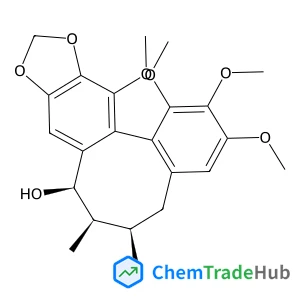
![4-[2-(3,4-Dihydro-2H-chromen-6-yl)-1,3-oxazol-5-yl]-1-(3-{[(2,5-dioxo-1-pyrrolidinyl)oxy]carbonyl}benzyl)pyridinium bromide structure](https://cnstatic.chemtradehub.com/structs/155/155863-03-9-8183.webp "4-[2-(3,4-Dihydro-2H-chromen-6-yl)-1,3-oxazol-5-yl]-1-(3-{[(2,5-dioxo-1-pyrrolidinyl)oxy]carbonyl}benzyl)pyridinium bromide structure")
推荐供应商







免责声明
本页面提供的学术期刊信息仅供参考和研究使用。我们与任何期刊出版商均无关联,也不处理投稿事宜。如有投稿相关咨询,请直接联系相关期刊出版商。
如发现页面信息有误,请发送邮件至 support@chemtradehub.com 联系我们。我们将及时核实并处理您的问题。