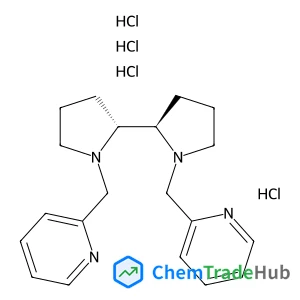
(2R,2'R)-1,1'-Bis(2-pyridinylmethyl)-2,2'-bipyrrolidine tetrahydrochloride
CAS号:
1228077-88-0
分子式:
C20H30Cl4N4
Hanno Schmiedt, Stephan Schlemmer, Sergey N. Yurchenko, Per Jensen
We report a new semi-classical method to compute highly excited rotational energy levels of an asymmetric-top molecule. The method forgoes the idea of a full quantum mechanical treatment of the ro-vibrational motion of the molecule. Instead, it employs a semi-classical Green's function approach to describe the rotational motion, while retaining a quantum mechanical description of the vibrations. Similar approaches have existed for some time, but the method proposed here has two novel features. First, inspired by the path integral method, periodic orbits in the phase space and tunneling paths are naturally obtained by means of molecular symmetry analysis. Second, the rigorous variational method is employed for the first time to describe the molecular vibrations. In addition, we present a new robust approach to generating rotational energy surfaces for vibrationally excited states; this is done in a fully quantum-mechanical, variational manner. The semi-classical approach of the present work is applied to calculating the energies of very highly excited rotational states and it reduces dramatically the computing time as well as the storage and memory requirements when compared to the fullly quantum-mechanical variational approach. Test calculations for excited states of SO2 yield semi-classical energies in very good agreement with the available experimental data and the results of fully quantum-mechanical calculations.

Journal of Peptide Science
Nature Medicine

Russian Journal of General Chemistry

Saudi Pharmaceutical Journal

Drug Discovery Today

Current Opinion in Solid State & Materials Science

Chemical Communications

Russian Journal of Bioorganic Chemistry
Russian Chemical Bulletin

Chemistry Education Research and Practice
M. Ángeles Navarro, Daniel Cosano, Asamanjoy Bhunia, Laura Simonelli, Vlad Martin-Diaconescu, Francisco J. Romero-Salguero, Dolores Esquivel
DOI: 10.1039/D1SE01437D
Ze-Yu Du, Yan-Zhao Yu, Ning-Fang Li, Yun-Shan Xue, Ling-Xi Xu, Hua Mei, Yan Xu
DOI: 10.1039/D1SE00804H
Zhilu Liu, Wei Li, Shanshan Cai, Zhengkai Tu, Xiaobing Luo, Song Li
DOI: 10.1039/D1SE01819A
Babasaheb M. Matsagar, Hsiang-L. Sung, Jyun-Yi Yeh, Ching-Tien Chen
DOI: 10.1039/D1SE00802A
Hui Peng, Yipu Xu, Yaping Jiang, Xin Wang, Rui Zhao, Faqiang Wang, Lu Li, Guofu Ma
DOI: 10.1039/D1SE01059J
Héctor de Paz Carmona, Aleš Vráblík, José Miguel Hidalgo Herrador, Romana Velvarská, Radek Černý
DOI: 10.1039/D1SE00917F
Yu Qiao, Wen Sheng, Chen He, Bai Yang, Haoxuan Xu, Chenzhen Liu, Zhonghao Rao
DOI: 10.1039/D1SE00973G
Xu Zhang, Xiaoman Li, Wanguo Gao, Shijian Luo, Senda Su, Rong Huang, Min Luo
DOI: 10.1039/D1SE90055B
Fankai Kong, Songyan Yin, Chongfei Sun, Chunhui Yang, Hailong Chen, Hengxu Liu
DOI: 10.1039/D1SE01582F
Zhao Min Sheng, Na Na Li, Qing Mei Xu, Cheng Yang Hong, Si Yuan Wu, Cheng Kang Chang, Sheng Han, Chang Ming Li
DOI: 10.1039/D1SE00722J
随着环保要求的提高和安全意识的增强,该化合物的研究和应用趋势正逐渐转向更安全、更环境友好的替代品。市场关注点主要集中在开发新型合成方法和绿色化学路径,以减少有害...
处理含有2,9 - 二苯基 - 1,10 - 菲罗啉的废料时,应先将其收集在适当的容器中,避免与其他化学品混合。随后,可以通过水解或氧化等方法进行处理,直至达到...
处理(6-氯-吡嗪-3-基)-(4-乙基-哌嗪-1-基)-甲酮时,应穿戴适当的个人防护装备(PPE),包括手套、护目镜和实验室外套。在通风橱中操作以确保良好的通...
在处理(R)-2-氯-1-(2,4-二氯苯基)乙醇时,应佩戴防护眼镜、实验室外套和手套,确保通风橱开启以减少接触和吸入的风险。避免直接接触皮肤和眼睛。处理过程中...
可考虑使用类似结构的化合物作为替代品,如3-氯-6-(哌啶-1-基)吡嗪或3-氯-6-(2-氯哌啶-1-基)吡嗪,这些化合物在结构上与目标化合物相似,可能具有相...
该化合物可以通过乙酸乙酯与5-溴-1H-苯并三氮唑的反应合成,通常在无水条件下进行。合成过程中,需要使用适当的溶剂如乙酸乙酯,并在适当的温度下反应。该反应具有较...
一水硫酸镁是一种无机化合物,化学式为MgSO₄·H₂O,CAS号为14168-73-1。它由镁离子、硫酸根离子和一个结晶水分子组成,通常呈现为白色粉末或颗粒状固...
氘代-1,3-二氯-2-丙醇主要应用于医药和有机合成领域,作为研究化合物的氘代替代品,用于标记和追踪反应过程。此外,在聚合物和半导体生产中也有一定的应用潜力。
氰乙酸环己酯应储存在阴凉、干燥、通风良好的环境中,远离火源和热源,防止阳光直射。储存容器应密封良好,避免与空气接触,防止发生不必要的反应。
目前,2-碘-4-硝基苯胺在医药和农药领域有一定的研究和应用,尤其是在开发新型药物和农药产品方面。然而,由于其潜在的环境和健康风险,行业正趋向于寻找更为安全和环...

Physical Chemistry Chemical Physics (PCCP) is an international journal co-owned by 19 physical chemistry and physics societies from around the world. This journal publishes original, cutting-edge research in physical chemistry, chemical physics and biophysical chemistry. To be suitable for publication in PCCP, articles must include significant innovation and/or insight into physical chemistry; this is the most important criterion that reviewers and Editors will judge against when evaluating submissions. The journal has a broad scope and welcomes contributions spanning experiment, theory, computation and data science. Topical coverage includes spectroscopy, dynamics, kinetics, statistical mechanics, thermodynamics, electrochemistry, catalysis, surface science, quantum mechanics, quantum computing and machine learning. Interdisciplinary research areas such as polymers and soft matter, materials, nanoscience, energy, surfaces/interfaces, and biophysical chemistry are welcomed if they demonstrate significant innovation and/or insight into physical chemistry. Joined experimental/theoretical studies are particularly appreciated when complementary and based on up-to-date approaches.
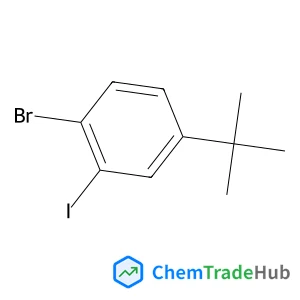
![Bis(N,N''-dimethylpiperazine)tetra[copper(I) iodide] structure](https://cnstatic.chemtradehub.com/structs/140/1401708-91-5-2b86.webp "Bis(N,N''-dimethylpiperazine)tetra[copper(I) iodide] structure")