


Optimization of hydrophilic/hydrophobic phase separation in sPEEK membranes by hydrothermal treatments
文献信息
发布日期
2017-05-22
DOI
10.1039/C7CP00087A
影响因子
3.676
作者
H. Mendil-Jakani, I. Zamanillo López, V. H. Mareau, L. Gonon
查看原文
摘要
Via SAXS, herein, we studied how a sPEEK microstructure evolves when it is immersed in water at a wide range of temperatures (20–100 °C) and time scales (from a few hours to dozens of days). In particular, we scrutinized the behavior of sPEEK at the temperature and time associated with the appearance of a well-defined nanosegregated morphology. At 80 °C, we observed nanoscale swelling along with smoothing of the water/polymer interface over a long period of time (several days). Herein, two of the main membrane properties, i.e., water uptake and proton conductivity, were studied for different immersion times and temperatures. It was found that the abovementioned properties were remarkably correlated with the evolution of the membrane microstructure, which was partly conserved after drying. The present findings helped us to understand that the thermally activated evolutions observed at both the nanoscale and macroscale were associated with the sPEEK β-relaxation crossover. Therefore, the very different swelling behaviors of sPEEK and Nafion are correlated to the much higher β-relaxation of sPEEK vs. Nafion (75 °C vs. −20 °C – dry state). From a practical viewpoint, this study emphasizes, for membranes alternative to Nafion, the importance and impact of the membrane pretreatment on their functional properties.
期刊推荐
Proceedings of the National Academy of Sciences of the United States of America
Molecular Pharmacology
Nature
Journal of Physics and Chemistry of Solids
Journal of Organometallic Chemistry
Pure and Applied Chemistry
Russian Chemical Reviews
European Journal of Wood and Wood Products
Journal of Heterocyclic Chemistry
Kinetics and Catalysis
相关文献
Functionalisable acyclic cucurbiturils‡
Daniel Bauer, Beatrice Andrae, Patrick Gaß, Danjano Trenz, Sabine Becker, Stefan Kubik
2019-02-22
Research Article
DOI: 10.1039/C9QO00156E
Why electrostatically enhanced thiourea is better than Schreiner's thiourea in both catalytic activity and regioselectivity?
Chao-Xian Yan, Rui-Zhi Wu, Ka Lu, Fang-Ling Yang, Xiao-Shan Yang, Rui Wang, Xing Yang, Pan-Pan Zhou, Xiangfeng Shao
2019-04-04
Research Article
DOI: 10.1039/C9QO00251K
A copper-catalyzed radical coupling/fragmentation reaction: efficient access to β-oxophosphine oxides
Shangbiao Feng, Jinlai Li, Feifei He, Tao Li, Huilin Li, Xiaolei Wang, Xingang Xie, Xuegong She
2019-02-12
Research Article
DOI: 10.1039/C9QO00006B
Rh(i)-Catalyzed intramolecular [3 + 2] cycloaddition reactions of yne-vinylidenecyclopropanes
Kang-Hua Rui
2019-04-03
Research Article
DOI: 10.1039/C9QO00343F
Organoiodine reagent-promoted intermolecular oxidative amination: synthesis of cyclopropyl spirooxindoles
Zhiguo Zhang, Yongchao Zhang, Guoqing Huang, Guisheng Zhang
2017-04-18
Research Article
DOI: 10.1039/C7QO00156H
Rhodium-catalyzed denitrogenative transannulation of 1,2,3-triazolyl-carbamates: efficient access to 4-aminooxazolidinones
Kuntal Pal, Chandra M. R. Volla
2017-04-17
Research Article
DOI: 10.1039/C7QO00101K
Highly soluble C2v-symmetrical fullerene derivatives: efficient synthesis, characterization, and electrochemical study
Kouya Uchiyama, Hiroshi Ueno, Hiroshi Okada, Hiroshi Moriyama
2019-02-05
Research Article
DOI: 10.1039/C9QO00056A
Organic photoredox catalytic decarboxylative cross-coupling of gem-difluoroalkenes with unactivated carboxylic acids
Hui Yang, Chao Tian, Dongsheng Qiu, Haitao Tian, Guangming Li
2019-05-10
Research Article
DOI: 10.1039/C9QO00495E
您可能还喜欢
化合物问答
4,5-二甲基-2-硝基苯甲酸(CAS号:4315-14-4)的市场或研究趋势如何?
4,5-二甲基-2-硝基苯甲酸主要应用于制药、染料和农药等行业。由于其潜在的毒性,其市场趋势可能受到法规限制和环保考量的影响,推动了替代产品的研发。在研究领域,...
4315-14-44,5-Dimethyl-2-nitro...
化合物问答
处理直接黑22(CAS号:6473-13-8)时应注意哪些实验室安全事项?
处理直接黑22时应穿戴适当的个人防护装备(PPE),包括实验服、手套、护目镜和口罩。操作应在通风橱内进行,以避免吸入有害气体。如果发生泄漏,应立即清理,并使用大...
6473-13-82-Naphthalenesulfoni...
化合物问答
处理2,1,3-苯并噻二唑-4-基异氰酸酯(CAS号:342411-14-7)时应注意哪些实验室安全事项?
处理2,1,3-苯并噻二唑-4-基异氰酸酯时应注意以下安全事项:穿戴个人防护装备,如实验室外套、防护眼镜和手套;在通风橱中操作,确保良好的通风;保持实验室环境干...
342411-14-74-Isocyanato-2,1,3-b...
化合物问答
如何处理含有Δ-8,9-脱氢雌酮(CAS号:204077-66-7)的废料?
含有Δ-8,9-脱氢雌酮的废料需要进行适当的处理以确保环境和人体安全。首先,收集废液并存放于密封容器中,避免泄漏。其次,可以考虑将其转化为无害物质或通过专业处理...
204077-66-7Thioquinapiperifil d...
化合物问答
如何储存5-溴戊酸(CAS号:2067-33-6)?
5-溴戊酸应储存在阴凉、干燥、通风良好的环境中,避免阳光直射。建议在室温(约15-25°C)下保存,保持相对湿度低于60%。应使用密封的玻璃或塑料容器,并远离热...
2067-33-65-Bromopentanoic aci...
化合物问答
4-(甲基亚磺酰基)苯胺(CAS号:22865-62-9)应用于哪些行业?
4-(甲基亚磺酰基)苯胺在医药、聚合物和传感器等领域有一定的应用。在医药方面,它可以用作合成药物的中间体;在聚合物领域,可以作为合成特殊性能高分子材料的单体;在...
22865-62-94-Methylsulfinylanil...
化合物问答
什么是1-(2-FLUOROPHENYL)-5-METHYL-1H-PYRAZOLE-4-CARBOHYDRAZIDE(CAS号:618092-58-3)?
1-(2-氟苯基)-5-甲基-1H-吡唑-4-亚甲基肼是一种有机化合物,其分子式为C9H9FN3O。该化合物具有特定的物理化学性质,如熔点、沸点等,但具体值需查...
618092-58-31-(2-Fluorophenyl)-5...
化合物问答
Dauricumine(CAS号:345641-00-1)通常如何合成?
Dauricumine通常通过复杂的合成路线制备,涉及多个步骤,包括环化、氧化、卤化等反应。合成过程中使用了多种催化剂和试剂,例如金属催化剂、氧化剂等。产率通常...
345641-00-1(1R,1'S,5R,6'S,8'S)-...
化合物问答
5-氰基苯酞(CAS号:82104-74-3)安全吗?
5-氰基苯酞在正常使用条件下相对安全,但其具有一定的毒性,需谨慎操作。在实验或工业应用中,应采取适当的防护措施,如佩戴防护手套、护目镜和实验服,确保通风良好。误...
82104-74-31-Oxo-1,3-dihydro-2-...
化合物问答
2-Methyl-1-(phenylsulfonyl)-1H-pyrrolo[2,3-b]pyridin-5-amine(CAS号:1186502-59-9)安全吗?
该化合物在使用时需要谨慎操作。虽然其毒性和健康风险尚未完全明确,但建议在通风良好的环境中操作,并穿戴适当的个人防护装备,如手套和防护眼镜。
1186502-59-92-Methyl-1-(phenylsu...
来源期刊
Physical Chemistry Chemical Physics

CiteScore:
5.5
自引率:
10.3%
年发文量:
3036
Physical Chemistry Chemical Physics (PCCP) is an international journal co-owned by 19 physical chemistry and physics societies from around the world. This journal publishes original, cutting-edge research in physical chemistry, chemical physics and biophysical chemistry. To be suitable for publication in PCCP, articles must include significant innovation and/or insight into physical chemistry; this is the most important criterion that reviewers and Editors will judge against when evaluating submissions. The journal has a broad scope and welcomes contributions spanning experiment, theory, computation and data science. Topical coverage includes spectroscopy, dynamics, kinetics, statistical mechanics, thermodynamics, electrochemistry, catalysis, surface science, quantum mechanics, quantum computing and machine learning. Interdisciplinary research areas such as polymers and soft matter, materials, nanoscience, energy, surfaces/interfaces, and biophysical chemistry are welcomed if they demonstrate significant innovation and/or insight into physical chemistry. Joined experimental/theoretical studies are particularly appreciated when complementary and based on up-to-date approaches.
推荐化合物
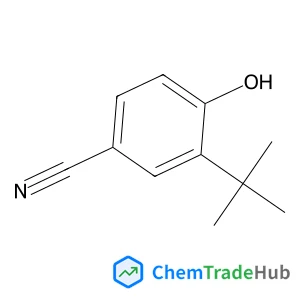
![6-Bromo-2,3-dihydro-1H-pyrido[2,3-b][1,4]oxazine structure](https://cnstatic.chemtradehub.com/structs/120/1203499-17-5-b4d1.webp "6-Bromo-2,3-dihydro-1H-pyrido[2,3-b][1,4]oxazine structure")
推荐供应商




免责声明
本页面提供的学术期刊信息仅供参考和研究使用。我们与任何期刊出版商均无关联,也不处理投稿事宜。如有投稿相关咨询,请直接联系相关期刊出版商。
如发现页面信息有误,请发送邮件至 support@chemtradehub.com 联系我们。我们将及时核实并处理您的问题。