









Functionalisable acyclic cucurbiturils‡
文献信息
发布日期
2019-02-22
DOI
10.1039/C9QO00156E
影响因子
5.281
作者
Daniel Bauer, Beatrice Andrae, Patrick Gaß, Danjano Trenz, Sabine Becker, Stefan Kubik
查看原文
摘要
Synthetic strategies are described to prepare acyclic cucurbituril derivatives with two different types of appended functional groups, one that mediates water solubility and another one that allows further functionalisation. The syntheses started with the coupling of a 1,4-disubstituted naphthalene derivative containing one 2-chloroethoxy and one 3-sulfonatopropoxy group to a suitable tetrameric glycoluril-derived precursor. This reaction afforded two regioisomers, differing in the relative orientation of the peripheral substituents, which could be separated in a straightforward fashion and structurally characterised. Both isomers were then converted into the corresponding diazides and diamines that served to append further residues by, respectively, copper(I)-catalysed azide–alkyne cycloaddition or amide formation. Binding studies showed that the functionalised dianionic acyclic cucurbiturils thus obtained possess a notable cation affinity in water, albeit a lower one than an analogue with four peripheral negatively charged substituents. This work constitutes the basis for the development of water-soluble acyclic cucurbiturils whose applications could potentially go beyond the use as receptors.
相关文献
Flexible polybenzoxazine thermosets with high glass transition temperatures and low surface free energies
Ching Hsuan Lin, Sheng Lung Chang, Ting Yi Shen, Yu Sin Shih, Hong Tze Lin, Chih Feng Wang
2012-01-30
Paper
DOI: 10.1039/C2PY00449F
Polymeric vesicles mimicking glycocalyx (PV-Gx) for studying carbohydrate–protein interactions in solution
Lu Su, Yu Zhao, Guosong Chen, Ming Jiang
2012-04-13
Paper
DOI: 10.1039/C2PY20110K
Recent advances in (reactive) melt processing of cellulose acetate and related biodegradable bio-compositions
Robert Quintana, Olivier Persenaire, Leila Bonnaud, Philippe Dubois
2011-11-28
Minireview
DOI: 10.1039/C1PY00421B
Double click reaction strategies for polymer conjugation and post-functionalization of polymers
Hakan Durmaz, Amitav Sanyal, Gurkan Hizal, Umit Tunca
2011-12-02
Review Article
DOI: 10.1039/C1PY00471A
Separation and quantification of dead species in styreneRAFT polymerization by gradient polymerelution chromatography
Ruiwei Guo, Zhipeng Shi, Xingxing Wang, Anjie Dong
2012-03-23
Paper
DOI: 10.1039/C2PY20102J
Imidazole-accelerated crosslinking of epoxidized natural rubber by dicarboxylic acids: a mechanistic investigation using NMR spectroscopy
Myriam Pire, Cédric Lorthioir, Evdokia K. Oikonomou, Sophie Norvez, Ilias Iliopoulos, Benoît Le Rossignol, Ludwik Leibler
2012-01-31
Paper
DOI: 10.1039/C2PY00591C
The unexpected behaviour of epoxidised macromonomers derived from catalytic chain transfer during ring opening copolymerisation
Bas G. P. van Ravensteijn, Robbert Duchateau, Johan P. A. Heuts
2012-05-25
Paper
DOI: 10.1039/C2PY20195J
Copper-free click chemistry on polymersomes: pre- vs. post-self-assembly functionalisation
Silvie A. Meeuwissen, Marjoke F. Debets, Jan C. M. van Hest
2011-12-20
Paper
DOI: 10.1039/C2PY00466F
Cyclopenta[c]thiophene oligomers based solution processable D–A copolymers and their application as FET materials
Anjan Bedi, Satyaprasad P. Senanayak, Soumyajit Das, K. S. Narayan, Sanjio S. Zade
2012-04-27
Paper
DOI: 10.1039/C2PY20032E
Synthesis and antibacterial characterization of gemini surfactant monomers and copolymers
Yi Zhang, Mingming Ding, Lijuan Zhou, Hong Tan, Jiehua Li, Huining Xiao, Jianshu Li, James Snow
2012-01-30
Paper
DOI: 10.1039/C2PY00558A
您可能还喜欢
化合物问答
4,5-二甲基-2-硝基苯甲酸(CAS号:4315-14-4)的市场或研究趋势如何?
4,5-二甲基-2-硝基苯甲酸主要应用于制药、染料和农药等行业。由于其潜在的毒性,其市场趋势可能受到法规限制和环保考量的影响,推动了替代产品的研发。在研究领域,...
4315-14-44,5-Dimethyl-2-nitro...
化合物问答
处理直接黑22(CAS号:6473-13-8)时应注意哪些实验室安全事项?
处理直接黑22时应穿戴适当的个人防护装备(PPE),包括实验服、手套、护目镜和口罩。操作应在通风橱内进行,以避免吸入有害气体。如果发生泄漏,应立即清理,并使用大...
6473-13-82-Naphthalenesulfoni...
化合物问答
处理2,1,3-苯并噻二唑-4-基异氰酸酯(CAS号:342411-14-7)时应注意哪些实验室安全事项?
处理2,1,3-苯并噻二唑-4-基异氰酸酯时应注意以下安全事项:穿戴个人防护装备,如实验室外套、防护眼镜和手套;在通风橱中操作,确保良好的通风;保持实验室环境干...
342411-14-74-Isocyanato-2,1,3-b...
化合物问答
如何处理含有Δ-8,9-脱氢雌酮(CAS号:204077-66-7)的废料?
含有Δ-8,9-脱氢雌酮的废料需要进行适当的处理以确保环境和人体安全。首先,收集废液并存放于密封容器中,避免泄漏。其次,可以考虑将其转化为无害物质或通过专业处理...
204077-66-7Thioquinapiperifil d...
化合物问答
如何储存5-溴戊酸(CAS号:2067-33-6)?
5-溴戊酸应储存在阴凉、干燥、通风良好的环境中,避免阳光直射。建议在室温(约15-25°C)下保存,保持相对湿度低于60%。应使用密封的玻璃或塑料容器,并远离热...
2067-33-65-Bromopentanoic aci...
化合物问答
4-(甲基亚磺酰基)苯胺(CAS号:22865-62-9)应用于哪些行业?
4-(甲基亚磺酰基)苯胺在医药、聚合物和传感器等领域有一定的应用。在医药方面,它可以用作合成药物的中间体;在聚合物领域,可以作为合成特殊性能高分子材料的单体;在...
22865-62-94-Methylsulfinylanil...
化合物问答
什么是1-(2-FLUOROPHENYL)-5-METHYL-1H-PYRAZOLE-4-CARBOHYDRAZIDE(CAS号:618092-58-3)?
1-(2-氟苯基)-5-甲基-1H-吡唑-4-亚甲基肼是一种有机化合物,其分子式为C9H9FN3O。该化合物具有特定的物理化学性质,如熔点、沸点等,但具体值需查...
618092-58-31-(2-Fluorophenyl)-5...
化合物问答
Dauricumine(CAS号:345641-00-1)通常如何合成?
Dauricumine通常通过复杂的合成路线制备,涉及多个步骤,包括环化、氧化、卤化等反应。合成过程中使用了多种催化剂和试剂,例如金属催化剂、氧化剂等。产率通常...
345641-00-1(1R,1'S,5R,6'S,8'S)-...
化合物问答
5-氰基苯酞(CAS号:82104-74-3)安全吗?
5-氰基苯酞在正常使用条件下相对安全,但其具有一定的毒性,需谨慎操作。在实验或工业应用中,应采取适当的防护措施,如佩戴防护手套、护目镜和实验服,确保通风良好。误...
82104-74-31-Oxo-1,3-dihydro-2-...
化合物问答
2-Methyl-1-(phenylsulfonyl)-1H-pyrrolo[2,3-b]pyridin-5-amine(CAS号:1186502-59-9)安全吗?
该化合物在使用时需要谨慎操作。虽然其毒性和健康风险尚未完全明确,但建议在通风良好的环境中操作,并穿戴适当的个人防护装备,如手套和防护眼镜。
1186502-59-92-Methyl-1-(phenylsu...
来源期刊
Organic Chemistry Frontiers

CiteScore:
7.8
自引率:
8.7%
年发文量:
724
Organic Chemistry Frontiers publishes high-quality research from across organic chemistry. Emphases are placed on studies that make significant contributions to the field of organic chemistry by reporting either new or significantly improved protocols or methodologies. Topics include, but are not limited to the following: Organic synthesis Development of synthetic methodologies Catalysis Natural products Functional organic materials Supramolecular and macromolecular chemistry Physical and computational organic chemistry
推荐化合物
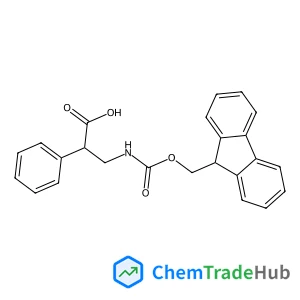
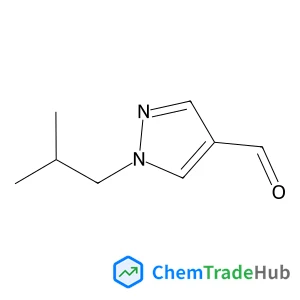
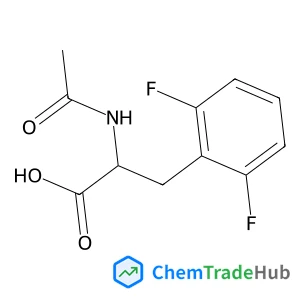
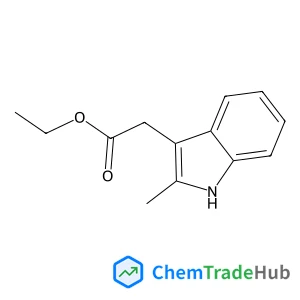
推荐供应商





免责声明
本页面提供的学术期刊信息仅供参考和研究使用。我们与任何期刊出版商均无关联,也不处理投稿事宜。如有投稿相关咨询,请直接联系相关期刊出版商。
如发现页面信息有误,请发送邮件至 support@chemtradehub.com 联系我们。我们将及时核实并处理您的问题。